
In this detailed guide, we answer one of the most fundamental questions in electrical engineering: Why Do We Need Power Transformers? We break down their core functions, technical principles, real-world applications, economic benefits, and safety contributions. By the end, you will understand why power transformers are irreplaceable in generating, transmitting, and using alternating current (AC) electricity reliably.
What Is a Power Transformer & How Does It Work?
Before exploring why power transformers are necessary, it is important to establish a clear understanding of what they are and how they function at a basic level.
Basic Definition of a Power Transformer
A power transformer is a static electrical device that transfers electrical energy between two or more circuits through electromagnetic induction. It can adjust voltage levels, modify current values, and manage impedance without changing the fundamental frequency of the AC supply.
Unlike motors or generators, power transformers have no moving parts, which contributes to their long service life, high reliability, and low maintenance requirements.
Core Components of a Power Transformer
Every power transformer relies on a few critical components to perform its functions effectively:
- Magnetic Core: Provides a low-reluctance path for magnetic flux, enabling efficient energy transfer between windings
- Primary Winding: Connected to the input power source and receives incoming electrical energy
- Secondary Winding: Delivers adjusted voltage or current to the connected load or circuit
- Insulation Materials: Prevent electrical breakdown and ensure safe operation between conductive parts
- Cooling Systems: Dissipate heat generated during operation to maintain stable performance
- Tank & Accessories: House internal components and provide protection from environmental factors
Working Principle of Power Transformers
Power transformers operate based on Faraday’s Law of Electromagnetic Induction. When alternating current flows through the primary winding, it creates a continuously changing magnetic flux in the core. This fluctuating magnetic field induces an alternating electromotive force (EMF) in the secondary winding.
The voltage ratio between the primary and secondary windings directly corresponds to the ratio of their respective turns. This relationship allows transformers to step voltage up or down with minimal energy loss, making them uniquely efficient for electrical power management.
Why Do We Need Power Transformers in Power Generation?
Power generation facilities face inherent limitations that make power transformers absolutely necessary from the very start of the energy supply chain.
Generator Voltage Limitations
Power station generators are designed with practical constraints that prevent them from producing extremely high voltages directly:
- Physical insulation challenges at ultra-high voltage levels
- Increased manufacturing complexity and cost
- Safety risks during operation and maintenance
- Structural limitations of rotating generator components
Typical generator output voltages include:
- 3.15 kV
- 6.3 kV
- 10.5 kV
- 15.75 kV
These voltages are suitable for internal plant use but far too low for efficient long-distance transmission.
Voltage Boosting at Power Plants
To overcome generator limitations, step-up transformers are installed immediately after power generation. These transformers increase voltage to levels suitable for transmission networks.
This step is non-negotiable. Without it, power plants could not deliver electricity beyond their immediate surroundings efficiently.
Why Do We Need Power Transformers in Long-Distance Transmission?
One of the most compelling answers to Why Do We Need Power Transformers lies in electrical transmission economics and physics.
Physics of Power Transmission
Electrical power follows a fundamental formula:
P = √3 × U × I × cosφ
When power (P) and power factor (cosφ) remain constant:
- Higher voltage means lower current
- Lower current reduces resistive losses in transmission lines
- Less conductive material is required for the same power capacity
Transmission Loss Reduction
Lower current directly reduces I²R losses, which are the primary cause of wasted energy during transmission.
Economic Benefits of High-Voltage Transmission
Using elevated voltages creates significant cost savings:
- Reduced energy loss over long distances
- Smaller conductor size requirements
- Lower infrastructure investment
- Improved overall grid efficiency
Modern transmission systems often operate at:
- 220 kV
- 330 kV
- 500 kV
- 750 kV
- 1000 kV and above in advanced grids
These voltages would be impossible to achieve without power transformers.
Why Do We Need Power Transformers in Power Distribution?
Once electricity reaches populated areas, transformers reverse their role to ensure safe usability.
Voltage Reduction for Consumer Use
High transmission voltages are dangerous and incompatible with standard equipment. Step-down transformers reduce voltage to practical levels:
- Primary distribution: 11 kV, 33 kV
- Secondary distribution: 400V, 230V
- Residential and commercial usage: 120V, 230V depending on region
Multi-Stage Distribution Network
Power typically passes through multiple transformer stages before reaching end users:
- Transmission substations
- Primary distribution substations
- Secondary distribution transformers
- Pole-mounted or pad-mounted transformers near buildings
Each stage relies on transformers to gradually lower the voltage to safe, usable levels.
Why Do We Need Power Transformers for Electrical Safety?
Beyond energy management, transformers provide life-saving and equipment-protecting benefits.
Isolation Between Circuits
Transformers electrically separate input and output circuits, preventing:
- Direct electrical shock hazards
- Ground loop issues
- Voltage surges from spreading across systems
Overvoltage and Surge Protection
Properly designed transformers help stabilize voltage fluctuations and reduce the impact of:
- Lightning strikes
- Switching surges
- Grid disturbances
This protection extends the lifespan of sensitive electronics and machinery.
Safe Voltage for Daily Use
By reducing high grid voltages to consumer-friendly levels, transformers:
- Prevent fatal electric shocks
- Protect household and industrial appliances
- Maintain safe working environments
Why Do We Need Power Transformers for Equipment Compatibility?
Different electrical devices require specific voltage and power conditions to operate correctly.
Matching Voltage Requirements
Virtually every category of equipment depends on transformers to receive appropriate power:
- Industrial machinery
- Medical devices
- Telecommunication equipment
- Data center servers
- Residential appliances
Supporting Global Voltage Standards
Transformers enable compatibility between different regional voltage standards, supporting international industry and trade.
Stabilizing Power Quality
Transformers help maintain consistent voltage levels, reducing issues like:
- Voltage sags
- Swells
- Unbalanced loads
- Harmonic distortions
Why Do We Need Power Transformers for Energy Efficiency?
Modern society prioritizes sustainable, low-loss energy systems—and transformers are central to this goal.
Minimizing Energy Loss
High-efficiency transformers waste less energy as heat, directly lowering:
- Operational costs
- Carbon emissions
- Resource consumption
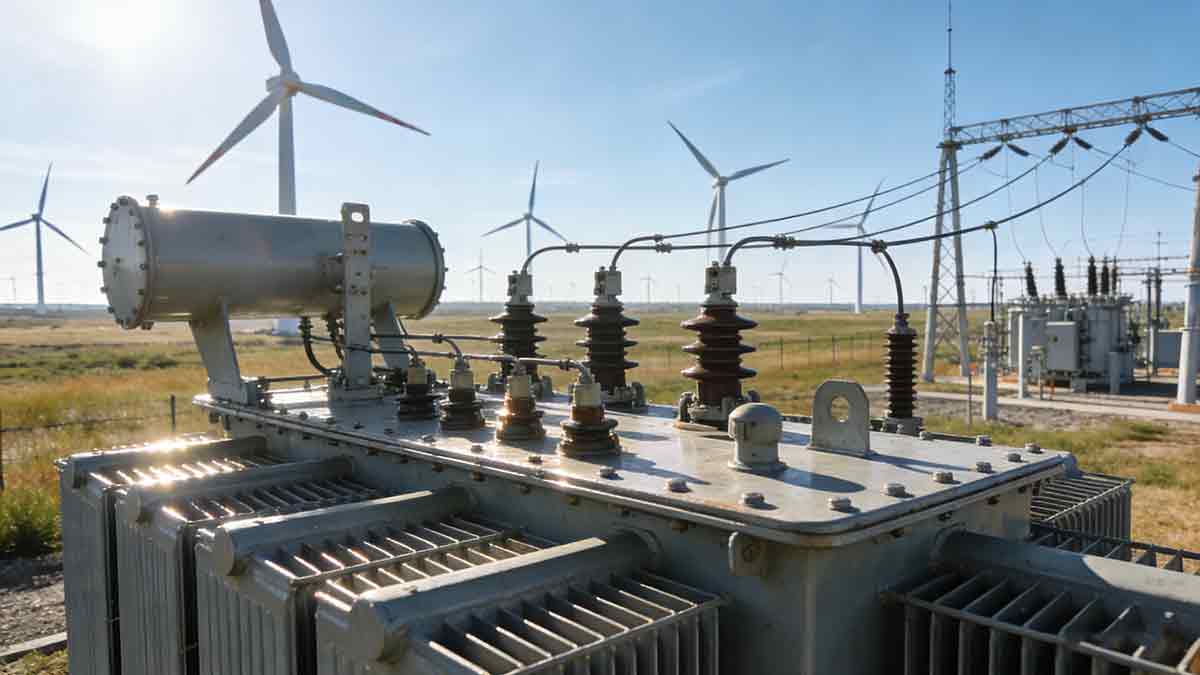
Enabling Renewable Energy Integration
Transformers facilitate the connection of renewable sources:
- Solar power plants
- Wind farms
- Hydroelectric facilities
- Battery energy storage systems
These installations depend on transformers to match grid voltage requirements.
Supporting Smart Grid Development
Advanced transformers support modern grid features:
- Remote monitoring
- Load management
- Fault detection
- Grid automation
This improves overall reliability and efficiency.
Key Benefits of Power Transformers: Summary Table
| Benefit Category | Practical Advantages | Impact on Systems |
|---|---|---|
| Voltage Regulation | Step-up & step-down capability | Flexible energy distribution |
| Loss Reduction | Lower current = lower I²R loss | Improved transmission efficiency |
| Cost Savings | Less conductor material & energy waste | Reduced infrastructure expenses |
| Safety Isolation | Electrical separation between circuits | Enhanced protection for people & equipment |
| Equipment Compatibility | Matches voltage to device requirements | Wide compatibility across industries |
| Grid Stability | Supports balanced load distribution | Reliable 24/7 power delivery |
| Renewable Integration | Connects green energy to the main grid | Accelerates sustainable adoption |
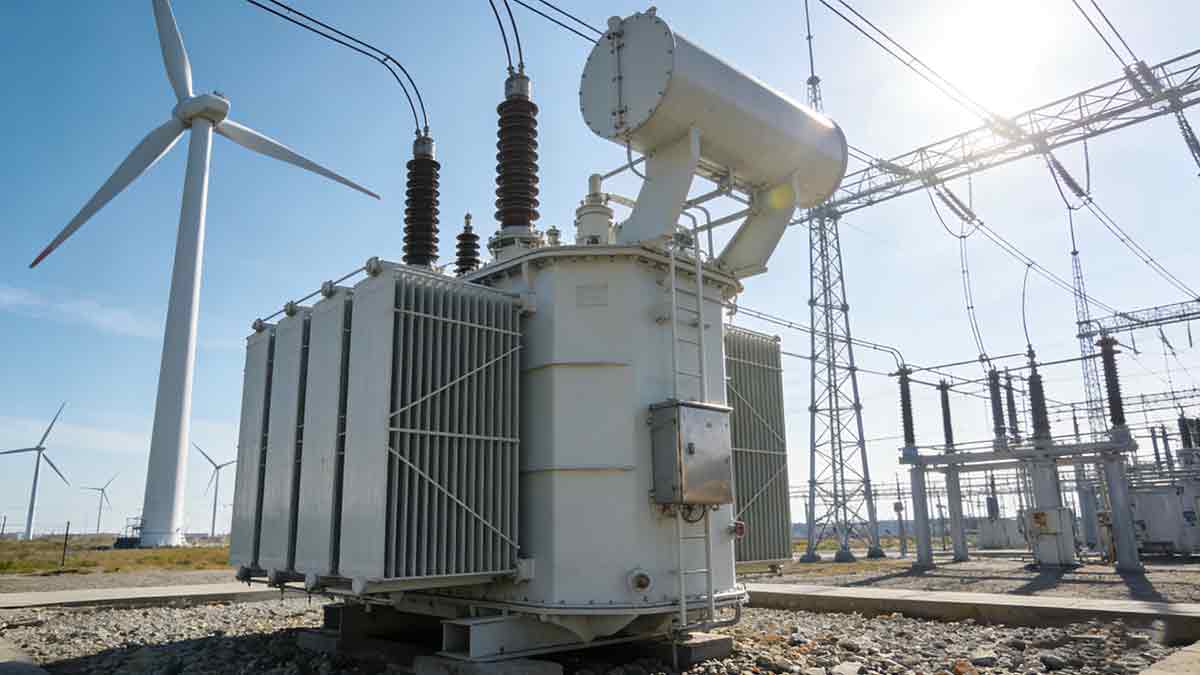
Common Types of Power Transformers and Their Roles
Understanding different transformer types further clarifies Why Do We Need Power Transformers.
Step-Up Transformers
- Increase the voltage for long-distance transmission
- Used at power plants and substations
- Essential for high-voltage grid feeders
Step-Down Transformers
- Decrease the voltage for distribution and usage
- Found in substations and local networks
- Provide safe power for homes and businesses
Distribution Transformers
- Designed for outdoor and underground installation
- Optimized for low-load, high-efficiency operation
- Deliver power directly to end-users
Isolation Transformers
- Prioritize electrical separation
- Protect sensitive equipment
- Used in medical and industrial applications
Frequently Asked Questions About Why We Need Power Transformers
Why Can’t We Transmit Electricity at Low Voltage?
Low voltage requires high current, leading to extreme energy loss, excessive heat, and prohibitively large and expensive conductors.
Why Do Generators Not Produce High Voltage Directly?
High voltage introduces insulation, mechanical, safety, and economic challenges that make direct generation impractical.
Can the Power Grid Function Without Transformers?
No. The entire electrical grid structure depends on transformers to adjust voltage at every stage from generation to consumption.
Are Transformers Only Used for Changing Voltage?
No. They also provide isolation, impedance matching, phase regulation, and power quality improvement.
Conclusion
To answer the question Why Do We Need Power Transformers? comprehensively, we need power transformers because they make modern electrical power feasible, efficient, safe, and practical.
They enable long-distance transmission, reduce energy waste, lower infrastructure costs, protect people and equipment, support industrial development, and integrate renewable energy. From power plants to household sockets, transformers are foundational to every part of the electrical ecosystem.
Without power transformers, large-scale power generation, global grids, urban development, and modern industry would be impossible. They remain essential infrastructure today and will continue to be vital as the world transitions to smarter, more sustainable energy systems.