
For transformer operators, installers, and facility managers, understanding the science and practical application of pebbles under the transformer is critical to designing a robust safety protocol and complying with electrical installation standards. This guide breaks down the core functions of these cobblestones, their optimal placement in oil discharge pits (with or without grates), key selection criteria for pebble materials and sizes, and long-term maintenance practices—all to answer the critical question of why pebbles are a non-negotiable element of transformer safety design.
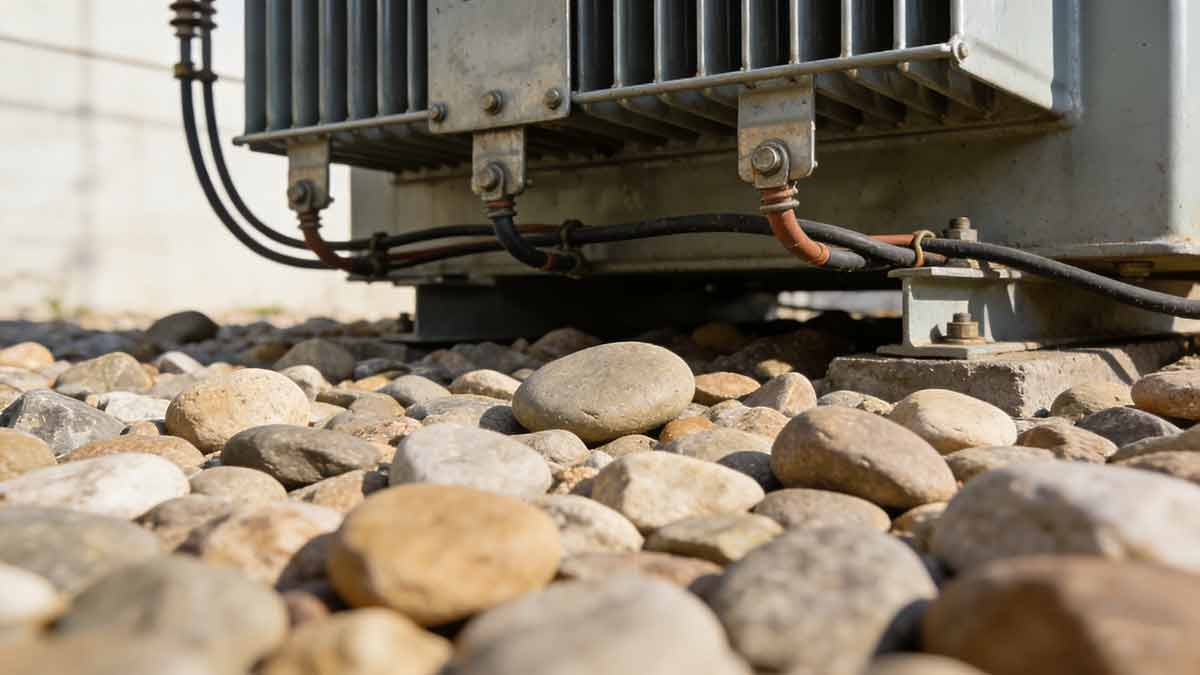
Pebbles Under the Transformer: Core Safety Roles in Transformer Accidents
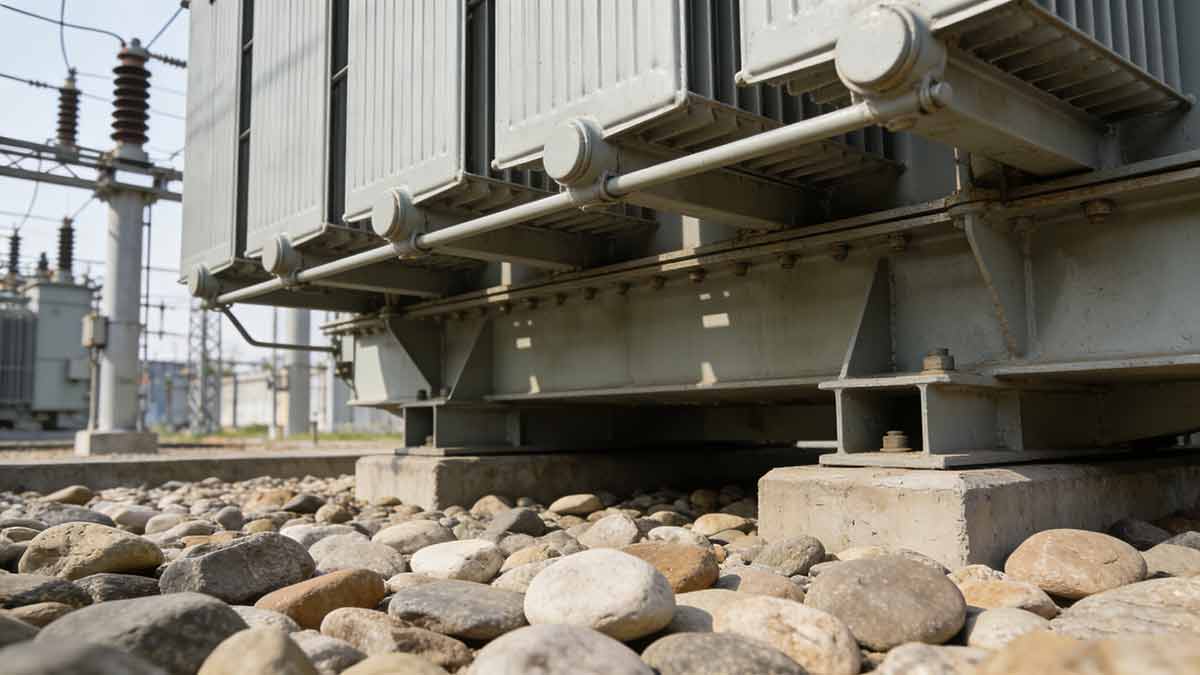
Pebbles under the transformer act as a first line of defense when an accident occurs, addressing the two most dangerous consequences of transformer failure: spilled hot insulating oil and fire ignition/spread. Unlike solid concrete or bare earth, the porous, irregular structure of cobblestones creates an engineered environment that counteracts these risks at the source, while also ensuring unobstructed oil flow to dedicated containment systems. Below are the primary safety functions that make pebbles under the transformer an essential design choice.
Fire Isolation and Suppression Capabilities
When a transformer experiences a catastrophic failure—such as a short circuit that causes sparking or oil injection—spilled insulating oil is immediately at risk of igniting, as transformer oil is flammable at high temperatures (typically above 140°C for mineral oil-based formulations). Pebbles under the transformer create a physical barrier that isolates small fires and prevents them from spreading to the surrounding transformer structure or adjacent electrical equipment. The gaps between individual cobblestones break up the surface of the spilled oil, limiting the area of fuel exposed to an ignition source and reducing the intensity of any fire that does start.
This isolation effect is critical for fire response: it slows the spread of flames, giving emergency personnel more time to intervene and extinguish the fire before it escalates. Additionally, the non-combustible nature of natural stone pebbles means they do not contribute to the fire load, unlike organic materials or synthetic surfaces that could melt or burn and exacerbate the accident. In many cases, the isolation provided by pebbles under the transformer is enough to contain a small oil fire to the immediate pit area, preventing it from reaching the transformer’s core components or nearby power lines.
High-Temperature Transformer Oil Cooling via Cobblestones
A major contributor to fire risk in transformer accidents is the extreme temperature of the spilled insulating oil—during a failure, oil can reach temperatures well above its flash point, making immediate combustion almost inevitable if the oil remains uncooled. Pebbles under the transformer solve this problem through passive thermal cooling: cobblestones (typically made of granite, basalt, or other dense natural stones) have high thermal mass and low thermal conductivity, meaning they absorb heat from the hot oil without transferring it to the surrounding environment.
As the spilled oil flows through the gaps between the pebbles, it comes into contact with the large surface area of the cool stone aggregate. This contact rapidly dissipates the oil’s heat, lowering its temperature below the flash point and eliminating the risk of ignition. Even if the oil has already ignited, the cooling effect of the pebbles can smother small flames by reducing the fuel’s temperature to a non-combustible level. This passive cooling is a key advantage of pebbles under the transformer, as it works without any active mechanical or electrical systems—making it reliable even in the event of a complete power failure, which is common during transformer accidents.
Prevention of Oil Drain Hole Clogging
Transformer oil discharge pits and emergency oil pools are designed to collect spilled oil and prevent it from seeping into the ground or contaminating water sources, but this system only works if the oil can flow unobstructed through drain holes to the containment area. Bare concrete or earth in the discharge pit is prone to sediment buildup, debris accumulation, or even the formation of oil sludge—all of which can clog drain holes and block oil flow. Pebbles under the transformer eliminate this risk by creating a permeable channel for oil to flow through.
The smooth, rounded surface of cobblestones prevents debris and sludge from sticking to the pit floor, and the uniform gaps between the pebbles ensure that oil flows directly to the drain holes without obstruction. Even if small amounts of sediment or transformer debris are present during an accident, the pebbles act as a filter, keeping larger particles from entering the drain system and clogging the pipes that lead to the emergency oil pool. This unobstructed flow is critical: if drain holes are blocked, spilled oil will pool on the transformer pad, increasing the fire risk and the likelihood of environmental contamination.
Pebble Placement Under the Transformer: Grid vs Non-Grid Oil Discharge Pits
The placement of pebbles under the transformer is not a one-size-fits-all practice; it is tailored to the design of the transformer’s oil discharge pit, which can either feature a metal grid (or grate) or be a grid-free, open pit. The two designs have distinct pebble laying requirements, and both are engineered to optimize oil flow, fire safety, and maintenance access. The table below outlines the key differences in pebble placement and core advantages for each pit design, followed by a detailed breakdown of installation best practices for both configurations.
Pebble Placement Comparison: Grid vs Non-Grid Oil Discharge Pits
| Design Feature | Grid/Grates Installed in Oil Discharge Pit | No Grid/Grates in Oil Discharge Pit |
|---|---|---|
| Pebble Placement Under the Transformer | Pebbles are laid directly on top of the grid/grate; the grid elevates the pebble layer 10–15cm above the pit floor. | Pebbles are placed directly in the open pit, filling the pit to a depth of 15–20cm and sitting on the pit’s concrete floor. |
| Primary Oil Flow Benefit | Grid creates a dedicated underlayer channel for oil, ensuring flow to drain holes is unimpeded by the pebble layer. | Pebble aggregate itself forms the flow channel; gaps between stones guide oil to the drain holes without additional structural support. |
| Maintenance Access | Grid allows technicians to access the pit floor for cleaning/debris removal without disturbing the pebble layer. | Pit floor access requires partial removal of the pebble layer; simpler initial installation with no grid to inspect/repair. |
| Insulation for Technicians | An elevated pebble layer provides enhanced electrical insulation for workers standing on the grid during inspections. | Pebble layer on the pit floor still delivers robust insulation, with a thicker aggregate layer for added protection. |
| Ideal Application | Large industrial transformers (≥10MVA) with high oil volume; frequent maintenance/inspection requirements. | Small to medium transformers (≤10MVA) for residential/commercial distribution; limited pit access or space constraints. |
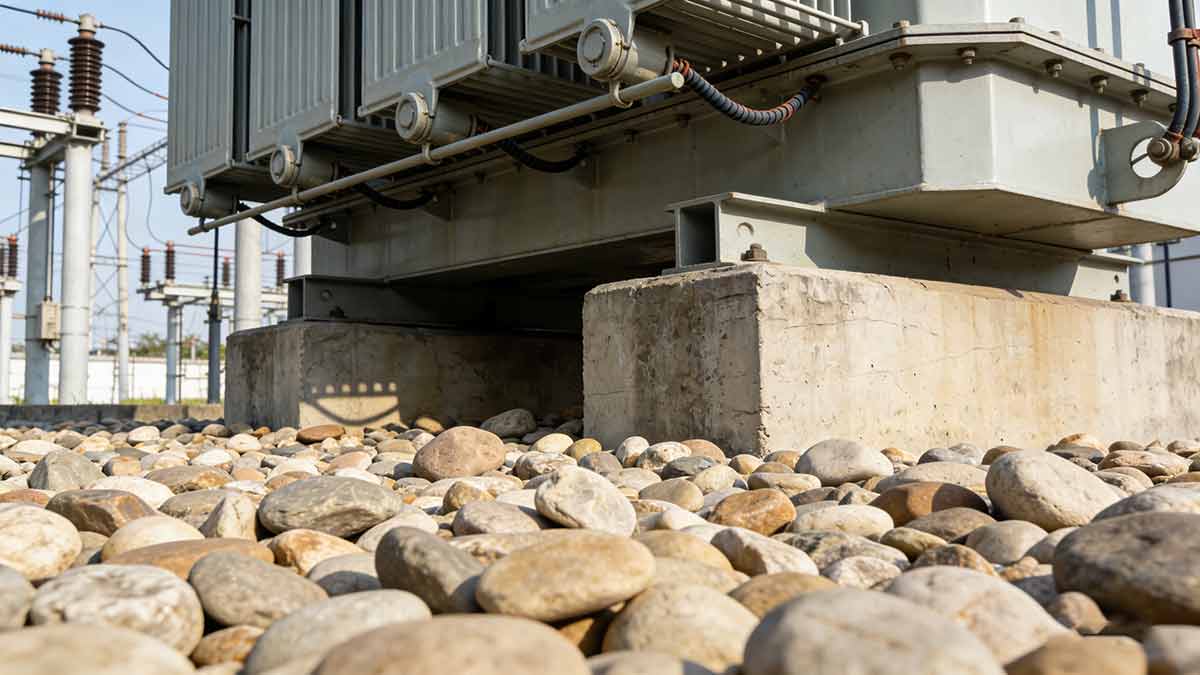
Pebble Installation for Grid-Based Oil Discharge Pits
For oil discharge pits with a metal grid (typically steel or aluminum, corrosion-resistant for outdoor use), the grid is first secured to the pit’s concrete ledges at a height of 10–15cm from the floor. This elevation is critical: it creates a clear channel for oil to flow under the pebble layer, directly to the drain holes at the pit’s base, without the pebbles blocking the flow path. Pebbles under the transformer are then laid on top of the grid in a uniform layer of 10–15cm thick, covering the entire grid surface and extending to the edges of the transformer pad.
The grid material must be rated for the weight of the pebble layer and any foot traffic from maintenance technicians—typically, grid slats are spaced 2–3cm apart to prevent pebbles from falling through while still allowing oil to flow freely. A key benefit of this design is that the pebble layer remains intact during pit cleaning: technicians can simply remove debris from the pit floor through the grid without moving the pebbles, saving time and reducing maintenance downtime. For pebbles under the transformer in grid-based pits, smaller to medium cobblestones (2–5cm in diameter) are preferred, as they fit securely on the grid and create consistent flow gaps.
Pebble Installation for Grid-Free Oil Discharge Pits
In grid-free oil discharge pits— a common design for smaller distribution transformers—pebbles under the transformer are laid directly on the pit’s smooth concrete floor, filling the pit to a depth of 15–20cm. Unlike the grid-based design, the pebble aggregate itself forms the primary flow channel for spilled oil, with the gaps between the stones guiding the oil to the drain holes (typically located at the lowest point of the pit for gravity-fed flow). This design is simpler and more cost-effective to install, as it eliminates the need for a metal grid and its associated hardware.
For grid-free pits, larger cobblestones (5–8cm in diameter) are recommended for pebbles under the transformer. Larger stones create wider gaps between the aggregate, ensuring that oil flows unobstructed to the drain holes and reducing the risk of small debris clogging the flow path. The pebble layer must cover the entire pit floor, including the area around the drain holes, to prevent bare concrete from being exposed and to maintain the cooling and fire isolation effects across the entire spill zone. While maintenance access requires partial removal of the pebble layer to clean the pit floor, this is a minor tradeoff for the simplicity and cost savings of the grid-free design—especially for transformers with low oil volume and infrequent maintenance needs.
Additional Key Benefits of Pebbles Under the Transformer Beyond Fire Safety
While fire suppression and oil cooling are the primary reasons for installing pebbles under the transformer, these cobblestones deliver two additional critical benefits that enhance the long-term usability and safety of transformer installations: improved electrical insulation for maintenance technicians and simplified oil unloading for routine and emergency operations. These secondary benefits make pebbles under the transformer a practical investment, not just a safety requirement, and address common pain points for transformer operators and service teams.
Enhanced Electrical Insulation for Safe Maintenance and Inspection
Transformers operate at high voltages, and even when de-energized, residual electrical charge can pose a serious risk to technicians performing maintenance, inspections, or repairs. Bare concrete or metal surfaces on the transformer pad conduct electricity, increasing the risk of electric shock if a technician comes into contact with a live component or residual charge. Pebbles under the transformer solve this problem by acting as a passive electrical insulator: natural stone cobblestones are non-conductive, and the air gaps between the pebbles further enhance the insulation effect by creating a break in any conductive path.
This insulation is critical for routine maintenance tasks, such as checking oil levels, inspecting gaskets for leaks, or testing transformer components. Technicians can stand on the pebble layer with reduced risk of electric shock, even if there is a minor electrical fault or residual charge in the transformer. For pebbles under the transformer, the insulation benefit is amplified by the uniform layer of aggregate—covering the entire transformer pad ensures that there are no conductive hotspots on the working surface. This not only complies with occupational health and safety (OHS) standards but also reduces the risk of workplace accidents and associated downtime for transformer operations.
Simplified Oil Unloading for Routine and Emergency Operations
Transformer insulating oil requires regular replacement or top-ups to maintain optimal performance, and in the event of an accident, all oil must be unloaded from the unit and the discharge pit to the emergency oil pool. Pebbles under the transformer simplify this oil unloading process by creating a smooth, permeable surface that allows oil to flow freely under gravity— the primary method of oil transfer in most transformer installations. Unlike bare concrete, which can have rough, uneven surfaces that trap oil in puddles, the rounded edges of cobblestones guide oil toward the drain holes and into the oil discharge system with minimal resistance.
For routine oil changes, this means that the transformer pad and pit can be drained completely, reducing the risk of oil residue buildup that can lead to sludge formation and clogging. For emergency operations, the unobstructed oil flow enabled by pebbles under the transformer ensures that spilled oil is quickly transferred to the emergency oil pool, minimizing environmental contamination and fire risk. Additionally, the non-stick surface of cobblestones prevents oil from adhering to the pit floor, making it easier to clean the pit after an accident or routine oil change—reducing maintenance time and costs.
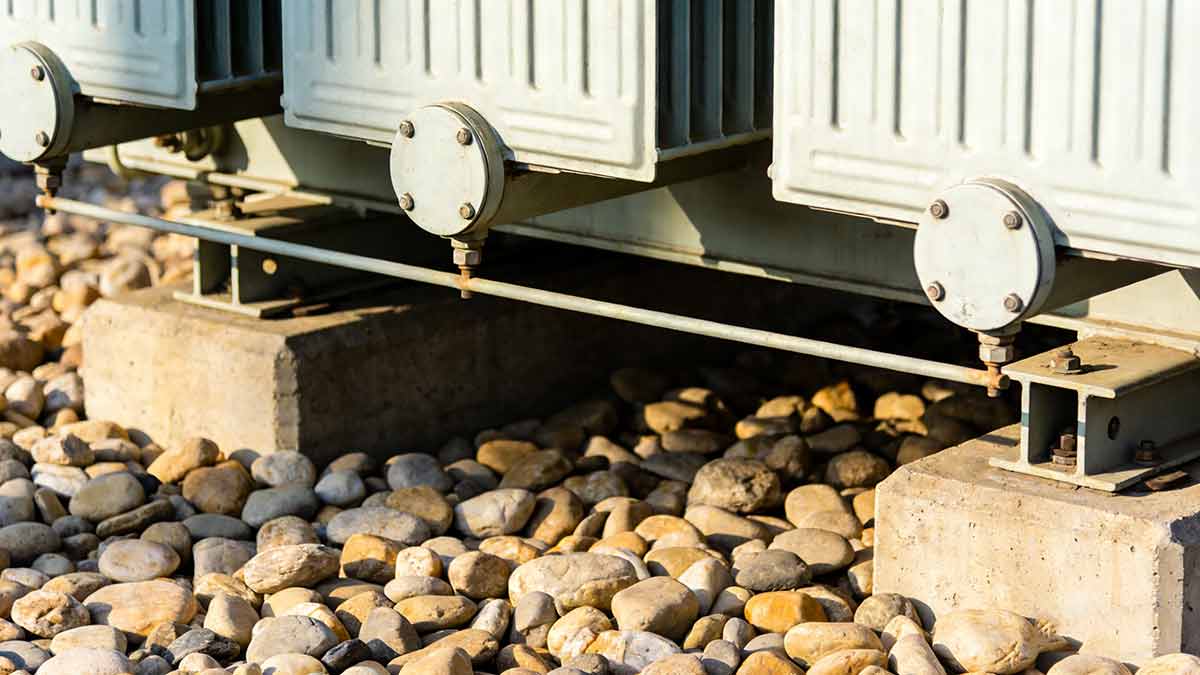
Prevention of Surface Contamination and Oil Pooling
A lesser-known but important benefit of pebbles under the transformer is the prevention of surface contamination and oil pooling on the transformer pad. Spilled oil that pools on bare concrete or earth can seep into the ground, causing soil and groundwater contamination, and can also create a slippery surface that poses a fall risk for technicians. Pebbles under the transformer eliminate oil pooling by channeling the oil directly into the discharge pit and emergency containment system, ensuring that no oil remains on the working surface of the transformer pad.
The porous structure of the pebble layer also absorbs small amounts of oil that may spill during routine maintenance (e.g., oil level checks or gasket replacements), preventing it from spreading across the pad and contaminating adjacent areas. Any oil absorbed by the pebble layer can be easily cleaned with absorbent materials or by flushing the pit with a small amount of water, and the non-porous surface of cobblestones means that oil does not penetrate the stone itself, so the pebbles can be reused after cleaning. This not only reduces environmental risk but also keeps the transformer pad clean and safe for daily operations.
What to Consider When Selecting Pebbles Under the Transformer?
Not all pebbles or stones are suitable for use under transformers— the material, size, and shape of the cobblestones directly impact their ability to perform fire safety, oil cooling, and flow functions. Choosing the wrong type of stone can compromise the safety of the transformer installation, lead to drain hole clogging, or reduce the effectiveness of oil cooling and fire isolation. For transformer manufacturers and installers, selecting the right pebbles under the transformer requires adherence to specific material and size specifications, and avoiding unsuitable stone types that can fail in high-temperature or high-oil environments. Below are the key selection criteria for optimal pebble performance.
Optimal Pebble Size and Shape Specifications
The size and shape of pebbles under the transformer are the most critical selection factors, as they determine the size of the gaps between the aggregate (and thus oil flow efficiency) and the surface area available for oil cooling. Rounded cobblestones are the only suitable shape—sharp, angular stones (such as crushed rock or gravel) have jagged edges that can damage transformer gaskets, puncture oil lines, or create sharp hotspots that can ignite spilled oil. Rounded cobblestones also have a smooth surface that prevents oil and debris from sticking, ensuring unobstructed flow and easy cleaning.
For size, the optimal diameter of pebbles under the transformer ranges from 2–8cm, with the exact size determined by the oil discharge pit design (grid vs non-grid) as outlined in the earlier placement section:
- Grid-based pits: 2–5cm diameter pebbles—small enough to sit securely on the grid without falling through, with small gaps that create a large cooling surface area.
- Grid-free pits: 5–8cm diameter pebbles—larger stones with wider gaps that ensure unobstructed oil flow to drain holes, eliminating clogging risk.
The pebble layer must also be of a uniform thickness (10–15cm for grid-based pits, 15–20cm for grid-free pits) to ensure consistent cooling, insulation, and flow across the entire transformer pad. Uneven pebble layers create low spots where oil can pool, reducing the effectiveness of fire isolation and cooling.
Recommended Pebble Material for Transformer Installations
Pebbles under the transformer must be made of dense, non-combustible, natural stone with high thermal mass and low water absorption—these properties ensure the stones can withstand high oil temperatures, absorb heat effectively, and not degrade over time. The best materials for cobblestones under transformers are:
- Granite: The gold standard for transformer pebbles—granite is extremely dense, non-porous, and has a high thermal mass. It can withstand temperatures in excess of 1,000°C without cracking or degrading, making it ideal for cooling hot transformer oil. Granite is also non-conductive and resistant to oil and chemical corrosion, ensuring long-term durability.
- Basalt: A close second to granite, basalt is a dense volcanic rock with similar thermal and structural properties. It is highly resistant to thermal shock (cracking from sudden temperature changes), which is critical for transformer accidents where cold stones come into contact with extremely hot oil.
- Limestone: A cost-effective alternative for low-voltage distribution transformers—limestone is non-combustible and has moderate thermal mass, but it is slightly porous and can absorb small amounts of oil over time. It is only recommended for transformers with low oil volume and infrequent accident risk.
All pebbles under the transformer must be clean and free of dust, sediment, or organic material (such as dirt, leaves, or wood) at the time of installation. Organic material is combustible and can ignite during a transformer accident, while dust and sediment can clog drain holes and reduce the permeability of the pebble layer.
Unsuitable Stone Types to Avoid for Pebbles Under the Transformer
There are several stone types that should never be used as pebbles under the transformer, as they fail to meet the basic safety and performance requirements. These include:
- Crushed rock/gravel: Angular edges damage transformer components and create fire hotspots; small particle size clogs drain holes.
- Marble: Soft and porous—marble degrades at high temperatures, absorbs oil, and can crack under thermal shock, compromising the pebble layer.
- Sandstone: Highly porous—sandstone absorbs large amounts of oil, leading to sludge formation and reduced cooling efficiency; it also crumbles over time.
- Synthetic stones/plastic pebbles: Combustible and low thermal mass—synthetic materials melt at high temperatures, contribute to the fire load, and provide no oil cooling benefit.
- Small pebbles/sand: Particle size is too small, leading to drain hole clogging and reduced oil flow; sand has no meaningful cooling surface area.
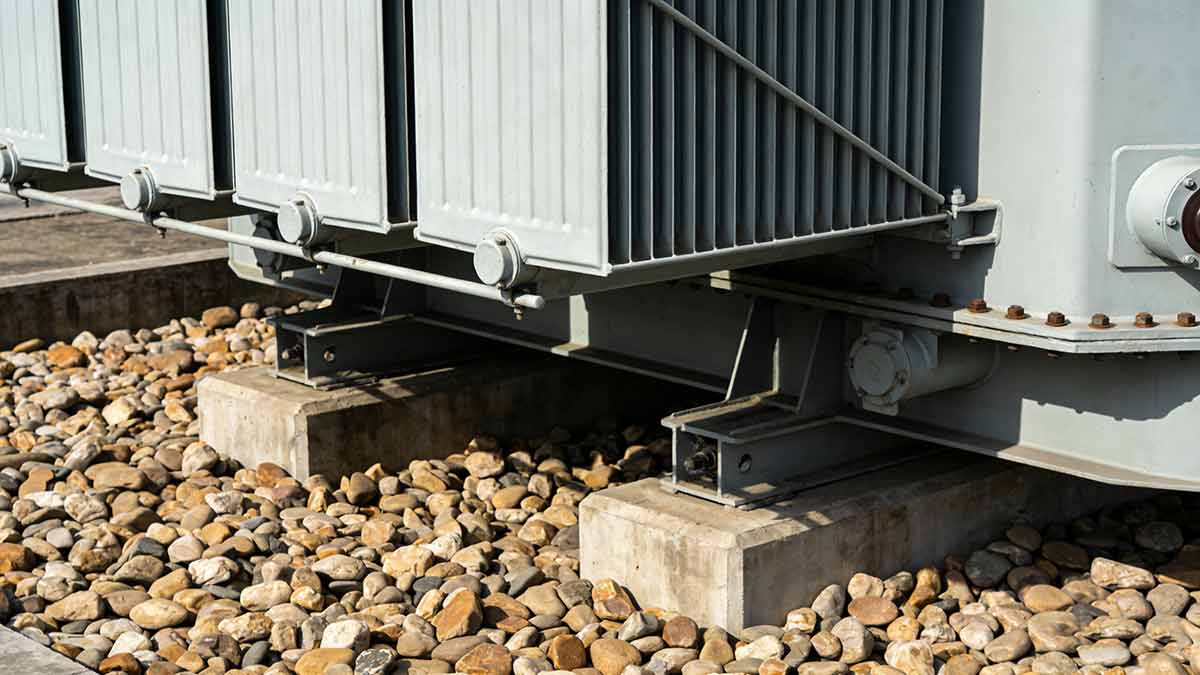
Avoiding these unsuitable stone types is critical—using the wrong pebbles under the transformer can turn a safety feature into a hazard, increasing the risk of fire, clogging, and transformer component damage.
Maintenance of Pebbles Under the Transformer for Long-Term Safety
Pebbles under the transformer are a low-maintenance safety component, but they require regular inspection and occasional cleaning/replacement to ensure they continue to perform their core functions over the transformer’s lifespan (typically 20–30 years). Neglecting the pebble layer can lead to debris buildup, oil sludge formation, stone degradation, or uneven layers—all of which compromise fire safety, oil flow, and insulation. For transformer operators, a simple, regular maintenance routine for pebbles under the transformer is essential to preserve the integrity of the safety system and avoid costly repairs or accidents. Below are the key maintenance practices for cobblestone layers under transformers.
Regular Inspection of the Pebble Layer
The pebble layer under the transformer should be inspected quarterly for routine maintenance, and immediately after any transformer incident (e.g., a small oil leak, sparking, or routine oil change). Inspections focus on four key areas to ensure optimal performance:
- Layer uniformity: Check for uneven areas, low spots, or missing pebbles that could cause oil pooling—fill in any gaps with new cobblestones of the same size and material.
- Debris accumulation: Remove any organic debris (leaves, twigs, grass), dust, or transformer debris (metal shavings, gasket material) from the pebble layer—debris is combustible and can clog drain holes.
- Stone condition: Inspect for cracked, chipped, or degraded pebbles—these stones have reduced thermal mass and can create sharp edges that damage transformer components.
- Oil flow: Test the oil flow by pouring a small amount of water into the discharge pit—ensure the water flows unobstructed to the drain holes and into the emergency oil pool (water simulates oil flow and is a non-hazardous test method).
Quarterly inspections are quick and non-invasive, typically taking 15–20 minutes per transformer, and can identify small issues before they escalate into major safety hazards.
Replacing Damaged or Contaminated Pebbles
Cracked, chipped, or degraded pebbles under the transformer should be replaced immediately with new cobblestones of the same size, shape, and material. For pebbles that have absorbed large amounts of oil (e.g., after a major spill), the affected stones should be removed and replaced—oil-saturated pebbles have reduced cooling efficiency and can become a fire hazard if exposed to an ignition source.
The replacement process is straightforward: remove the damaged/contaminated pebbles, clean the area with a high-pressure water spray to remove oil residue or sludge, and lay new pebbles to restore the uniform layer thickness. For large transformer installations, it is recommended to keep a small stock of spare cobblestones on-site to enable quick replacement and avoid downtime.
Cleaning the Oil Discharge Pit and Pebble Bed
The oil discharge pit and pebble layer under the transformer should be deep cleaned annually to remove oil sludge, sediment, and persistent debris that cannot be removed during quarterly inspections. Deep cleaning follows a simple, step-by-step process that minimizes transformer downtime:
- De-energize the transformer: Ensure the unit is completely de-energized and locked out/tagged out (LOTO) for technician safety.
- Remove surface debris: Use a leaf blower or hand rake to remove loose debris from the pebble layer.
- Flush the pebble bed: Use a high-pressure water spray (100–150 bar) to flush the gaps between the pebbles—this removes oil sludge and sediment without disturbing the pebble layer.
- Clean the pit floor: For grid-based pits, clean the pit floor through the grid with a wet/dry vacuum; for grid-free pits, partially remove the pebble layer to clean the floor and drain holes with a brush and water.
- Inspect and refill: After cleaning, inspect the pebble layer for uniformity and replace any missing/damaged stones—restore the layer to the original thickness.

Annual deep cleaning ensures that the pebble layer and oil discharge pit remain free of sludge and debris, preserving unobstructed oil flow and optimal cooling performance. For transformers that have experienced a major oil spill, an additional deep cleaning should be performed after the spill to remove all oil residue and restore the safety system.
Long-Term Replacement of the Pebble Layer
Under normal operating conditions, a well-maintained pebble layer under the transformer will last 10–15 years. Granite and basalt cobblestones are extremely durable and resist degradation from oil, temperature, and weather. After 15 years, however, the pebble layer may show signs of significant wear (e.g., widespread chipping, reduced thermal mass, or oil saturation), and it is recommended to replace the entire layer with new cobblestones.
Full layer replacement is a one-time task that aligns with the transformer’s mid-life maintenance (typically 15 years), and it ensures that the safety system is restored to its original performance standards. The replacement process involves removing the old pebble layer, cleaning the entire oil discharge pit and transformer pad, and laying a new uniform layer of cobblestones—this is a minor investment compared to the cost of a transformer fire or environmental contamination caused by a failing pebble layer.
FAQs About Pebbles Under the Transformer
To address the most common questions and misconceptions about pebbles under the transformer, we’ve compiled a list of frequently asked questions from transformer operators, installers, and facility managers. These answers provide clear, authoritative guidance on the core functions, placement, selection, and maintenance of cobblestone layers—resolving key doubts and ensuring compliance with electrical safety standards.
Can any type of stone be used as pebbles under the transformer?
No. Only rounded, dense, non-combustible natural cobblestones (granite, basalt, or limestone for low-voltage units) are suitable. Sharp, angular stones (crushed rock), porous stones (sandstone), marble, synthetic pebbles, and small gravel/sand must be avoided—they compromise fire safety, clog drain holes, or damage transformer components.
How thick should the pebble layer be under the transformer?
The optimal thickness depends on the oil discharge pit design:
- Grid-based pits: 10–15cm thick pebble layer on top of the grid.
- Grid-free pits: 15–20cm thick pebble layer directly on the pit floor.
A uniform layer thickness is critical to avoid oil pooling and ensure consistent cooling/insulation.
Do pebbles under the transformer require any special treatment before installation?
Yes. Pebbles must be clean and free of dust, sediment, and organic material at installation—debris is combustible and can clog drain holes. No additional chemical treatment is needed, as natural stone cobblestones are resistant to oil and chemical corrosion.
Can pebbles under the transformer be reused after an oil spill?
Yes—if the pebbles are not cracked, degraded, or heavily oil-saturated. After a small spill, the pebbles can be cleaned with a high-pressure water spray to remove oil residue and reused. For heavily oil-saturated pebbles (after a major spill), the affected stones should be replaced with new cobblestones.
What is the purpose of the emergency oil pool in conjunction with pebbles under the transformer?
Pebbles under the transformer channel spilled oil to the oil discharge pit and drain holes, while the emergency oil pool is the final containment system for the oil. The pool prevents the oil from seeping into the ground or contaminating water sources, and it keeps the oil isolated from ignition sources—working with the pebbles to create a complete oil spill and fire safety system.
Are pebbles under the transformer a mandatory safety requirement?
Yes, in most countries and regions (including the EU, US, UK, and Asia), pebbles or cobblestones under transformers are a mandatory requirement under electrical installation standards (e.g., IEC 60076 for transformers, NFPA 70 for electrical safety). Compliance is enforced by electrical inspectors and is a key part of transformer safety certification.
Conclusion
Pebbles under the transformer are far more than a simple structural detail—they are a fundamental engineered safety component that addresses the most critical risks of transformer accidents: fire spread and spilled hot insulating oil. By providing fire isolation, passive thermal cooling of high-temperature oil, unobstructed oil flow to emergency containment, and enhanced electrical insulation for maintenance technicians, these cobblestones form the first line of defense in protecting transformer assets, electrical infrastructure, and personnel from harm.
The effectiveness of pebbles under the transformer depends on three key factors: correct placement (grid vs non-grid oil discharge pits), careful selection of rounded, dense natural stone cobblestones of the right size, and regular maintenance to preserve the uniformity and integrity of the pebble layer. For transformer manufacturers, installers, and operators, investing in high-quality pebbles and adhering to the design and maintenance guidelines outlined in this guide is not just a compliance requirement—it is a critical step in building a robust, reliable electrical distribution system that minimizes the risk of costly accidents and downtime.
In the event of a transformer accident, the pebbles under the unit are the first safety feature to activate, working passively (no power or mechanical systems required) to mitigate risk at the source. This reliability makes them an indispensable part of transformer safety design, and a testament to the importance of small, engineered details in protecting critical electrical infrastructure. By understanding and valuing the role of pebbles under the transformer, electrical professionals can ensure that their transformer installations are as safe, efficient, and durable as possible—for the lifetime of the unit and beyond.