
What matters should be paid attention to when selecting a cast resin power transformer?
Dry-type cast resin power transformers have witnessed remarkable global growth in recent years, driven by their inherent advantages of safety, environmental friendliness, and reliability. As China advances its modernization drive, rapid urbanization and industrialization have led to a steady surge in power demand across urban and rural power grids. This escalating load places higher requirements on the performance, stability, and adaptability of power distribution equipment—making the scientific selection of dry-type cast resin power transformers a critical decision for ensuring efficient and uninterrupted power supply.
Below are key considerations to guide the rational type selection of dry-type cast resin power transformers, tailored to practical application scenarios and technical requirements:
Temperature Control System: Safeguarding Insulation Lifespan
The safe operation and service life of dry-type cast resin power transformers are predominantly determined by the integrity and reliability of their winding insulation. Most transformer failures stem from insulation damage caused by excessive coil temperatures exceeding the insulation’s rated withstand limit. Therefore, implementing effective monitoring and intelligent control of the transformer’s operating temperature is indispensable for preventing potential hazards.
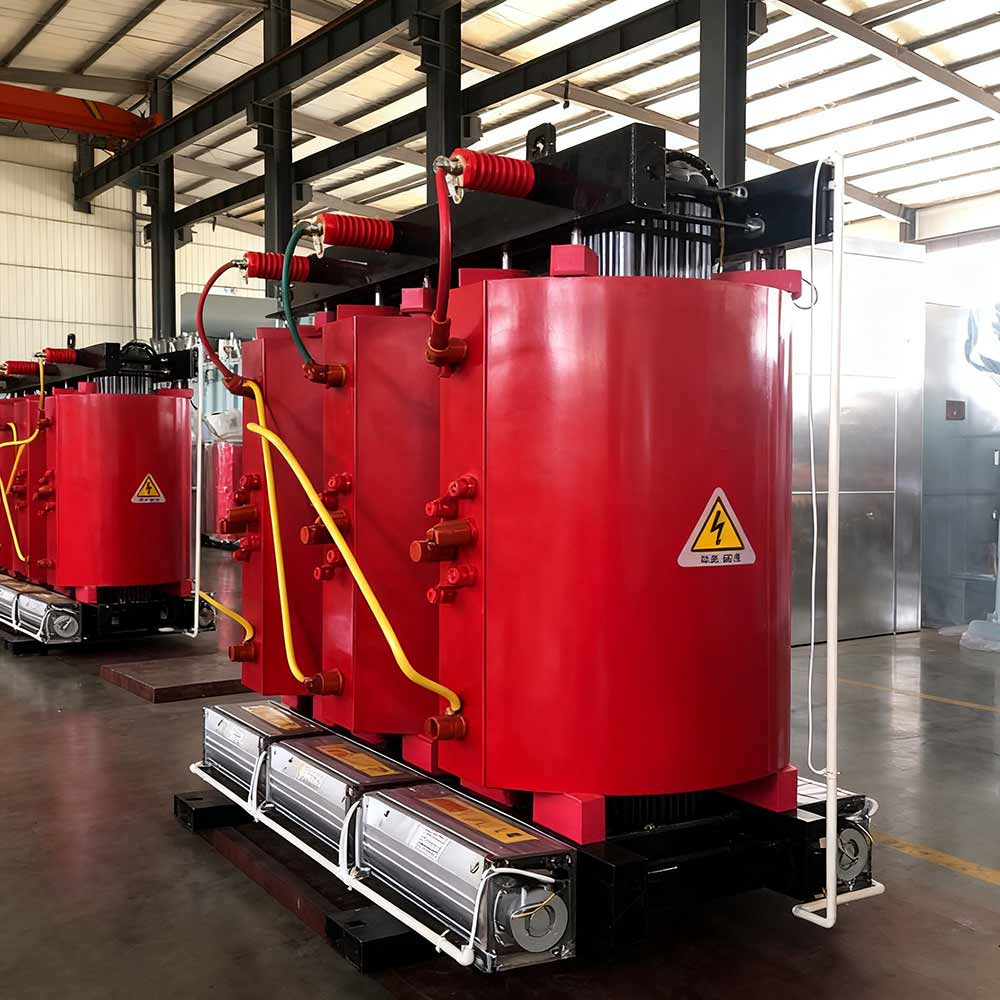
Modern dry-type cast resin transformers are typically equipped with advanced temperature control systems integrated with real-time monitoring, alarm, and protection functions. These systems utilize embedded temperature sensors to track the actual operating temperature of windings (often focusing on the hottest spots) with high precision. When the temperature approaches the insulation’s critical threshold, the system triggers multi-level responses: first issuing an audible and visual alarm to alert operators, then automatically activating forced air cooling fans to reduce temperature, and ultimately tripping the power supply if the temperature continues to rise uncontrollably—effectively avoiding insulation breakdown. For scenarios with strict reliability requirements (such as data centers or key industrial facilities), selecting a temperature control system with remote monitoring and data logging capabilities can further enhance operational visibility and predictive maintenance capabilities.
Protection Enclosure: Adapting to Environmental Conditions
The selection of a transformer’s outer protection enclosure should be strictly based on the characteristics of the installation environment and specific protection needs. For indoor installations in general industrial plants, commercial buildings, or residential complexes, the IP20 protection enclosure is the most commonly adopted option. This enclosure effectively prevents the intrusion of solid foreign objects with a diameter exceeding 12mm (such as tools or debris) and small animals like mice, snakes, cats, or sparrows—all of which could cause catastrophic failures such as short circuits or power outages. Additionally, it provides a secure barrier around live components, reducing the risk of accidental electric shock for maintenance personnel.
For outdoor or semi-outdoor installations (e.g., open-air substations, construction sites, or rural power distribution points), the IP23 protection enclosure is a more suitable choice. Building on the protection capabilities of IP20, IP23 enclosures offer additional defense against water droplets falling at an angle of up to 60° from the vertical—effectively shielding the transformer from rain, dew, or splashed water. However, it is crucial to note that the sealed structure of the IP23 enclosure slightly restricts air circulation, which may reduce the transformer’s natural cooling efficiency. When selecting this enclosure type, it is necessary to appropriately derate the transformer’s operating capacity (usually by 10-15% depending on the manufacturer’s specifications) to compensate for the reduced heat dissipation and ensure long-term stable operation.
Cooling Method: Balancing Capacity and Efficiency
Dry-type cast resin power transformers primarily adopt two cooling methods: natural air cooling (AN) and forced air cooling (AF), each tailored to different load characteristics and operational requirements.

Natural air cooling (AN) relies on natural convection of air to dissipate heat generated during transformer operation. This method is characterized by simple structure, low energy consumption, and minimal maintenance needs. Under AN mode, the transformer can operate continuously at its rated capacity for extended periods, making it ideal for scenarios with stable, long-term load demands (such as residential power supply or constant-load industrial equipment).
Forced air cooling (AF) enhances heat dissipation by installing axial flow fans around the transformer, which actively blow air over the winding and core surfaces to accelerate heat transfer. When switching to AF mode, the transformer’s output capacity can be increased by up to 50% compared to AN mode. This makes AF particularly suitable for intermittent overload operations (e.g., peak power demand periods in summer) or emergency overloads caused by equipment failures. However, it is important to recognize that overload operation significantly increases load loss and impedance voltage, placing the transformer in a non-economical operating state. Prolonged continuous overload should be strictly avoided, as it can accelerate insulation aging and shorten the transformer’s service life. When selecting the cooling method, users should comprehensively assess their load fluctuation patterns and reserve appropriate capacity margins to balance operational flexibility and energy efficiency.
Overload Capacity: Considering Multifaceted Influencing Factors
The overload capacity of dry-type cast resin power transformers is not a fixed value but is jointly determined by four key factors: ambient temperature, pre-overload load condition (initial load), transformer insulation thermal state, and heating time constant.
- Ambient Temperature: Higher ambient temperatures reduce the transformer’s heat dissipation potential, thereby limiting its overload capacity. For example, in high-temperature environments above 40°C, the allowable overload duration and magnitude will be significantly lower than in moderate-temperature conditions (20-30°C).
- Pre-Overload Load Condition: If the transformer has been operating at a high load (e.g., 90% of rated capacity) for an extended period before overload, its internal temperature will already be relatively high, leaving less room for further overload. Conversely, a transformer operating at a low initial load will have greater overload resilience.
- Insulation Thermal State: New transformers or those with well-maintained insulation systems have stronger overload capacity, while aged or damp insulation will be more susceptible to damage under overload conditions.
- Heating Time Constant: This parameter reflects the speed at which the transformer’s temperature rises under overload. Transformers with a larger heating time constant can withstand short-term heavy overloads better, as their temperature rises more slowly.
When evaluating overload capacity, users should refer to the manufacturer’s technical specifications (such as overload curves) and combine them with their actual operating conditions to avoid overestimating the transformer’s bearing capacity and causing potential safety risks.
By meticulously considering these four core aspects—temperature control systems, protection enclosures, cooling methods, and overload capacity—users can select dry-type cast resin power transformers that perfectly match their application scenarios, ensuring safe, efficient, and long-term stable operation of the power distribution system.