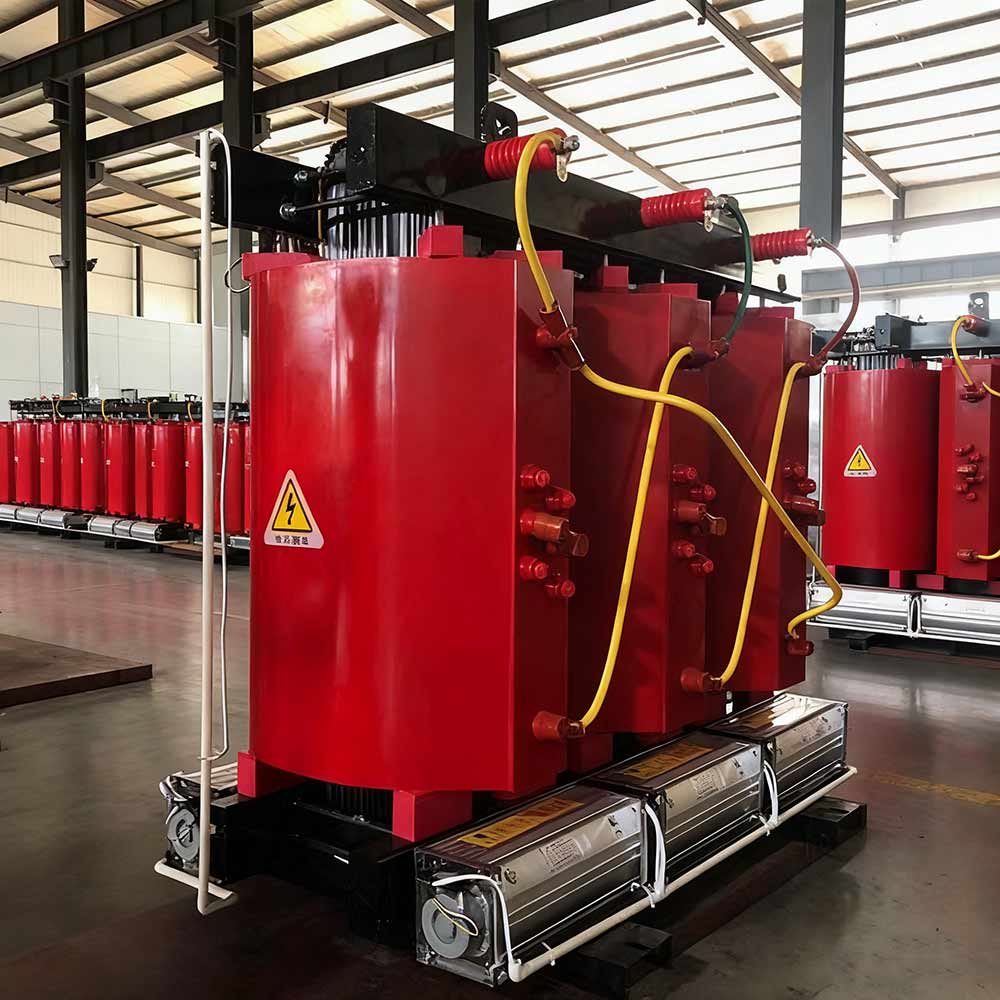
The SCB series is defined by its advanced epoxy resin insulation technology, a design that sets it apart from traditional transformers. Both high-voltage and low-voltage windings are precision-wound using high-purity copper tape or copper foil, then vacuum-cast with epoxy resin and cured to form a robust, glass-fiber-reinforced composite structure. This integrated manufacturing process eliminates air gaps within the insulation system, ensuring exceptional mechanical strength and electrical stability.
Available in insulation classes F (155°C) and H (180°C), the SCB series delivers outstanding performance metrics: superior electrical conductivity, robust resistance to lightning surges and short-circuit impacts, compact dimensions, and lightweight construction. These attributes make the series a preferred choice for modern power distribution systems where safety, efficiency, and space-saving are critical.
As a premium upgrade to the SCB10 and a direct replacement for oil-immersed distribution transformers, the SCB11 stands out as the high-performance leader among dry-type transformer options. Its superiority is rooted in advanced engineering, premium materials, and strict quality control, resulting in the following core benefits:
The high-voltage winding is crafted from oxygen-free copper wire (99.9% purity), while the low-voltage winding uses either copper wire or heavy-gauge copper foil—materials chosen for their excellent conductivity and thermal stability. Windings are wrapped in high-density glass fiber felt for additional insulation, then vacuum-cast with unfilled epoxy resin. This process creates a solid, cylindrical monolithic structure that exhibits minimal partial discharge (typically ≤10pC at rated voltage), exceptional mechanical rigidity, and long-term operational reliability.
All insulation components, including the glass fiber wrapping, feature self-extinguishing properties that prevent flame spread in the event of a fault. Unlike oil-immersed transformers, the SCB11 produces no arcs during short circuits and emits no toxic or harmful gases when exposed to high temperatures. This eco-friendly design eliminates environmental contamination risks, making it suitable for green building projects and sensitive ecosystems.
The epoxy resin casting forms a hermetic barrier that prevents moisture absorption by the windings, even in extreme humidity conditions (up to 100% relative humidity). Additionally, iron core clamps are treated with a specialized anti-corrosion coating to withstand harsh operating environments, including coastal areas or industrial sites with high atmospheric moisture. Intermittent operation requires no additional dehumidification measures, reducing maintenance demands.
The SCB11’s integrated winding structure and reinforced core design provide exceptional mechanical strength to withstand the electromagnetic forces generated during short circuits. Rigorous testing ensures compliance with IEC 60076 standards for short-circuit withstand capability. Meanwhile, the epoxy insulation system’s high dielectric strength (≥35kV/mm) delivers robust protection against lightning-induced overvoltages, minimizing downtime in outdoor or exposed installations.
Both the inner and outer resin layers of the windings are engineered to be ultra-thin, maximizing heat transfer to the surrounding air. The standard cooling method is natural air circulation (AN), which supports continuous operation at full rated capacity. For applications requiring enhanced overload performance—regardless of the transformer’s protection class (IP00, IP20, IP23)—an optional forced air cooling (AF) system can be installed. This system boosts short-term overload capacity by up to 50%, ensuring safe operation during peak load periods.
The SCB11’s core advantage lies in its optimized iron core, which uses high-grade cold-rolled grain-oriented silicon steel sheets with low hysteresis and eddy current losses. Compared to the SCB10, the SCB11 achieves a 15–20% reduction in no-load loss and a 10–15% reduction in load loss, translating to significant energy savings over the transformer’s lifespan. Its high efficiency (typically ≥98.5% for medium-capacity models) ensures economical operation and eliminates the need for regular loss-related maintenance.
With its integrated design and high power density, the SCB11 offers a smaller footprint and lighter weight than traditional transformers of equivalent capacity. This reduces installation space requirements and lowers transportation and lifting costs. Unlike oil-immersed transformers, it requires no oil containment pits, fire suppression systems, or backup power for cooling—further reducing upfront infrastructure investments.
The absence of fire or explosion risks allows the SCB11 to be installed directly in load centers, such as basement electrical rooms, high-rise building utility floors, or industrial production areas. This decentralized placement minimizes low-voltage cable lengths, reducing line losses and cutting costs associated with expensive low-voltage distribution equipment. The transformer can be positioned in close proximity to power-consuming equipment, ensuring stable voltage supply and improving overall system efficiency.
The SCB11 epoxy resin dry-type transformer is tailored for critical infrastructure and high-demand environments where reliability, safety, and efficiency are non-negotiable. Its key application areas include:
- Urban power grids and distribution networks
- High-rise buildings, commercial complexes, and shopping malls
- Theaters, hospitals, and hotels (where noise and safety are paramount)
- Tunnels, subways, and underground power stations
- Laboratories and precision manufacturing facilities
- Railway stations, seaports, and airports
- Combined substations and industrial parks
Equipped with an optional temperature display and control system, the SCB11 provides real-time monitoring of winding temperatures, triggering automatic fan activation, overload alarms, or power tripping to protect the transformer and extend its service life. This intelligent feature ensures peace of mind for operators and minimizes unplanned downtime.