
For transformer manufacturers and end-users alike, understanding the root causes of oil leaks, implementing accurate detection, and adopting effective repair methods is essential to minimizing operational downtime and economic losses. This comprehensive guide delves into the primary triggers of transformer oil leaks, step-by-step detection protocols, proven remediation solutions, and long-term preventive strategies, providing authoritative answers to the most pressing questions in the field.
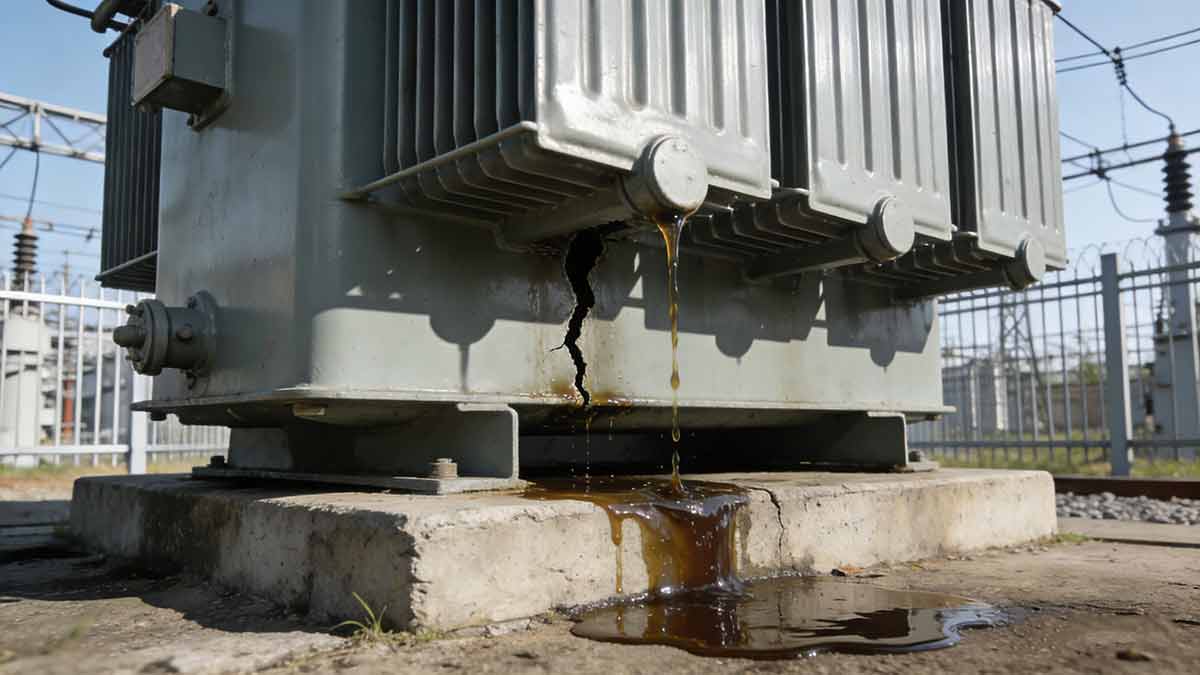
Common Root Causes of Transformer Oil Leak
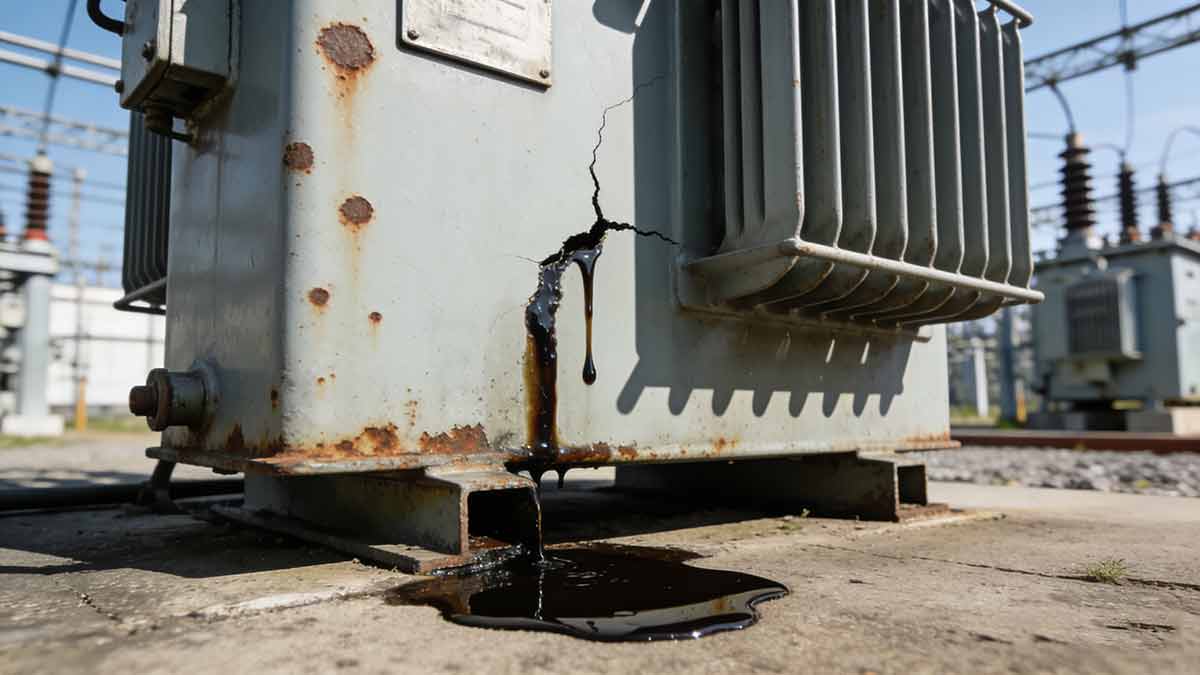
Transformer oil leak does not occur randomly; it is usually a result of accumulated defects or external stresses acting on the transformer’s structural components. Among all contributing factors, issues related to welding quality and electromagnetic vibration take center stage, accounting for over 70% of all on-site leak incidents according to industry maintenance data.
Weld Seam Defects: The Primary Culprit Behind Transformer Oil Leak
The transformer tank, typically fabricated from steel plates, relies heavily on welding to form a sealed, pressure-resistant structure. Any flaw in the welding process can create hidden channels for oil to seep out. What makes these defects particularly insidious is that they often remain concealed during the factory inspection phase, only manifesting after the transformer has been in operation for a period of time.
Substandard welding craftsmanship is the root of these defects, which include several common types that directly lead to oil leakage risks. The table below breaks down these weld seam defects, their formation mechanisms, and how they trigger oil leaks over time:
| Weld Seam Defect Type | Formation Mechanism | Leak Triggering Process |
|---|---|---|
| Incomplete fusion welding | Insufficient welding current or improper electrode angle leads to failure of the base metal and weld metal to fully melt and bond | During factory testing, the defect is covered by residual welding flux and protective paint layers; under operational conditions (temperature fluctuations, internal oil pressure changes), the unbonded gaps expand gradually, creating pathways for oil to seep out |
| Unbonded welds | Hasty welding operations or inconsistent welding speed cause an incomplete connection between adjacent weld sections | The discontinuous weld joints cannot withstand the long-term internal oil pressure of the transformer; minor gaps widen into visible cracks, resulting in direct oil leakage |
| Pinhole defects | Contamination of the welding surface (e.g., rust, grease) or gas entrapment during the molten metal solidification process | Tiny pinholes are too small to be detected by visual inspection; over time, transformer oil permeates through these micro-pores due to capillary action, forming slow, persistent leaks |
| Sand hole defects | The presence of impurities in the welding material or improper shielding gas flow during welding leads to the formation of irregular cavities in the weld seam | These cavities act as internal reservoirs for transformer oil; as the transformer operates, thermal expansion of the oil increases internal pressure, forcing oil to leak through the cavities to the external surface |
During the factory manufacturing stage, these defects are not easily identified because the residual welding flux and protective paint coat the weld seams, masking the surface irregularities. It is only when the transformer is put into operation that the hidden troubles begin to surface. Operational conditions such as cyclic temperature rises and falls (causing expansion and contraction of the tank and weld seams), fluctuations in internal oil pressure due to load changes, and mechanical stresses from transportation and installation all contribute to the expansion of these micro-defects, eventually leading to noticeable oil leaks.

Electromagnetic Vibration: A Hidden Accelerator of Transformer Oil Leak
While weld seam defects lay the foundation for oil leaks, electromagnetic vibration acts as a key external factor that exacerbates these issues. Transformers generate strong magnetic fields during operation, which induce electromagnetic forces between the core and coil components. These forces cause continuous, low-amplitude vibrations that are transmitted to the entire transformer structure, including the tank and its weld seams.
Over an extended period, this persistent vibration leads to fatigue damage in the weld seams. Even welds that meet basic quality standards can develop micro-cracks under the effect of cyclic mechanical stress. For weld seams that already have inherent defects (such as incomplete fusion or pinholes), the vibration accelerates the expansion of these flaws, turning latent risks into actual oil leak incidents. The vibration-induced cracks usually start at the edge of the weld seam, where stress concentration is most pronounced, and gradually extend inward, eventually compromising the integrity of the tank’s seal.
Reliable Detection Methods for Locating Transformer Oil Leak Points
The first step in resolving a transformer oil leak is to accurately locate all leak points—missing even one minor leak can lead to recurring issues after repair. Effective leak detection requires a combination of targeted techniques and systematic inspection protocols, tailored to the severity of the leak and the transformer’s operational status.
Comprehensive Transformer Oil Leak Detection Techniques
Different leak detection methods have their own advantages and limitations, and selecting the right approach depends on factors such as leak rate, transformer accessibility, and on-site conditions. The following table compares the most widely used detection techniques in the industry, providing clear guidance for maintenance teams:
| Detection Technique | Operational Principle | Advantages | Limitations |
|---|---|---|---|
| Visual inspection | Direct observation of the transformer tank surface for oil stains, wet marks, or dripping oil | Simple, low-cost, no special equipment required; suitable for detecting obvious leaks | Cannot identify hidden or micro-leaks; easily affected by external contamination (e.g., dust, rainwater) on the tank surface |
| Pressure testing | Sealing the transformer tank and filling it with compressed air or inert gas to increase internal pressure, then applying soapy water to the weld seams to check for bubble formation | High accuracy for locating both visible and hidden leaks; can detect pinhole-level micro-leaks | Requires the transformer to be shut down and drained of oil; may not be suitable for transformers in critical operational positions |
| Ultrasonic leak detection | Using an ultrasonic detector to capture the high-frequency sound waves generated by oil flowing through leak points | Non-destructive, does not require oil draining; can detect leaks from a distance without direct contact | Susceptible to interference from on-site noise (e.g., nearby machinery, wind); requires trained operators to interpret data |
| Fluorescent dye detection | Adding a special fluorescent dye to the transformer oil, allowing it to circulate for a period of time, then using a UV lamp to illuminate the tank surface, leak points will glow brightly under UV light | Highly sensitive, can pinpoint the exact location of micro-leaks; suitable for complex transformer structures with hard-to-reach areas | The dye may require a long circulation time to reach leak points; UV lamps have limited effective range; dye compatibility with transformer oil must be verified in advance |
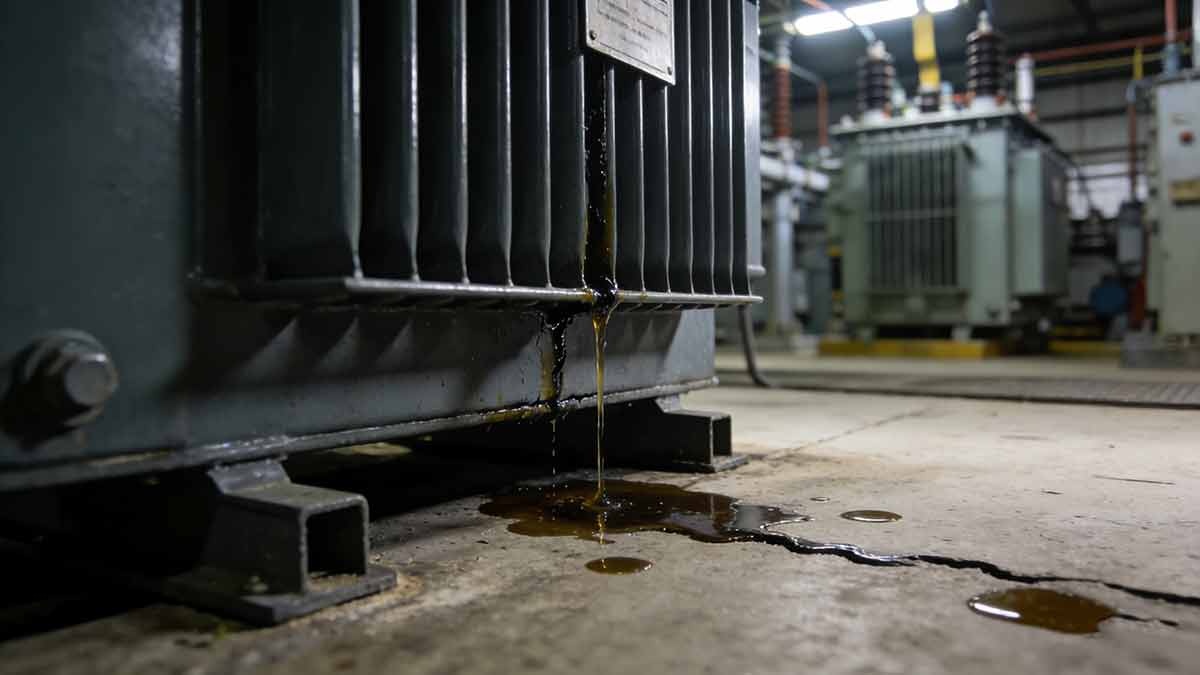
Key Tips to Ensure No Transformer Oil Leak Points Are Missed
To achieve comprehensive leak detection, maintenance teams should follow a systematic inspection process rather than relying on a single technique. First, conduct a preliminary visual inspection to mark areas with obvious oil stains, as these are high-probability leak points. Next, for transformers that can be shut down, perform a pressure test combined with a soapy water application to verify the initial marks and identify additional hidden leaks. For transformers that cannot be taken offline, use ultrasonic detectors or fluorescent dye detection to supplement the visual inspection.
Special attention should be paid to high-risk areas where leaks are most likely to occur, including the weld seams between the tank body and cover, the joints between the tank and flange connections, the welds around the oil level gauge and drain valve interfaces, and the areas near the transformer’s core and coil mounting points (where vibration stress is concentrated). During the inspection process, it is crucial to clean the tank surface thoroughly to remove dust, grease, and old paint layers, as these can cover up leak traces and interfere with detection accuracy.
Proven Solutions to Resolve Transformer Oil Leak Issues
Once all leak points have been accurately located, the next step is to implement targeted repair measures. The choice of repair method depends on the severity of the leak, the location of the leak point, and whether the transformer can be shut down for maintenance. For severe, urgent leaks, emergency riveting can be used to control the oil flow temporarily, while long-term, permanent repairs rely on polymer composite materials to achieve a durable seal.
Emergency Riveting for Severe Transformer Oil Leak Situations
When a transformer experiences a severe oil leak (e.g., rapid oil dripping or spraying), immediate action is required to reduce oil loss and prevent safety hazards. Riveting is a fast, effective emergency treatment method that can be performed without draining the entire transformer oil tank.
The specific operational steps are as follows:
- Tool preparation: Gather metal tools such as flat shovels and pointed punches, ensuring the tools are clean and free of rust to avoid contaminating the transformer oil.
- Leak point stabilization: Position the flat shovel at a 45-degree angle to the edge of the leak point, then use a hammer to gently tap the shovel, deforming the surrounding metal surface slightly to narrow the leak gap and reduce oil flow rate.
- Precision riveting: For small, concentrated leak points, use a pointed punch to tap the center of the leak area lightly. The impact force will cause the metal to deform and seal the micro-cracks or pinholes. It is important to control the tapping force to avoid creating new cracks in the tank surface.
- Initial cleaning: After the oil leak rate is significantly reduced, use a clean, lint-free cloth to wipe the surface of the treated area, removing residual oil and metal debris to prepare for subsequent permanent repair.
It is important to note that riveting is a temporary solution, not a permanent fix. It is designed to control the leak in emergency situations, buying time for the maintenance team to arrange a comprehensive repair using more durable materials.
Long-Term Leak Sealing with Polymer Composite Materials
For a permanent resolution of transformer oil leaks, polymer composite materials are the preferred choice in the industry. These materials offer excellent adhesion to steel surfaces, high resistance to transformer oil corrosion, and good tolerance to the temperature fluctuations experienced by operational transformers. Unlike traditional repair methods such as re-welding (which requires draining oil and poses fire risks), polymer composite repairs can be performed on-site with minimal downtime.
The following table outlines the step-by-step application process for polymer composite materials, along with key technical considerations to ensure repair effectiveness:
| Application Step | Specific Operations | Technical Considerations |
|---|---|---|
| Surface preparation | Use a wire brush or sandpaper to polish the treated area (including the leak point and a 5–10 cm surrounding area) to remove rust, paint, oil stains, and metal oxide layers; wipe the polished surface with a degreasing agent (e.g., acetone) to ensure full cleanliness | The surface must be dry and free of contaminants—any residual oil or grease will significantly reduce the material’s adhesion; the polishing should create a rough surface texture to enhance bonding strength |
| Material mixing | Follow the manufacturer’s ratio to mix the base polymer and curing agent thoroughly; stir the mixture in a single direction for 2–3 minutes to avoid air entrapment | The mixing ratio must be precise—deviations can lead to incomplete curing or reduced material performance; the mixed material should be used within its pot life (usually 15–30 minutes at room temperature) |
| Material application | Apply a thin layer of the mixed composite material to the leak point using a spatula; press the material firmly to ensure it fully penetrates into micro-cracks or pinholes; build up additional layers of material to a thickness of 2–3 mm, extending the coverage beyond the polished area | For active leak points (with slow oil seepage), apply the material while applying slight pressure to push the material into the leak channels; avoid leaving air bubbles between layers |
| Curing process | Allow the applied material to cure naturally at room temperature; for transformers that need to be put back into operation quickly, use a low-temperature heat source (e.g., a hot air gun) to accelerate curing | The curing time depends on ambient temperature—higher temperatures shorten curing time, while temperatures below 10°C require extended curing periods; do not expose the curing material to water or mechanical impact |
| Post-curing verification | After the material is fully cured, wipe the repair area clean and conduct a visual inspection; for critical transformers, perform a pressure test to confirm no oil seepage | The cured material should form a smooth, uniform layer without cracks or peeling; the pressure test should be conducted at 1.2 times the normal operating pressure of the transformer tank |
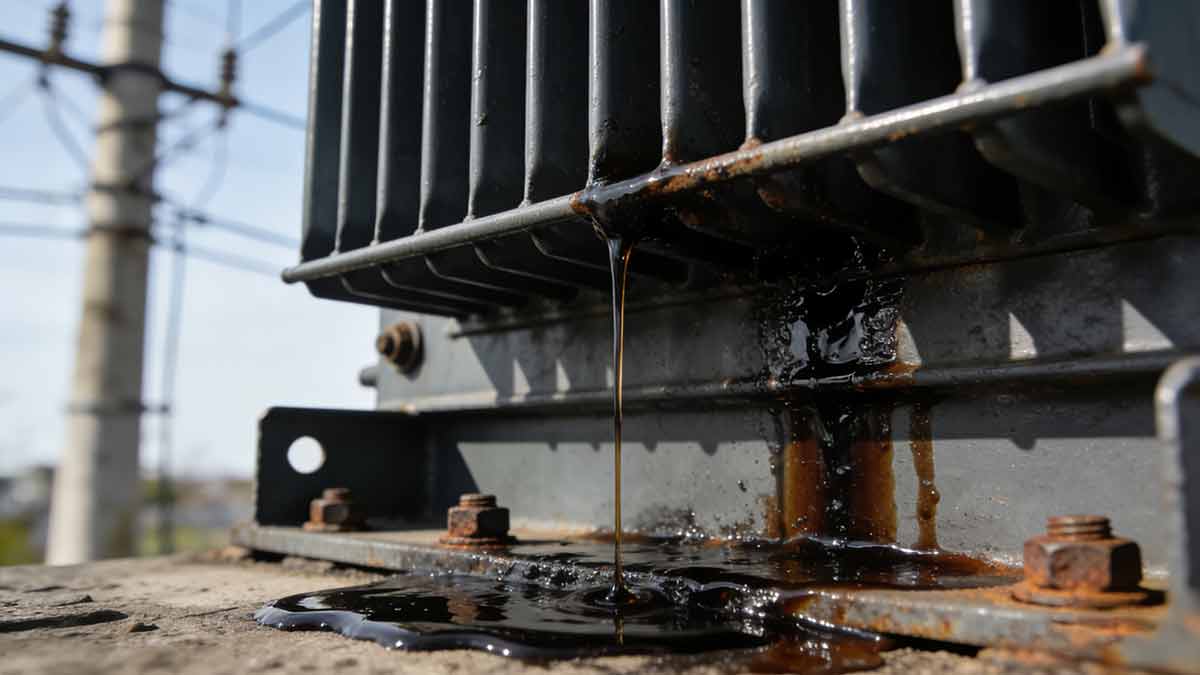
Post-Repair Verification to Confirm Leak Elimination
A successful repair is not complete without thorough verification. After the polymer composite material has fully cured, maintenance teams should conduct a series of checks to ensure the leak has been completely eliminated. First, perform a visual inspection of the repair area to check for any signs of oil seepage. Next, for transformers that were shut down for repair, refill the oil tank and conduct a pressure test to verify the seal integrity. For transformers that remained in operation during repair, monitor the repair area for 24–48 hours, checking for any oil stains or wet marks at regular intervals. All verification data should be recorded in the transformer maintenance log for future reference.
Preventive Measures to Avoid Future Transformer Oil Leak Incidents
While effective repair can resolve existing oil leak issues, the most cost-effective strategy for transformer operators is to prevent leaks from occurring in the first place. By implementing strict quality control during the manufacturing process and establishing a regular maintenance routine for operational transformers, the risk of oil leaks can be reduced by more than 80%.
Strict Welding Quality Control During Transformer Manufacturing
The foundation of leak prevention lies in eliminating weld seam defects at the source. Transformer manufacturers should implement a comprehensive welding quality management system, covering every stage from pre-welding preparation to post-welding inspection.
Key quality control measures include:
- Welder qualification verification: Ensure all welders hold valid professional certifications and have extensive experience in welding transformer tank structures; conduct regular skill assessments to maintain welding standards.
- Pre-welding surface treatment: Require thorough cleaning of the steel plate surfaces to be welded, removing all rust, grease, and contaminants that can cause weld defects; verify the surface cleanliness before welding operations begin.
- Standardized welding processes: Establish detailed welding operation procedures, specifying parameters such as welding current, voltage, electrode type, and welding speed; use automated welding equipment where possible to ensure consistency in weld quality.
- Comprehensive post-welding inspection: Adopt non-destructive testing (NDT) methods such as ultrasonic testing (UT) and radiographic testing (RT) to inspect all weld seams; reject any welds that fail to meet the relevant industry standards (e.g., IEC 60076 series standards for power transformers).
Optimized Coating and Flux Application Practices
The application of welding flux and protective paint is not just a cosmetic step—it also plays a role in protecting the weld seams from corrosion. However, improper application can mask hidden defects. To balance protection and defect detection, manufacturers should:
- Use high-quality welding flux that is easy to clean after welding; avoid excessive flux application that can cover up weld surface irregularities.
- Apply protective paint only after the weld seams have passed NDT inspection; ensure the paint layer is of uniform thickness and fully covers the weld seams without creating bubbles or cracks.
- Conduct a final visual inspection after paint application to check for any signs of oil seepage (e.g., paint discoloration or blistering) that may indicate hidden weld defects.
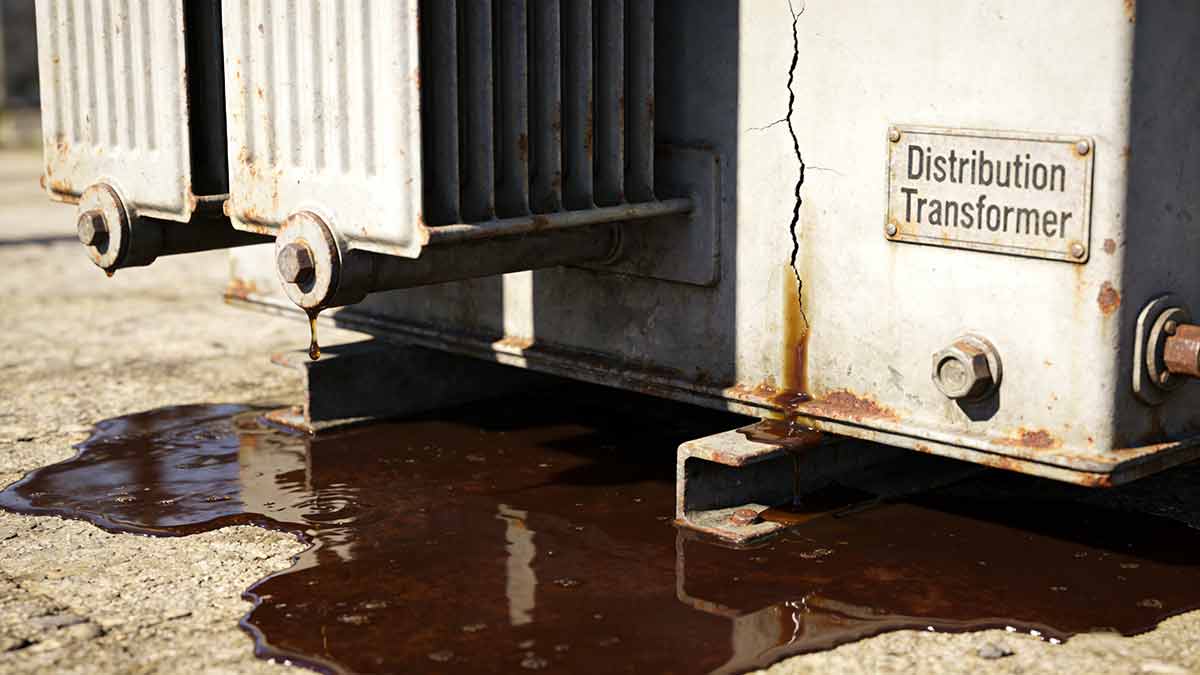
Regular Maintenance and Monitoring for Operational Transformers
For transformers that have been put into service, regular maintenance and monitoring are essential to detecting potential leak risks before they escalate into actual incidents. A well-designed maintenance plan should include the following key tasks:
- Vibration monitoring: Install vibration sensors on the transformer tank to monitor the amplitude and frequency of electromagnetic vibrations; conduct timely inspections if abnormal vibration levels are detected, as this may indicate potential weld seam fatigue.
- Oil analysis: Perform regular oil sampling and analysis to check for changes in oil viscosity, moisture content, and dielectric strength; a sudden drop in oil level or increase in moisture content may indicate an undetected leak.
- Weld seam inspection: Conduct periodic visual inspections of the transformer tank and weld seams; clean the tank surface regularly to remove dust and corrosion, making it easier to detect early signs of oil seepage.
- Preventive repair: For weld seams that show signs of minor corrosion or micro-cracks, apply polymer composite materials proactively to reinforce the seal before a leak occurs.
FAQs About Transformer Oil Leak
To address the most common questions raised by transformer operators and maintenance teams, we have compiled a list of frequently asked questions and provided authoritative answers based on industry best practices.
Q1: How long can a transformer oil leak repair with polymer composite materials last?
A: When applied correctly, polymer composite material repairs can last for 5–10 years, depending on the operating conditions of the transformer. Factors that affect the longevity of the repair include the quality of surface preparation, the ambient temperature during curing, and the severity of electromagnetic vibration. Regular maintenance inspections can extend the service life of the repair by identifying and addressing potential issues early.
Q2: Can a transformer oil leak be repaired without shutting down the transformer?
A: Yes, minor to moderate oil leaks can be repaired using polymer composite materials while the transformer is in operation. This is known as “hot repair” and is ideal for transformers that are critical to the power supply system and cannot be taken offline. However, severe leaks that involve large cracks or rapid oil loss require the transformer to be shut down and drained of oil for safe, effective repair.
Q3: What are the potential risks of ignoring a small transformer oil leak?
A: Ignoring a small oil leak can lead to a range of serious consequences. Over time, the leak will worsen, resulting in significant oil loss that reduces the transformer’s insulation and heat dissipation capabilities. This can cause the transformer to overheat, leading to coil burnout and equipment failure. Additionally, leaked transformer oil is flammable, posing a fire risk, and can contaminate the surrounding soil and water, resulting in environmental violations and legal liabilities.
Q4: Are there any differences in repair methods between power transformers and distribution transformers?
A: The fundamental repair principles (leak detection, emergency riveting, polymer composite material sealing) are the same for both power and distribution transformers. However, distribution transformers are typically smaller in size and easier to access, making on-site repairs more straightforward. Power transformers, on the other hand, are larger and operate at higher voltages, requiring more stringent safety protocols during repair operations, such as grounding and voltage testing.
Conclusion
Transformer oil leak is a pervasive issue that poses significant risks to transformer operational safety, reliability, and environmental compliance. As this guide has outlined, the primary causes of oil leaks are rooted in substandard welding craftsmanship—including defects such as incomplete fusion welding, unbonded welds, pinholes, and sand holes—that are masked during factory inspections but exposed under operational stresses, compounded by electromagnetic vibration that accelerates weld seam fatigue.
Resolving oil leaks effectively requires a systematic approach: accurate leak detection using a combination of visual inspection, pressure testing, ultrasonic detection, or fluorescent dye methods; emergency riveting to control severe leaks temporarily; and permanent repair using polymer composite materials that offer excellent adhesion and corrosion resistance. Most importantly, preventing oil leaks from occurring in the first place requires strict welding quality control during manufacturing, optimized coating practices, and regular maintenance for operational transformers.
By understanding the root causes of transformer oil leaks, adopting proven detection and repair strategies, and implementing proactive preventive measures, transformer manufacturers and operators can minimize downtime, reduce maintenance costs, and ensure the long-term, safe operation of their transformer assets. Whether you are a maintenance technician troubleshooting an on-site leak or a manufacturer looking to improve product quality, the insights provided in this guide serve as a comprehensive, authoritative resource to address all aspects of transformer oil leak management.