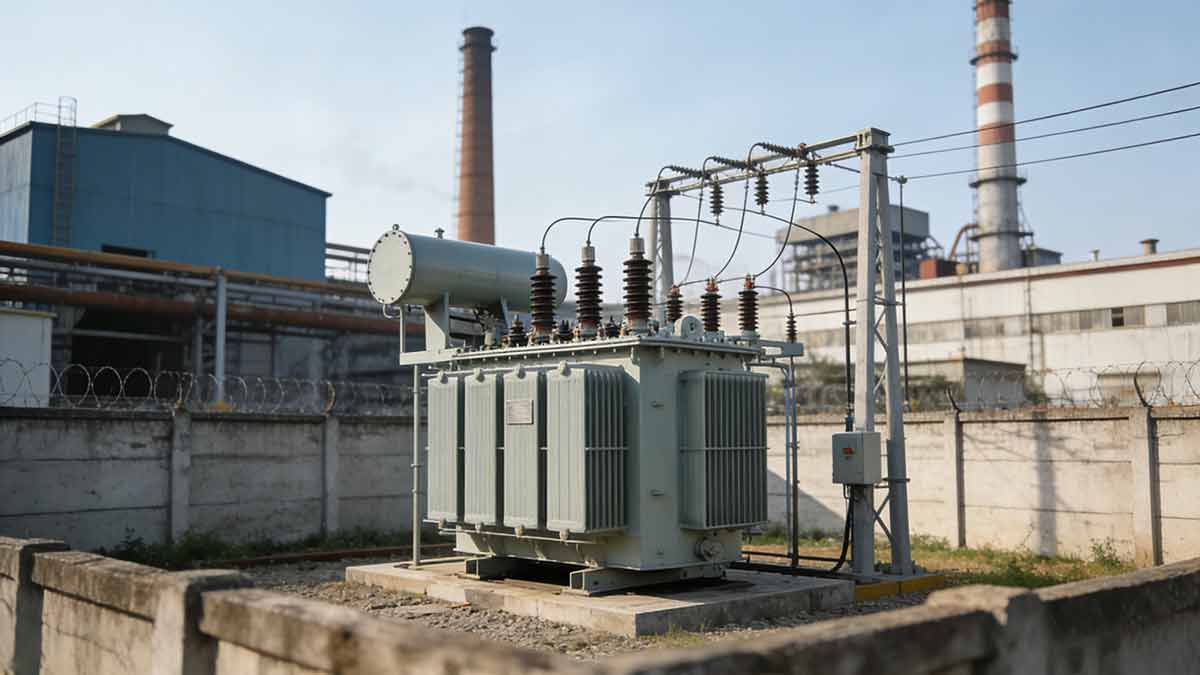
Understanding Transformer Losses and Efficiency: Core Fundamentals
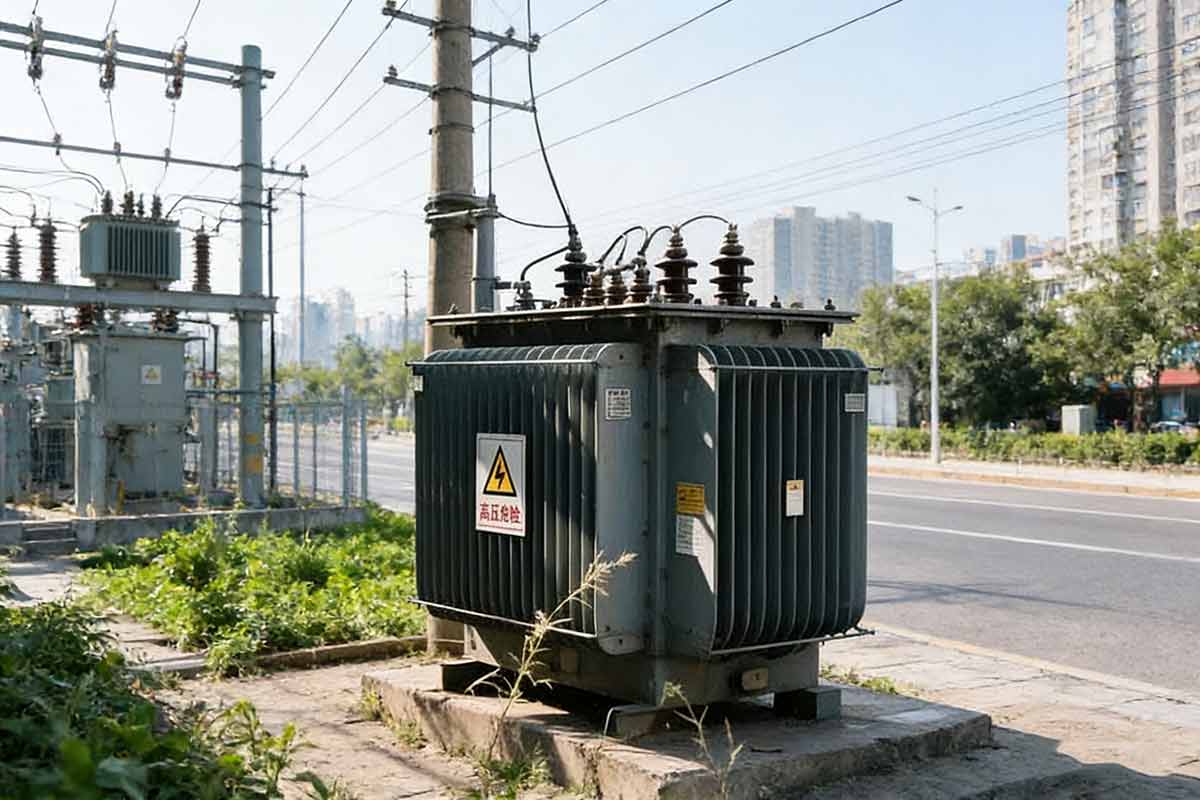
Classification and Detailed Analysis of Transformer Losses
Core Losses (Iron Losses) in Transformers
Hysteresis Loss
- When alternating current flows through the primary winding, it creates an alternating magnetic field that cycles through the core material.
- The magnetic domains within the core material realign with each cycle of the magnetic field, and energy is expended to overcome the internal friction of these domain movements.
- This energy expenditure is dissipated as heat, constituting hysteresis loss.
- The magnitude of hysteresis loss is determined by the magnetic properties of the core material, the frequency of the alternating current, and the maximum magnetic flux density within the core.
- High-quality magnetic alloys with low hysteresis coefficients are routinely employed in modern transformer design to reduce this loss component.
Eddy Current Loss
- The alternating magnetic flux in the core induces closed-loop electric currents within the core’s metallic structure, known as eddy currents.
- These currents flow against the electrical resistance of the core material, resulting in Joule heating and energy dissipation.
- Eddy current loss is proportional to the square of the supply frequency and the square of the maximum magnetic flux density.
- Transformer manufacturers mitigate eddy current loss by constructing cores from thin, insulated laminations of silicon steel, which disrupt the flow of eddy currents and significantly reduce associated energy loss.
Key Characteristics of Core Losses
- Core losses are classified as constant losses, meaning their magnitude remains nearly unchanged under varying load conditions.
- These losses are present as long as the transformer is energized, even when operating at no-load conditions with zero secondary current.
- Core losses are primarily dependent on supply frequency, magnetic flux density, and core material properties, rather than load current levels.
- Continuous core loss generation contributes to baseline heating within the transformer core, requiring consistent thermal management.
Copper Losses (Winding Losses) in Transformers
Formation Mechanism of Copper Losses
- Transformer windings are fabricated from conductive materials (typically high-purity copper or aluminum) with inherent electrical resistance.
- When load current passes through these windings, electrical energy is converted into thermal energy due to the resistive properties of the conductor material, following Joule’s Law of heating.
- This thermal energy dissipation constitutes copper loss, which directly reduces the amount of usable electrical energy transferred between the primary and secondary sides of the transformer.
- Copper losses are concentrated in the winding assemblies, making them a primary source of heat in transformer winding components.
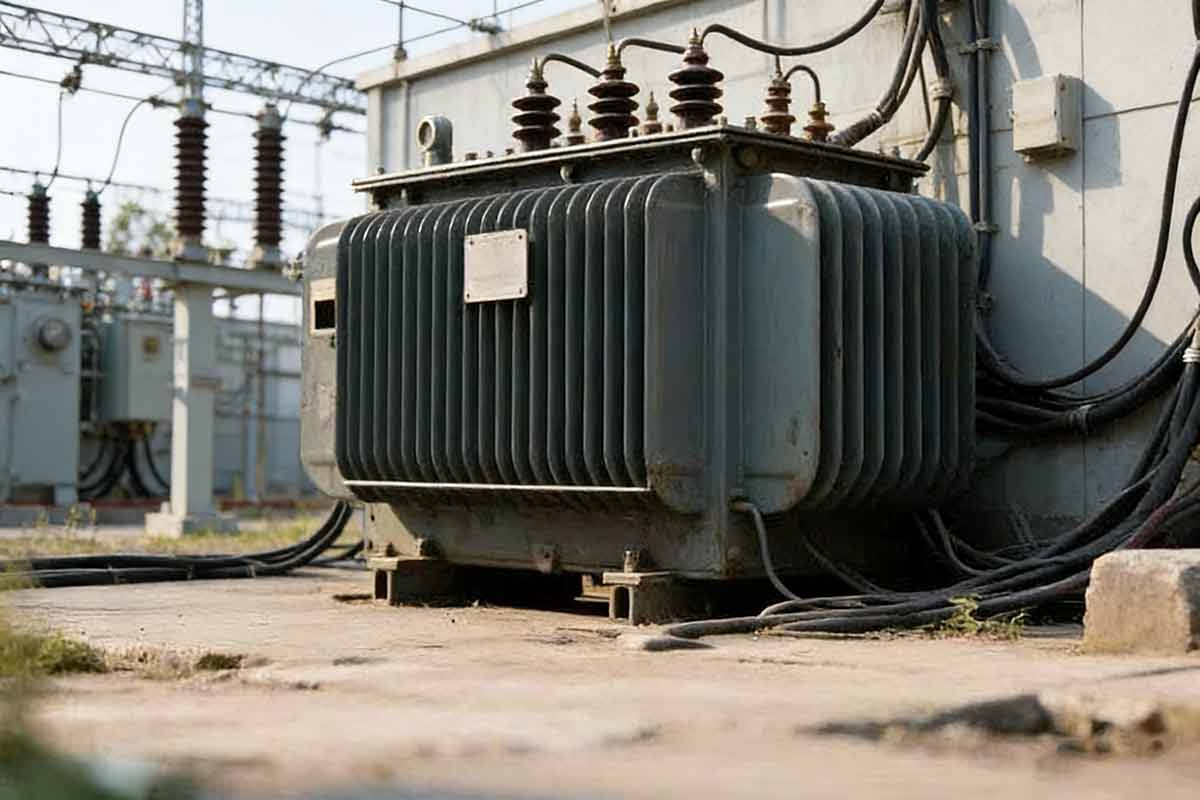
Dependent Factors of Copper Losses
- Copper loss magnitude is directly proportional to the square of the load current flowing through the windings.
- The resistance of the winding material, which is affected by conductor cross-sectional area, length, material purity, and operating temperature, impacts copper loss levels.
- As load current increases with rising power demand, copper losses escalate exponentially, leading to increased heat generation in the windings.
- Under no-load conditions, copper losses approach zero, as minimal excitation current flows through the windings.
Mathematical Representation of Copper Losses
The quantitative relationship for copper losses in transformers follows established electrical principles, providing a clear framework for loss calculation:
Where:
- = Total copper loss in watts
- = RMS current flowing through the winding in amperes
- = Total resistance of the winding in ohms
For transformers operating at partial load, copper loss can be expressed using the load coefficient, demonstrating its variable nature:
Where:
- = Transformer load coefficient (ratio of actual load to rated load)
- = Copper loss at full rated load
Additional Transformer Loss Components
Stray Load Losses
- Leakage magnetic fluxes interact with metallic structural components, including tank walls, clamping structures, and bushing supports.
- These fluxes induce eddy currents in adjacent conductive materials, leading to additional thermal energy loss.
- Stray load losses increase with rising load current and are more pronounced in large power transformers with high magnetic flux leakage.
Dielectric Losses
- Electrical stress applied to insulating materials during operation causes molecular polarization and energy dissipation.
- Dielectric losses are constant under rated voltage conditions and are influenced by the type, quality, and thermal state of the insulation material.
- High-grade insulating materials with low dielectric loss tangents are utilized to minimize this loss component in premium transformers.
Comparative Overview of Transformer Loss Types
| Loss Category | Alternative Name | Loss Nature | Primary Influencing Factors | Load Dependency | Key Heat Generation Area |
|---|---|---|---|---|---|
| Core Loss | Iron Loss | Constant Loss | Supply frequency, magnetic flux density, and core material properties | Independent of load current | Transformer magnetic core |
| Copper Loss | Winding Loss | Variable Loss | Load current magnitude, winding resistance, and operating temperature | Directly proportional to square of load current | Transformer primary and secondary windings |
| Stray Load Loss | Leakage Flux Loss | Variable Loss | Load current, leakage flux magnitude, and structural material conductivity | Increases with rising load current | Transformer structural metal components |
| Dielectric Loss | Insulation Loss | Constant Loss | Applied voltage, insulation material properties, and operating temperature | Independent of load current | Transformer insulation systems |
Transformer Efficiency: Definition, Calculation, and Performance Metrics
Definition of Transformer Efficiency
- Efficiency is a dimensionless value, typically expressed as a percentage.
- High-efficiency transformers minimize energy waste, reduce operational costs, and lower thermal stress on internal components.
- Transformer efficiency values generally range from 95% to 99.7% for modern commercial and power transformers, with larger units often achieving higher efficiency ratings.
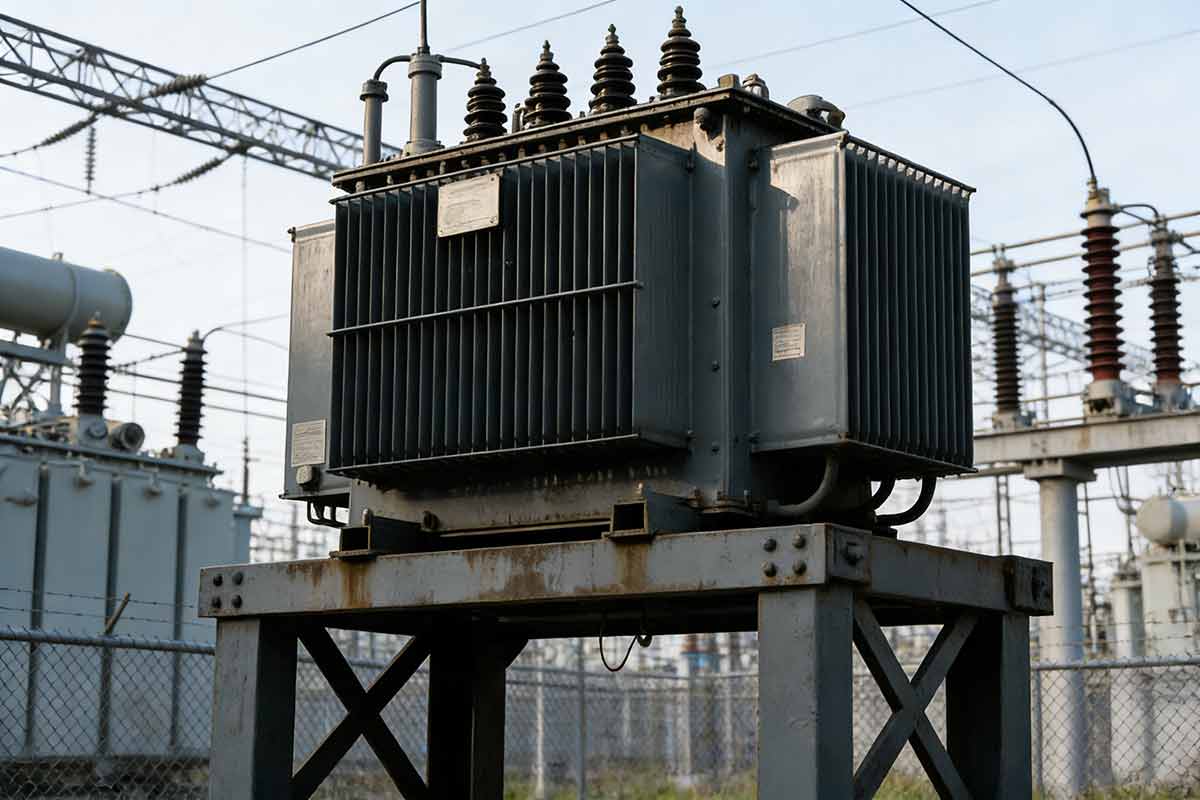
Mathematical Formulation of Transformer Efficiency
The calculation of transformer efficiency incorporates total losses, providing an accurate representation of operational performance. The fundamental efficiency formula is as follows:
Where:
- = Transformer efficiency percentage
- = Output power delivered to the load (in watts)
- = Input power supplied to the primary winding (in watts)
Since input power equals the sum of output power and total losses, the formula can be rewritten to include loss components:
For standard efficiency calculations, stray and dielectric losses are often combined with core and copper losses for simplified analysis, resulting in:
Maximum Efficiency Condition in Transformers
- Transformer efficiency varies significantly with changes in load factor, as the proportion of constant and variable losses shifts with load current.
- At low load levels, constant core losses dominate total losses, resulting in relatively low efficiency values.
- As load increases, the proportion of core losses decreases, while variable copper losses rise gradually, leading to an increase in efficiency.
- Beyond a certain load threshold, the exponential growth of copper losses surpasses the benefits of reduced core loss proportion, causing efficiency to decline.
- The maximum efficiency point occurs when the total constant core losses are equal to the total variable copper losses of the transformer.
- Operating transformers at or near this maximum efficiency point optimizes energy usage and minimizes long-term operational expenses.
Efficiency Variation Under Different Load Conditions
Low Load Operation
- Core losses constitute the majority of total losses, as copper losses remain minimal.
- Efficiency values are comparatively low due to the high ratio of constant losses to output power.
- Prolonged low-load operation results in poor energy utilization and increased cost per unit of energy transferred.
Optimal Load Operation
- Core losses and copper losses are balanced, achieving the maximum efficiency point.
- Total energy loss is minimized, providing the most cost-effective operational state.
- This load range is the target operating zone for continuous transformer operation in most applications.
High Load Operation
- Copper losses increase exponentially, becoming the dominant loss component.
- Efficiency declines steadily as load exceeds the optimal point, with accelerated heat generation in windings.
- Excessive high-load operation can lead to thermal overload, insulation degradation, and reduced transformer service life.
Factors Influencing Transformer Losses and Efficiency
Design and Construction Factors
- Core Material Selection: High-permeability, low-loss silicon steel alloys, amorphous metal cores, and nanocrystalline materials reduce hysteresis and eddy current losses.
- Winding Design: Conductor material choice (copper vs. aluminum), cross-sectional area, and winding configuration affect winding resistance and copper loss levels.
- Core Lamination: The thickness and insulation quality of core laminations directly impact eddy current loss mitigation.
- Leakage Flux Control: Advanced winding arrangements and magnetic shielding minimize stray load losses caused by leakage magnetic fields.
- Insulation System: High-performance dielectric materials reduce dielectric losses and improve thermal stability.
Operational Parameters
- Load Factor: The ratio of actual load to rated load is the primary operational factor affecting efficiency, as it governs copper loss magnitude.
- Supply Voltage and Frequency: Deviations from rated voltage and frequency alter magnetic flux density, increasing core losses and reducing efficiency.
- Operating Temperature: Elevated temperatures increase winding resistance, raising copper losses, and can degrade insulation properties over time.
- Voltage Regulation: Poor voltage regulation indicates higher internal losses and reduced overall efficiency performance.
Environmental and Installation Factors
- Ambient Temperature: Higher ambient temperatures reduce heat dissipation efficiency, leading to elevated operating temperatures and increased losses.
- Cooling System Performance: The effectiveness of cooling methods (ONAN, ONAF, OFAF) directly impacts operating temperature and loss of stability.
- Installation Location: Proper ventilation, clearance from heat sources, and protection from environmental contaminants preserve optimal operational conditions.
- Altitude: Higher altitudes reduce air density, diminishing cooling efficiency and potentially increasing operating losses.
Strategies to Improve Transformer Efficiency and Reduce Losses
Select High-Efficiency Transformer Models
- Specify transformers designed and certified to meet international high-efficiency standards (such as DOE, IEC 60076, and CENELEC regulations).
- Choose units with advanced core materials, including amorphous metal cores, which deliver substantial reductions in core losses compared to conventional silicon steel.
- Select transformers with optimized winding designs using high-purity conductors to minimize copper losses under rated load conditions.
- Evaluate efficiency curves during equipment selection to ensure the transformer’s maximum efficiency point aligns with typical operational load profiles.
Optimize Transformer Loading Conditions
- Avoid continuous low-load operation, as this condition results in disproportionately high core loss relative to output power.
- Match transformer rating to actual load requirements to maintain operation within the optimal efficiency range.
- Implement load management systems to distribute loads across multiple transformers, preventing individual units from operating at excessively low or high loads.
- For variable load applications, utilize smart monitoring systems to adjust operational parameters and maintain near-optimal efficiency.
Maintain Optimal Operating Conditions
- Regularly monitor and control transformer operating temperature to prevent excessive winding resistance and increased copper losses.
- Ensure cooling systems function at peak performance, conducting routine maintenance on fans, pumps, and heat dissipation components.
- Stabilize input voltage and frequency to maintain rated magnetic flux density and minimize core loss fluctuations.
- Protect transformers from environmental stressors, including moisture, dust, and chemical contaminants, to preserve insulation and core integrity.
Implement Regular Maintenance and Monitoring
- Conduct periodic insulation resistance testing to identify degradation that could lead to increased losses or equipment failure.
- Perform dissolved gas analysis (DGA) on oil-filled transformers to detect internal faults that may cause abnormal loss generation.
- Monitor load profiles continuously using smart metering and SCADA systems to track efficiency performance and identify operational inefficiencies.
- Schedule core and winding inspections to detect physical damage, corrosion, or degradation that impacts loss characteristics.
System-Level Efficiency Optimization
- Deploy transformer paralleling strategies for large-scale applications to maintain collective operation within optimal efficiency ranges.
- Implement energy management systems that integrate transformer efficiency data with overall facility power usage analytics.
- Upgrade outdated transformer units to modern high-efficiency models, leveraging long-term energy savings to offset capital investment.
- Train operational personnel on transformer losses and efficiency principles to ensure informed decision-making regarding equipment operation and maintenance.
The Importance of Transformer Losses and Efficiency in Modern Energy Systems
- Reduced transformer losses directly contribute to lower greenhouse gas emissions, supporting global climate action initiatives.
- High-efficiency transformers decrease strain on power generation facilities, reducing the need for excess capacity and associated resource consumption.
- For industrial and commercial operators, improved efficiency translates to substantial cost savings on electricity bills over the transformer’s service life.
- Efficient transformer operation minimizes thermal output, reducing cooling requirements and enhancing overall system reliability.
- Regulatory bodies worldwide are implementing stricter efficiency standards, driving the adoption of low-loss transformer technologies across all sectors.
- As renewable energy integration expands, high-efficiency transformers play a vital role in maximizing energy transfer from solar, wind, and other renewable sources to end users.