
Understanding the power transformer classifications by voltage, cooling & phase is essential for utilities, businesses, and electrical professionals to choose the right equipment for their specific needs. Power transformers are critical for safe and efficient power delivery, and their classifications directly impact performance, compatibility, and cost.
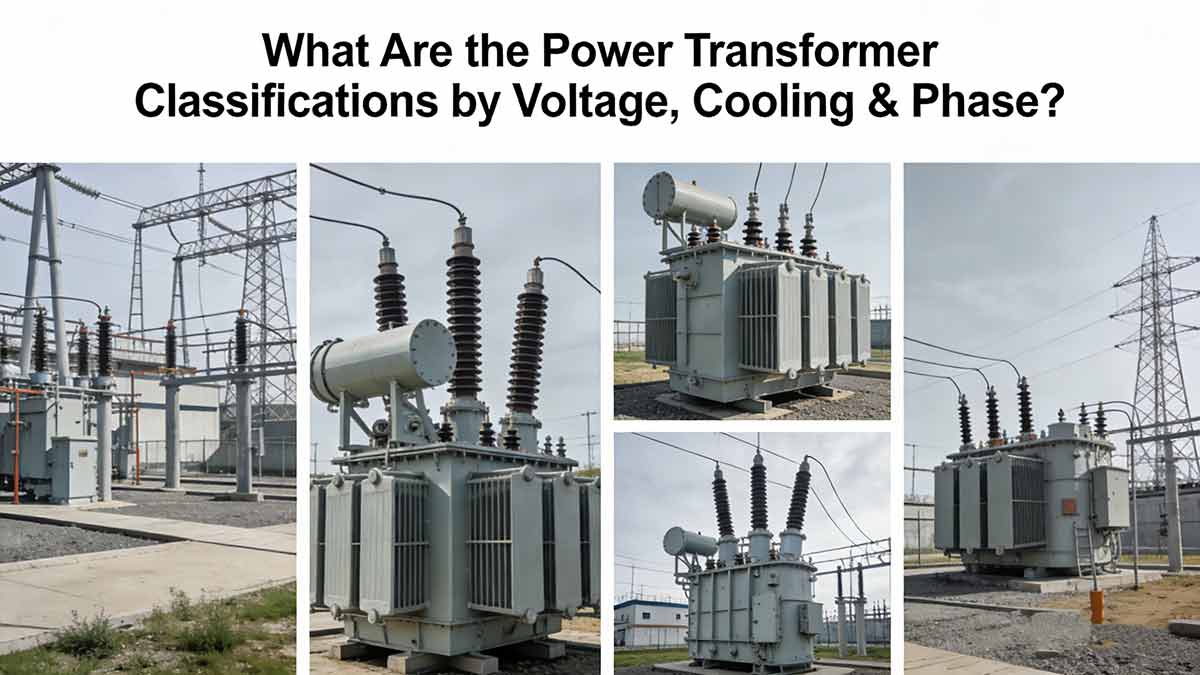
Whether you’re upgrading a network, installing a new system, or troubleshooting existing equipment, knowing how transformers are categorized helps you make informed decisions. This guide breaks down each classification type in simple terms, uses tables and lists for clarity, addresses common questions, and shares real-world examples to boost understanding—no overly technical jargon, just practical insights.
⚡ Power Transformer Classifications: An Overview
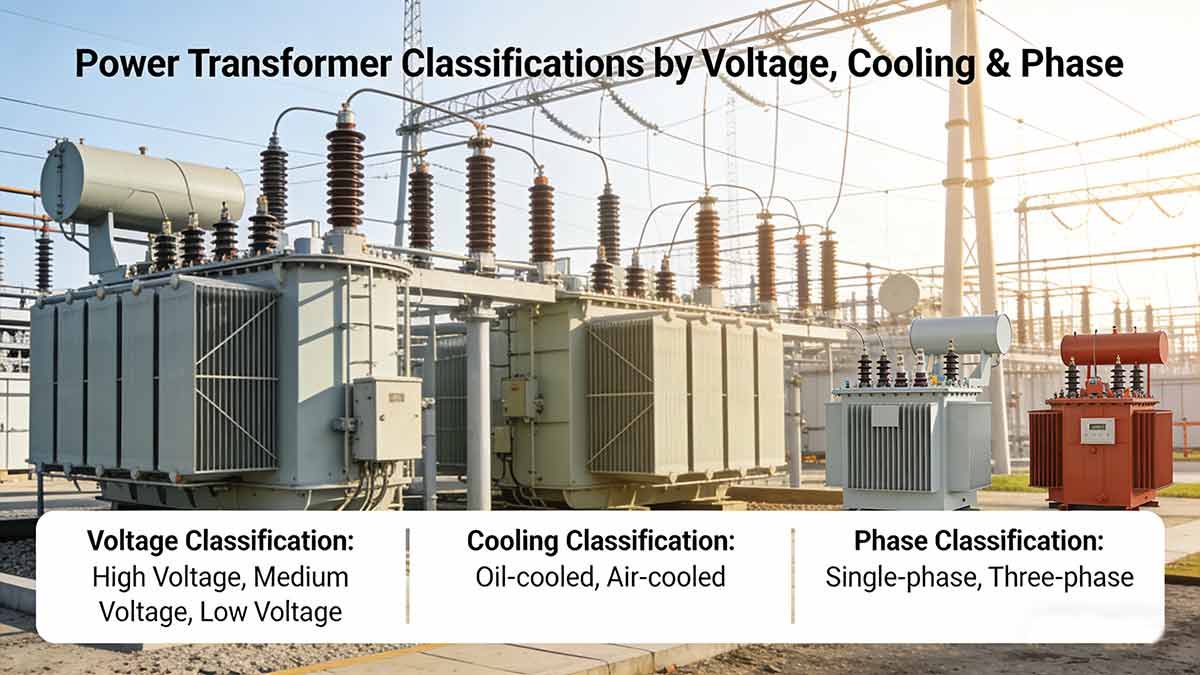
Power transformers are classified based on three primary factors: voltage rating, cooling system, and phase configuration. Each classification serves a unique purpose, and choosing the right one depends on your network’s requirements (e.g., power demand, environmental conditions, space constraints). Below is a high-level overview of the three key classification categories, followed by detailed breakdowns of each:
- Voltage Classification: Based on the voltage levels they handle (low, medium, high, extra-high), determining their use in distribution or transmission networks.
- Cooling Classification: Based on how they dissipate heat (oil-immersed, dry-type, or forced cooling), adapting to different environmental and space needs.
- Phase Classification: Based on the number of electrical phases (single-phase or three-phase), matching the power supply of the network.
A common question many professionals ask is: “Why do power transformer classifications matter?” The answer is simple—choosing the wrong classification leads to inefficiency, premature failure, and safety hazards. For example, a low-voltage transformer can’t handle high-voltage transmission, just as a dry-type transformer may not thrive in harsh outdoor conditions. By understanding these classifications, you can select a transformer that aligns with your network’s needs and ensures long-term reliability.
📊 Power Transformer Classification by Voltage
Voltage rating is one of the most critical power transformer classifications, as it determines the transformer’s role in the electrical network. Transformers are categorized by the maximum voltage they can safely handle, with clear distinctions between low, medium, high, and extra-high voltage units. This classification ensures compatibility with power generation, transmission, and distribution systems.
🔌 Low Voltage (LV) Transformers
Low-voltage transformers are designed for voltage levels up to 1kV (1000 volts). They are the most common type used in commercial, residential, and small industrial settings, where power needs are moderate.
- Voltage Range: 0–1kV (typically 230V, 400V for residential/commercial use)
- Key Uses: Powering homes, offices, small factories, and retail spaces; stepping down medium voltage to usable levels for appliances and equipment.
- Key Features: Compact size, easy installation, low maintenance, and cost-effective for small-scale applications.
Example: A retail store uses a 400V low-voltage transformer to step down the building’s incoming 11kV power to a level safe for lighting, cash registers, and air conditioning systems.
📈 Medium Voltage (MV) Transformers
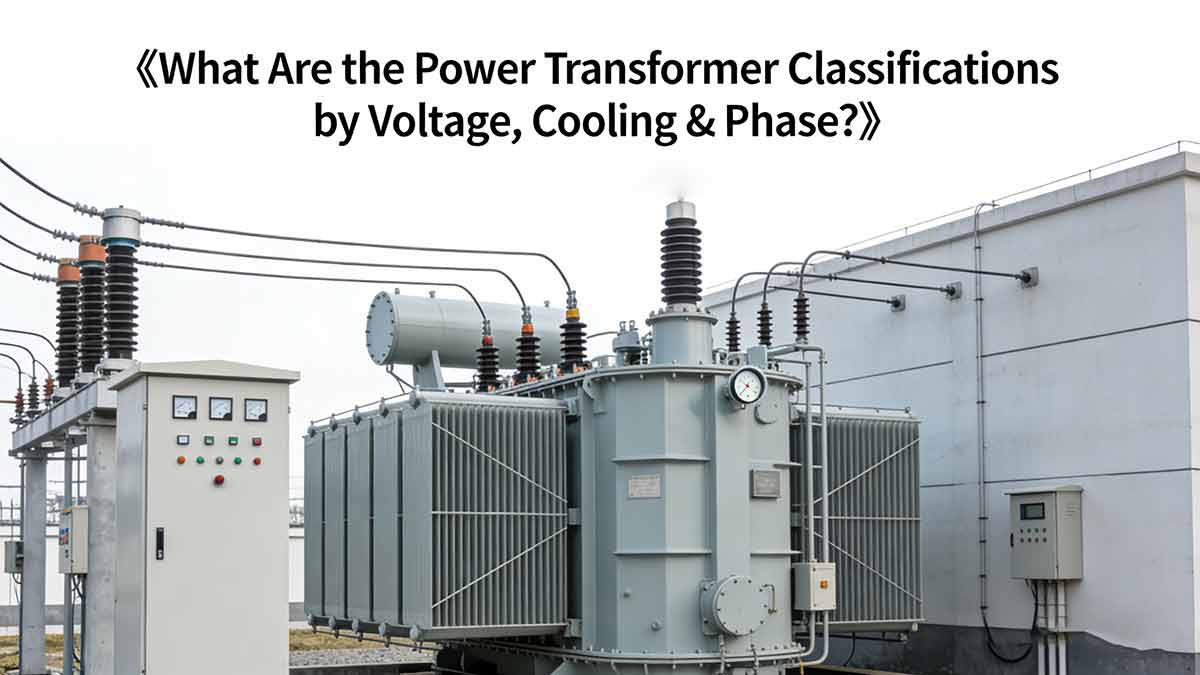
Medium voltage transformers handle voltage levels between 1kV and 33kV. They are primarily used in distribution networks, connecting high-voltage transmission lines to low-voltage local networks.
- Voltage Range: 1kV – 33kV (common ratings: 11kV, 22kV)
- Key Uses: Distributing power to neighborhoods, industrial parks, and large commercial buildings; stepping down high voltage to low voltage for end users.
- Key Features: More robust than low-voltage transformers, designed for outdoor installation, and equipped with basic cooling systems.
⚡ High Voltage (HV) Transformers
High voltage transformers are rated between 33kV and 220kV. They are used in power transmission networks, moving electricity from power plants to distribution substations over long distances.
- Voltage Range: 33kV – 220kV
- Key Uses: Transmitting power across cities, regions, or states; minimizing energy loss during long-distance transport.
- Key Features: Large size, heavy-duty construction, advanced cooling systems, and strict safety protocols due to high voltage levels.
🌐 Extra-High Voltage (EHV) Transformers
Extra-high voltage transformers handle voltage levels above 220kV (up to 800kV or higher). They are used for long-distance, high-capacity power transmission, often between countries or large regions.
- Voltage Range: 220kV+ (common ratings: 400kV, 765kV)
- Key Uses: Interconnecting national power grids, transmitting power from large power plants (e.g., hydroelectric, nuclear) to major substations.
- Key Features: Specialized design for extreme voltage, advanced insulation, and high-efficiency cooling to handle large power loads.
📋 Voltage Classification Comparison Table
Voltage Classification | Voltage Range | Key Applications | Key Features |
|---|---|---|---|
Low Voltage (LV) | 0–1kV | Residential, commercial, small industrial | Compact, low maintenance, cost-effective |
Medium Voltage (MV) | 1kV – 33kV | Local distribution networks, industrial parks | Outdoor design, robust construction |
High Voltage (HV) | 33kV – 220kV | Long-distance distribution, regional grids | Large size, advanced cooling, high safety |
Extra-High Voltage (EHV) | 220kV+ | National/international power transmission | Specialized insulation, high-efficiency cooling |
❄️ Power Transformer Classification by Cooling System
Cooling system is another key power transformer classification, as transformers generate heat during operation—effective cooling is critical to prevent overheating and extend lifespan. The cooling method is chosen based on the transformer’s size, power capacity, and operating environment (e.g., indoor vs. outdoor, hot vs. cold climates).
🛢️ Oil-Immersed Cooling Transformers
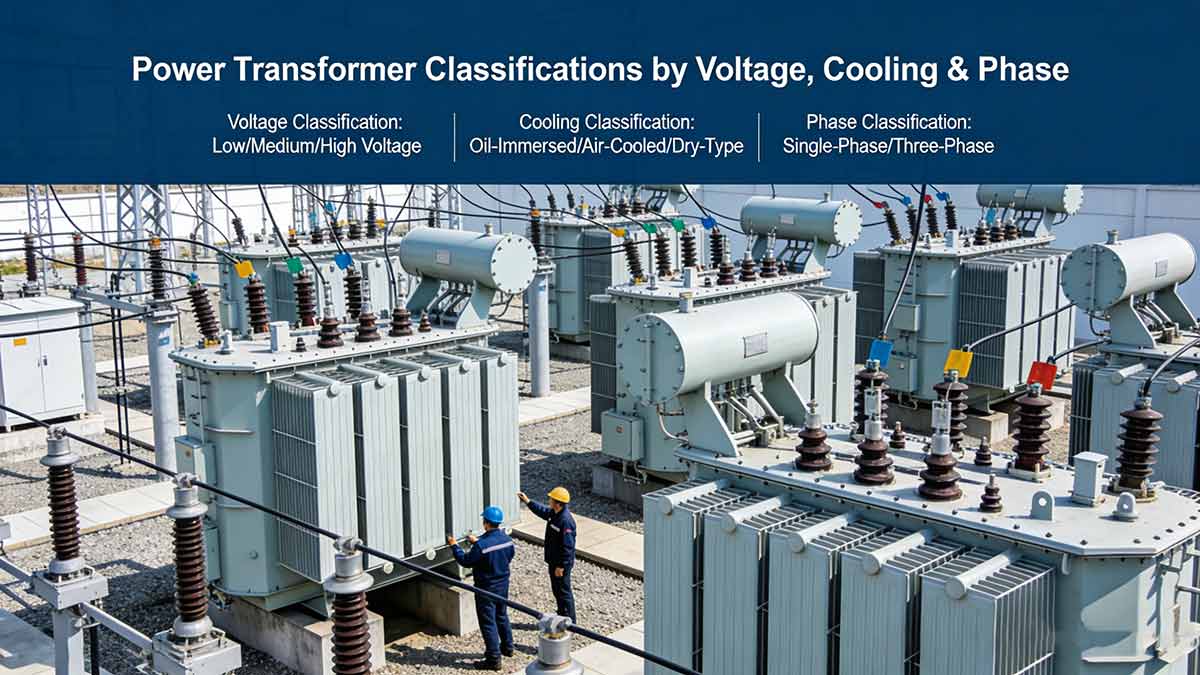
Oil-immersed transformers are the most common type for medium and high voltage applications. They use mineral oil or synthetic oil to dissipate heat and insulate internal components.
- Cooling Mechanism: Oil absorbs heat from the core and windings, then circulates to radiators (or cooling fans) where heat is released into the air.
- Subtypes: Natural Oil Circulation (ONAN) – oil circulates naturally; Forced Oil Circulation (OFAF) – fans or pumps speed up oil flow for better cooling.
- Key Uses: Outdoor installations, medium/high voltage transformers, industrial and utility applications.
- Advantages: Excellent heat dissipation, long lifespan (25–40 years), protection against moisture and dust.
- Disadvantages: Requires regular oil testing/maintenance, slightly larger footprint than dry-type transformers.
Real-World Example: A utility company uses oil-immersed ONAN transformers in rural areas, where maintenance access is limited—their natural cooling system requires minimal upkeep, and the oil protects against harsh weather.
💨 Dry-Type Cooling Transformers
Dry-type transformers use air or resin to cool internal components, eliminating the need for oil. They are ideal for indoor or environmentally sensitive applications.
- Cooling Mechanism: Air circulates around the core and windings (natural air circulation, AN) or is forced by fans (forced air cooling, FA).
- Subtypes: Cast Resin Dry-Type – windings are coated in resin for extra insulation; Vacuum Pressure Impregnated (VPI) – windings are impregnated with varnish to improve heat resistance.
- Key Uses: Indoor installations (e.g., offices, hospitals, data centers), environmentally sensitive areas (e.g., near water sources), low/medium voltage applications.
- Advantages: No oil leaks, low maintenance, compact size, safe for indoor use.
- Disadvantages: Less effective heat dissipation (not ideal for high load demands), shorter lifespan (15–20 years) compared to oil-immersed units.
💧 Forced Cooling Transformers (Specialized)
Forced cooling transformers are designed for high-power, high-heat applications, where natural cooling (oil or air) is insufficient. They use external pumps or fans to enhance heat dissipation.
- Cooling Mechanism: Forced Oil Cooling (OFAF) – fans blow air over oil-filled radiators; Forced Air Cooling (FA) – fans direct cool air over dry-type windings; Forced Water Cooling (OW) – water circulates around the transformer (rare, used for very high-power units).
- Key Uses: High-voltage transformers, large industrial plants, power substations with high load demands.
- Advantages: Handles high power loads without overheating, compact size for their capacity.
- Disadvantages: Higher maintenance (needs fan/pump upkeep), higher energy consumption.
❄️ Cooling Classification Comparison Table
Cooling Type | Cooling Mechanism | Key Applications | Pros | Cons |
|---|---|---|---|---|
Oil-Immersed (ONAN/OFAF) | Oil circulates to radiators; natural or forced | Outdoor, medium/high voltage, utilities | Excellent cooling, long lifespan, weather-resistant | Requires oil maintenance, larger footprint |
Dry-Type (AN/FA) | Air circulation: natural or forced | Indoor, low/medium voltage, sensitive areas | No oil leaks, low maintenance, compact | Poor heat dissipation, shorter lifespan |
Forced Cooling (OFAF/FA/OW) | Fans/pumps enhance heat dissipation | High-power, high-heat applications | Handles high loads, compact | High maintenance, high energy use |
🔄 Power Transformer Classification by Phase
The third key power transformer classification is based on phase configuration—single-phase or three-phase. This classification depends on the power supply of the network, with single-phase used for low-power applications and three-phase for high-power, industrial, and utility use.
🔹 Single-Phase Transformers
Single-phase transformers have two windings (primary and secondary) and operate on a single alternating current (AC) phase. They are the simplest type of transformer, used for low-power needs.
- Phase Configuration: 1 phase (2 wires: live and neutral)
- Voltage Range: Typically low voltage (230V, 400V), occasionally medium voltage for small commercial use.
- Key Uses: Residential homes, small offices, small appliances (e.g., refrigerators, lights), rural areas with low power demand.
- Key Features: Compact, low cost, easy to install, designed for low load capacity (up to 50kVA).
Common Question: Can single-phase transformers be used for industrial applications? In most cases, non—industrial equipment (e.g., motors, factories) requires three-phase power for higher efficiency and power capacity. Single-phase transformers are limited to small-scale use.
🔹 Three-Phase Transformers
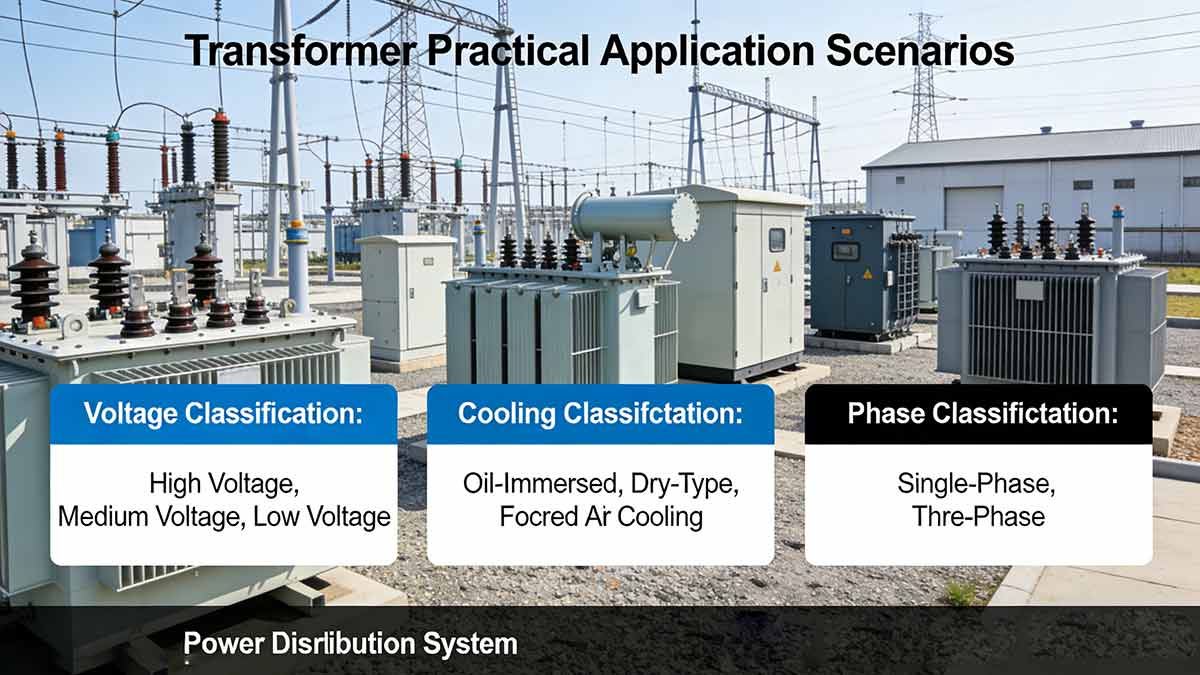
Three-phase transformers have three primary and three secondary windings, operating on three AC phases. They are the most common type for industrial, commercial, and utility applications, as they deliver more power efficiently.
- Phase Configuration: 3 phases (3 live wires, sometimes a neutral wire)
- Voltage Range: Low, medium, high, or extra-high voltage (depending on application).
- Key Uses: Industrial plants, large commercial buildings, utility distribution networks, power transmission, heavy machinery (e.g., motors, pumps).
- Key Features: High power capacity (50kVA to 1000kVA+), efficient power delivery, less energy loss, compact size compared to three single-phase transformers.
🔍 Single-Phase vs. Three-Phase Transformers: Key Differences
Feature | Single-Phase Transformers | Three-Phase Transformers |
|---|---|---|
Phase Configuration | 1 phase (2 wires) | 3 phases (3–4 wires) |
Power Capacity | Low (up to 50kVA) | High (50kVA+) |
Efficiency | Lower (higher energy loss) | Higher (lower energy loss) |
Key Applications | Residential, small commercial | Industrial, utilities, large commercial |
Cost (per kVA) | Higher | Lower (more cost-effective for high power) |
🤔 How to Choose the Right Transformer Based on Classifications
Now that you understand the power transformer classifications by voltage, cooling, and phase, the next step is to choose the right unit for your needs. The selection process depends on three key factors: your network’s power requirements, operating environment, and long-term goals. Below is a step-by-step guide to help you decide:
Step 1: Determine Voltage Requirements
- Assess the incoming voltage (from the power grid) and the outgoing voltage needed for your equipment.
- For residential/commercial use: Low-voltage (230V/400V) transformers are ideal.
- For local distribution: Medium voltage (11kV/22kV) transformers are suitable.
- For long-distance transmission, High or extra-high voltage transformers are required.
Step 2: Choose the Right Cooling System
- Indoor installation: Dry-type transformers (no oil leaks, safe for enclosed spaces).
- Outdoor installation: Oil-immersed transformers (weather-resistant, better heat dissipation).
- High load demands: Forced cooling transformers (handles heat from heavy use).
- Environmentally sensitive areas: Dry-type or synthetic oil-immersed transformers.
Step 3: Select Phase Configuration
- Low power needs (residential/small office): Single-phase transformers.
- High power needs (industrial/large commercial/utilities): Three-phase transformers.
- Note: If you have a three-phase network but need to power single-phase equipment, you can use a three-phase transformer with a neutral wire to supply single-phase power.
Real-World Example: Choosing the Right Transformer
A large manufacturing plant needs a transformer to power its heavy machinery (high load) and operate outdoors in a hot climate. Here’s how they chose based on classifications:
- Voltage: Medium voltage (11kV) – connects to the local distribution grid and steps down to 400V for machinery.
- Cooling: Oil-immersed (OFAF) – outdoor installation, hot climate requires forced cooling to prevent overheating.
- Phase: Three-phase – high load machinery requires efficient three-phase power.
The plant selected a 11kV/400V, 500kVA, three-phase oil-immersed OFAF transformer—this unit meets their power needs, handles the hot climate, and operates reliably outdoors.
❌ Common Mistakes in Transformer Classification Selection
Many professionals make mistakes when selecting transformers based on classifications, leading to inefficiency, downtime, and extra costs. Below are the most common errors and how to avoid them:
- Choosing the Wrong Voltage: Selecting a low-voltage transformer for a high-voltage network will cause immediate failure. Always verify the network’s voltage rating before purchasing.
- Ignoring Cooling Needs: Using a dry-type transformer outdoors in a hot climate will lead to overheating. Match the cooling system to the operating environment.
- Underestimating Phase Requirements: Using a single-phase transformer for industrial equipment will result in insufficient power and equipment damage. Choose three-phase for high-power needs.
- Overlooking Future Growth: Selecting a transformer that only meets current needs may require replacement sooner. Consider future power demand when choosing voltage and phase capacity.
📝 Key Takeaways for Power Transformer Classifications
Power transformer classifications by voltage, cooling, and phase are critical for selecting the right equipment for your network. By understanding the differences between low/medium/high/extra-high voltage, oil-immersed/dry-type/forced cooling, and single/three-phase transformers, you can make informed decisions that ensure efficiency, reliability, and safety.
Remember: Each classification serves a unique purpose—there’s no “one-size-fits-all” transformer. Consider your network’s voltage needs, operating environment, and power demands to choose the right unit. Proper selection based on these classifications will extend the transformer’s lifespan, reduce maintenance costs, and minimize downtime.
Whether you’re upgrading an existing system, installing a new transformer, or need help navigating power transformer classifications by voltage, cooling & phase, our team of industry experts is here to assist. We can help you select the perfect transformer tailored to your specific needs, ensuring long-term performance and value.