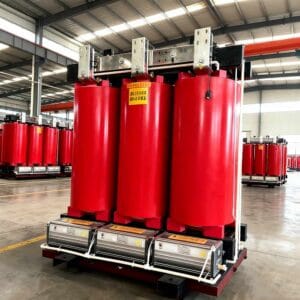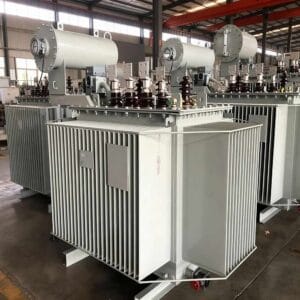
Single Phase Pole Mount Transformer for Residential Neighborhoods
Single Phase Pole Mount Transformer: A Comprehensive Guide for Efficiency and Selection
1. What Is a Single Phase Pole Mount Transformer?
Core Characteristics:
- Single-Phase Design: Optimized for systems that only require two conductors (hot and neutral), matching the power needs of most homes and small businesses.
- Pole-Mounted Installation: Saves ground space, reduces theft risk, and simplifies access for utility maintenance.
- Compact & Lightweight: Constructed with high-efficiency core materials (e.g., grain-oriented silicon steel) and compact windings, ensuring easy handling and installation.
- Weather Resistance: Enclosed in corrosion-resistant, weatherproof casings (often aluminum or steel) to withstand rain, extreme temperatures, and UV exposure.
2. How Does a Single Phase Pole Mount Transformer Work?
- High-Voltage Input: The transformer’s primary winding connects to the utility’s high-voltage distribution line, receiving single-phase AC power.
- Magnetic Field Generation: When current flows through the primary winding, it creates a fluctuating magnetic field in the transformer’s iron core.
- Voltage Induction: The magnetic field induces an alternating current in the secondary winding, which has fewer turns than the primary winding (for step-down operation).
- Low-Voltage Output: The secondary winding delivers low-voltage power (e.g., 120V/240V) to local distribution lines, powering homes, shops, or small equipment.
3. Key Applications of Single Phase Pole Mount Transformers
3.1 Residential Areas
- Powers single-family homes, townhouses, and small apartment buildings, delivering the 120V/240V power needed for appliances (refrigerators, HVAC systems), lighting, and electronics.
- Ideal for suburban or rural neighborhoods where homes are spread out, as pole mounting avoids the cost of underground cabling.
3.2 Rural Electrification
- Critical for bringing electricity to remote rural areas, where population density is low and ground-mounted transformers are uneconomical.
- Supports farms, rural clinics, and small rural businesses, enabling access to essential power for irrigation pumps, medical equipment, and communication devices.
3.3 Light Commercial Spaces
- Supplies power to small commercial establishments: convenience stores, gas stations, small offices, and local shops.
- Fits in tight urban spaces (e.g., sidewalk utility poles) where ground space is limited, ensuring businesses near residential areas stay powered.
3.4 Temporary Power Needs
- Used in construction sites, outdoor events, or emergency response (e.g., post-storms) to provide temporary single-phase power for tools, lighting, or emergency services.
- Easy to install and relocate, making it a flexible solution for short-term power demands.
4. How to Choose the Right Single Phase Pole Mount Transformer: Key Selection Factors
4.1 Power Capacity (kVA)
- Calculate the total load the transformer will serve: sum the power requirements of all connected devices (e.g., homes, appliances, machinery).
- Choose a capacity with a 10-20% buffer to avoid overloading (e.g., if the total load is 15kVA, select a 18-20kVA transformer). Overloading leads to overheating, reduced lifespan, and potential failures.
4.2 Voltage Ratings
- Match the primary voltage to the utility grid’s supply (e.g., 7.2kV, 12.47kV) and the secondary voltage to the end-user’s needs (e.g., 120V/240V, 208V).
- Confirm compatibility with local electrical codes (e.g., ANSI standards in North America, IEC standards in Europe) to avoid compliance issues.
4.3 Environmental Adaptability
- For harsh climates (extreme cold, heat, or humidity), select models with temperature-resistant insulation and weatherproof casings (e.g., NEMA 3R ratings for outdoor use).
- In coastal areas, choose corrosion-resistant materials (e.g., marine-grade aluminum) to prevent saltwater damage.
4.4 Efficiency
- Opt for high-efficiency transformers (e.g., DOE Level 2 or IE3 standards) to reduce energy loss and lower utility costs. Efficient models use advanced core materials and optimized windings to minimize no-load and load losses.
- Consider the “load factor”: if the transformer will operate at partial load (common in residential areas), prioritize low no-load losses (energy wasted when the transformer is idle).
4.5 Safety & Certification
- Ensure the transformer meets safety standards (e.g., ANSI C57.12.20, IEC 60076) for insulation, short-circuit resistance, and fire safety.
- Look for certifications from reputable bodies (e.g., UL, CE) to verify compliance with regional safety regulations.
5. Daily Maintenance Tips for Longevity
5.1 Regular Visual Inspections
- Check the casing for damage (dents, cracks) or corrosion. Repair or replace damaged casings promptly to protect internal components.
- Inspect electrical connections (primary and secondary terminals) for looseness, overheating (discoloration), or signs of arcing. Tighten loose connections and clean corrosion with a wire brush.
- Look for oil leaks (in oil-filled models) or coolant leaks (in dry-type models). Leaks indicate a seal failure and require immediate repair to avoid insulation damage.
5.2 Periodic Testing
- Conduct insulation resistance tests (using a megohmmeter) annually to check for insulation degradation. Low resistance values signal potential short-circuit risks.
- Test voltage output regularly to ensure it stays within the desired range (e.g., ±5% of the rated secondary voltage). Use a multimeter to measure voltage at the secondary terminals.
- For oil-filled transformers, test the oil’s dielectric strength every 2-3 years. Contaminated oil (with water or dirt) reduces insulation performance and must be filtered or replaced.
5.3 Cleanliness
- Keep the transformer and its surroundings clean. Remove debris (leaves, dirt) from the casing and vents to prevent overheating.
- Trim overhanging tree branches near the transformer to avoid damage from falling limbs and to maintain clear access for maintenance.
5.4 Emergency Preparedness
- Label the transformer with contact information for the utility company or maintenance team. In case of failure (e.g., loud humming, smoke), report it immediately.
- Have a backup plan (e.g., a portable generator) for critical loads during transformer outages, especially in rural or remote areas.
6. Market Trends & Future Outlook
6.1 Smart Transformers
- Integration of IoT sensors allows remote monitoring of voltage, temperature, load, and fault conditions. Utility companies can detect issues (e.g., overheating) in real time, reducing downtime and maintenance costs.
- Some models include remote tap changers, enabling utility teams to adjust voltage without on-site visits.
6.2 Energy Efficiency & Sustainability
- Governments worldwide (e.g., the U.S. DOE, EU) are implementing stricter efficiency standards, driving the adoption of low-loss transformers.
- Dry-type SPPMTs are gaining popularity over oil-filled models, as they eliminate the risk of oil spills and are more environmentally friendly (suitable for eco-sensitive areas).
6.3 Rural Electrification Initiatives
- Global efforts to expand electricity access (e.g., the UN’s Sustainable Development Goal 7) are increasing demand for SPPMTs in rural and underserved regions. Manufacturers are developing low-cost, rugged models tailored for these markets.
7. Final Thoughts: Invest in Quality for Reliable Power
FAQ About Single Phase Pole Mount Transformer
What are the typical kVA ratings for single phase pole mount transformers?
Single phase pole mount transformers are available in a range of capacities to match diverse load requirements, commonly spanning from 10 kVA to 167 kVA. Popular standard ratings include 25 kVA, 50 kVA, and 75 kVA for residential neighborhoods, where each unit typically supplies power to 10-20 households. Larger ratings like 100 kVA or 167 kVA are used for commercial areas or light industrial loads, while smaller 5-15 kVA units are suitable for remote rural locations with scattered households. These ratings are standardized under international norms such as CSA C2.2:25 and ANSI/IEEE C57, which limit maximum capacity to 167 kVA for pole-mounted single-phase designs.
What are the main applications of single phase pole mount transformers?
Their primary application is in power distribution networks, stepping down high-voltage utility power (e.g., 12.47kV, 13.8kV) to low-voltage levels (120V/240V, 240V/480V) suitable for homes, small businesses, and agricultural operations. They are particularly prevalent in rural and remote areas with scattered electrical loads, as their pole-mounted design eliminates the need for large substations and reduces low-voltage line length by up to 60%, lowering energy losses. Additionally, they are used in urban street lighting systems, railway power grids, and as part of distributed energy solutions, including integration with small-scale renewable energy sources. Multiple units can also be grouped to form a three-phase power supply for larger loads.
What installation standards must single phase pole mount transformers comply with?
Installation must adhere to international and regional standards, including CSA C2.2:25 (Canada), ANSI/IEEE C57 (United States), and IEC 60076 (global). CSA C2.2:25 specifies requirements for 60 Hz, single-bushing transformers rated up to 167 kVA and 34.5 kV, designed for effectively grounded wye systems. Installation standards include pole tilt angles (13°-15° for single-pole mounting), minimum lead spacing (300mm between phases), and grounding resistance (≤10Ω for surge arresters). For capacity ≤50kVA, single-pole mounting is acceptable, while larger units (50-315kVA) require dual-pole installation for stability. In high-lightning areas, low-voltage side zinc oxide arresters with ≥40kV impulse withstand voltage are mandatory.
How to select the right single phase pole mount transformer for a residential area?
Selection depends on three key factors: total load demand, voltage requirements, and environmental conditions. First, calculate the aggregate load of the service area (e.g., 20 households × 5kW = 100kW, requiring a 125-167 kVA transformer to account for peak demand). Second, match the primary voltage to the utility distribution line (common options: 12.47kV/7.2kV) and secondary voltage to end-user needs (120/240V for North American residences). Third, consider environmental factors: choose weather-resistant enclosures for coastal or high-humidity areas and CSP models for remote locations. Ensure compliance with local efficiency standards (e.g., DOE 2016 in the U.S.) to minimize long-term energy costs.
What are the common faults of single phase pole mount transformers and how to troubleshoot them?
Common faults include short circuits (due to insulation failure), overloads (exceeding rated capacity), oil level/oil temperature anomalies, and abnormal noise/vibration. Troubleshooting starts with visual inspection: check for oil leaks, discolored oil (indicates internal faults), loose connections, and overheating signs. Electrical testing involves measuring input/output voltage (deviations indicate winding damage) and load current (excess current signals overload). Insulation resistance testing using a megohmmeter identifies insulation degradation, while checking protective devices (fuses, surge arresters) reveals tripping causes. Abnormal noise often stems from loose cores or faulty cooling fans, which require mechanical inspection and tightening.
What are the energy efficiency standards for single phase pole mount transformers?
Global efficiency standards include the U.S. DOE 2016, ANSI/IEEE C57, and IEC 60076. DOE 2016 mandates minimum efficiency levels for transformers <2500 kVA and <34.5 kV, with requirements increasing with capacity: 98.7% for 10 kVA, 99.11% for 50 kVA, and 99.33% for 167 kVA. These standards drive design innovations such as high-efficiency silicon steel cores and optimized winding configurations, reducing energy losses by up to 60% compared to older models. Compliance is mandatory for market access in North America, Europe, and Southeast Asia, where single-phase pole mount transformers are widely used. Manufacturers often exceed these standards to offer premium energy-saving solutions.
How to maintain a single phase pole mount transformer for optimal performance?
Regular maintenance includes visual inspections (monthly) for oil leaks, corrosion, and loose connections; oil analysis (annually) to check for moisture, contaminants, and degradation; and insulation resistance testing (biennially). Cooling systems (fins, fans) should be cleaned periodically to ensure heat dissipation, while surge arresters and grounding systems require testing to verify functionality. Load monitoring helps prevent overloads, and thermal imaging can detect hotspots indicating internal faults. For oil-immersed units, maintaining proper oil levels and replacing degraded oil extends service life. Following manufacturer guidelines and regional standards (e.g., CSA C2.2:25) ensures compliance and reliability.
What are the safety considerations for single phase pole mount transformer operation?
Key safety measures include proper grounding (transformer enclosure and core must be grounded to ≤10Ω) and installation of surge arresters to protect against lightning strikes. High-voltage components must be isolated with adequate clearances, and access to pole-mounted units should be restricted to authorized personnel. In residential areas, warning signs and physical barriers prevent accidental contact. Regular testing of protective devices (fuses, circuit breakers) ensures they trigger during faults, minimizing fire and electrical hazard risks. Compliance with safety standards (ANSI/IEEE C57, CSA C2.2) is non-negotiable for utility and end-user safety.
Why are single phase pole mount transformers widely used in rural power grids?
Their popularity in rural areas stems from several advantages: compact size and pole-mounted design eliminate the need for expensive substation infrastructure; proximity to loads reduces low-voltage line length, cutting energy losses by over 60%; and single-phase operation matches the scattered, low-demand characteristics of rural households. They are cost-effective to install and maintain, with simple construction that facilitates repairs in remote locations. Additionally, their ability to operate independently or in three-unit groups provides flexibility for growing rural communities. Governments and utilities in North America, Southeast Asia, and China increasingly adopt them for rural electrification and grid modernization.
How does weather affect single phase pole mount transformer performance?
Extreme temperatures (hot or cold) can impact oil viscosity and heat dissipation, reducing efficiency or causing overheating. Rain, snow, and humidity increase the risk of insulation degradation and corrosion, especially if the enclosure is damaged. Lightning strikes pose a significant threat, potentially damaging windings and protective devices without proper surge arresters. To mitigate these effects, manufacturers use weather-resistant enclosures, corrosion-resistant coatings, and temperature-compensated components. In high-lightning areas, additional low-voltage arresters and enhanced grounding are recommended. Regular inspections after severe weather events help identify and address damage promptly.
What are the voltage options for single phase pole mount transformers?
Primary voltage ratings are tailored to utility distribution lines, with common options including 12.47kV/7.2kV, 13.8kV/7.9kV, and 34.5kV. Secondary voltages are designed for end-user applications: 120V/240V for North American residences, 240V/480V for small commercial loads, and 347V or 600V for industrial uses. Manufacturers offer customizable voltage configurations to meet regional grid requirements, ensuring compatibility with local power systems. These voltage ratings are standardized under ANSI/IEEE and CSA standards to ensure interoperability and safety.
What is the typical lifespan of a single phase pole mount transformer?
With proper maintenance and compliance with operational standards, single phase pole mount transformers have a typical lifespan of 25-35 years. Key factors influencing lifespan include material quality (high-grade silicon steel and copper extend life), load management (avoiding chronic overloads), and environmental conditions (corrosive or extreme climates reduce life). Oil-immersed units require periodic oil replacement to maintain insulation performance, which can extend lifespan by 5-10 years. Aging transformers may show signs such as increased noise, reduced efficiency, or frequent faults, indicating the need for replacement.
What are the cost factors for single phase pole mount transformers?
Costs are influenced by capacity (larger kVA ratings cost more), design type (CSP models are more expensive than conventional), materials (copper windings cost more than aluminum), and customization (special voltage or environmental adaptations). Installation costs include pole preparation, wiring, and compliance with local standards, which vary by region. Long-term costs include energy losses (efficiency levels impact operational costs) and maintenance (CSP models reduce maintenance costs). Utilities often balance upfront costs with long-term energy savings, preferring high-efficiency models for long-term economic benefits.





Related Products

Compact Box Transformer Substation for Urban Areas
Transformer BoxBox Type Prefabricated Transformer Substations for Residential
Transformer Box250 KVA European-style Box-type Transformer Substation
Transformer Box500 kva Compact Substation Green Transformer Box
Transformer BoxHigh Efficiency 1 MVA Transformer for Utilities
Distribution Transformer10 MVA Dry Type Transformer for Large-Scale Manufacturing Units
Distribution Transformer2000 KVA Oil Filled Transformer for Substation Voltage Conversion
Distribution TransformerThree Phase 1250 KVA Transformer for Substation Distribution
Distribution Transformer315 KVA Dry Type Transformer IEC Compliant for Power Grids
Distribution TransformerLow Loss 4 MVA Transformer for Energy Efficient Operations
Distribution Transformer