
Residential Distribution Transformer Rated Capacity
While residential distribution transformers differ in rated capacity, physical size, and footprint, their core structural design remains consistent across models. These essential power components rely on precision engineering to ensure safe voltage conversion for homes, and understanding their structure, potential failure points, and protective measures is key to long-term reliability.
Core Structural Fundamentals
At the heart of every residential distribution transformer lies a simplified yet robust design, optimized for efficiency and safety. Two windings—crafted from high-quality insulated enameled copper wire—form the core electrical components: a high-voltage winding designed to accept incoming grid power and a low-voltage winding that delivers appropriately reduced voltage to residential circuits.
These windings are meticulously wrapped around a laminated silicon steel core, chosen for its low magnetic hysteresis loss and efficient flux conduction. To enhance moisture resistance and electrical insulation, the entire winding-core assembly undergoes a thorough immersion in premium insulating varnish. This coating creates a barrier against humidity and contaminants, and the unit is dried in controlled conditions to ensure the varnish cures evenly—resulting in a durable, moisture-sealed component ready for operational use.
Moisture-Related Failures: Risks & Consequences
Water intrusion or prolonged exposure to high humidity stands as one of the most common causes of residential transformer failure. When a transformer becomes submerged or damp, moisture penetrates the insulation system, coming into direct contact with the enameled wire windings. Most water sources—including rainwater, groundwater, or condensation—contain trace corrosive substances (such as chlorides, sulfates, or dissolved minerals) that accelerate deterioration.
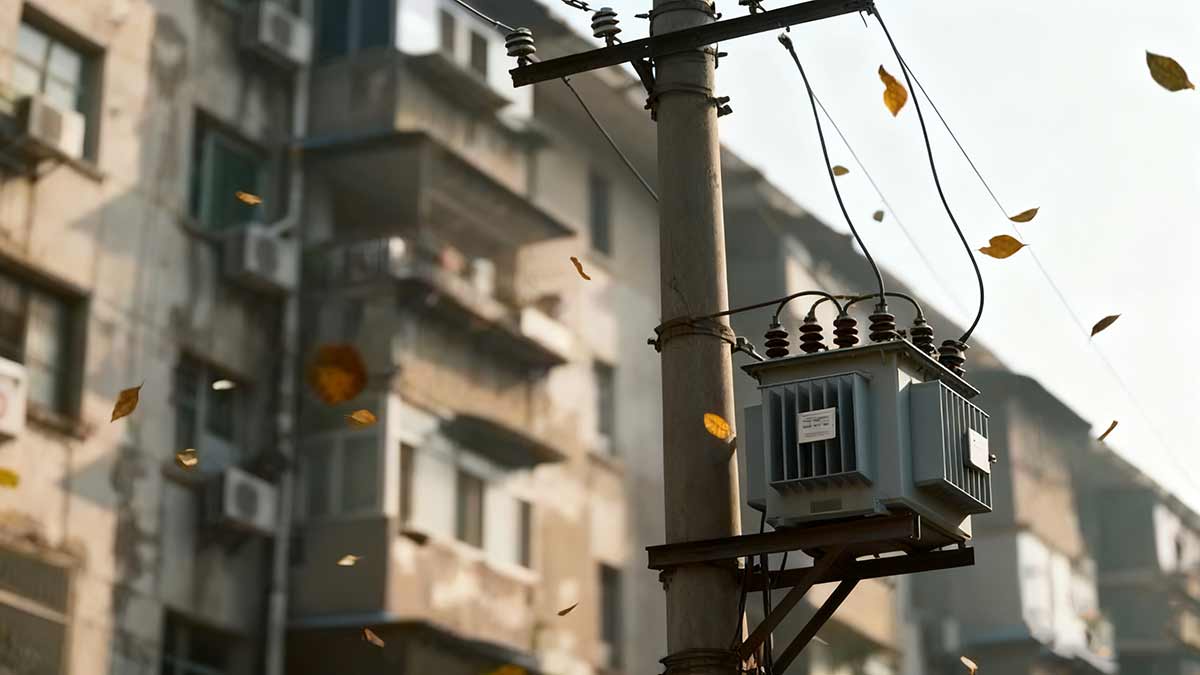
Over time, this moisture triggers a series of damaging effects: the enamel insulation on the wires may develop mold, crack, or peel away, while the overall insulation resistance of the windings degrades significantly. Once insulation integrity is compromised, electrical breakdown can occur between adjacent wire turns (inter-turn short circuit) or between different winding layers (inter-layer short circuit).
A short circuit creates a low-resistance path that draws massive short-circuit current, causing the transformer to heat rapidly—often exceeding safe temperature limits within minutes. This extreme heating typically progresses through distinct stages: initial abnormal warmth, followed by smoke emission (from burning insulation or varnish), and ultimately complete burnout if power is not disconnected promptly. A telltale sign of this issue is an unusual odor—often described as burnt plastic, chemical, or moldy—which signals incipient insulation damage. Immediate power shutdown is critical at this stage to prevent catastrophic failure or fire hazards.
Other Causes of Transformer Overheating & Burning
Beyond moisture-related issues, several other factors can lead to transformer overheating and eventual burnout, often stemming from improper use or environmental neglect:
- Mismatched Load Capacity: Using a transformer with a rated capacity that does not align with the total load of connected residential devices is a primary risk. Arbitrarily increasing the load (e.g., adding high-power appliances without upgrading the transformer) forces the unit into prolonged overload. This exceeds its design limits, causing excessive current flow in the windings, elevated copper losses, and gradual overheating.
- Extreme Ambient Temperatures: Operating the transformer in an environment with excessively high temperatures—such as enclosed spaces without ventilation, direct sunlight exposure, or hot attics—reduces its heat dissipation efficiency. The transformer’s internal temperature accumulates, pushing insulation and winding materials beyond their thermal tolerance.
- Faulty Cooling or Blocked Ventilation: Residential transformers rely on natural convection or auxiliary cooling components (e.g., small fans, heat sinks) to dissipate heat. If these cooling systems become damaged, or if ventilation openings are blocked by dust, debris, or storage items, heat cannot escape effectively, leading to internal temperature spikes.
- Proximity to Heat Sources: Installing the transformer too close to heat-generating equipment (e.g., furnaces, water heaters, or electrical panels) exposes it to additional external heat, compounding its own thermal output and increasing failure risk.

Preventive Measures to Protect Residential Transformers
To mitigate the risks of moisture damage, overheating, and burnout, proactive maintenance and proper installation are essential:
- Prioritize Waterproofing: Install transformers in dry, sheltered locations (e.g., dedicated utility rooms, weatherproof enclosures) to prevent direct exposure to rain, snow, or groundwater. For outdoor installations, choose units with appropriate IP (Ingress Protection) ratings to resist water intrusion.
- Control Humidity: Avoid placing transformers in persistently humid environments (e.g., damp basements, unventilated crawl spaces). If humidity is unavoidable, enhance ventilation through mechanical fans, dehumidifiers, or improved air circulation (e.g., maintaining proper spacing from walls or other obstacles).
- Address Water Intrusion Promptly: If a transformer is accidentally submerged or becomes damp, do not reconnect power until thorough drying is completed. Use professional drying methods—such as hot air drying, vacuum drying, or low-voltage heat cycling—to remove moisture from windings and core, and test insulation resistance before restarting.
- Regular Dehumidification for Idle Units: For transformers that are not used for extended periods (e.g., seasonal homes or backup power systems), implement periodic energization (e.g., 30 minutes monthly) to generate gentle heat, which helps evaporate internal moisture and maintain dryness.
- Ensure Proper Load Matching: Always verify that the transformer’s rated capacity meets or exceeds the total power demand of connected devices. Consult a qualified electrician before adding high-power loads to avoid overload.
- Maintain Ventilation & Cooling: Keep ventilation openings clean and unobstructed, and inspect cooling systems regularly for functionality. Ensure the transformer is installed with adequate clearance from heat sources and surrounding structures to facilitate natural heat dissipation.
By adhering to these structural best practices, failure prevention strategies, and maintenance guidelines, residential distribution transformers can deliver reliable, safe performance for years, supporting the steady power supply essential for modern homes.