
Key Classification of Transformers
A main transformer stands as a pivotal static electrical apparatus in modern power systems, operating on the fundamental principle of electromagnetic induction to modify alternating current (AC) voltage levels. Beyond its core function, this equipment plays a critical role in ensuring efficient, safe, and reliable power distribution across industries, communities, and critical infrastructure.
At its heart, a main transformer comprises three essential components: the primary coil (which accepts incoming electrical power), the secondary coil (responsible for delivering voltage-adjusted output), and a magnetic core—typically constructed from laminated silicon steel sheets to minimize energy loss and enhance magnetic flux conductivity. These components work in tandem to deliver five core capabilities: voltage conversion (enabling power transmission across long distances and Adaptive end-use requirements), current transformation (matching electrical load demands), impedance matching (optimizing power transfer efficiency between circuits), electrical isolation (protecting sensitive equipment and personnel from voltage fluctuations), and voltage regulation (achieved through specialized designs like magnetic saturation transformers for stable output).
To help industry professionals, project managers, and technical enthusiasts deepen their understanding of this essential equipment, we break down the primary classifications of main transformers, exploring their design nuances, technical specifications, and real-world applications.
Power Transformers
Power transformers represent the backbone of high-voltage power transmission networks, engineered to handle massive electrical loads and facilitate long-distance power transfer between power plants and substations. Today’s advanced power systems feature a range of high-capacity models, with common voltage ratings including 1150KV, 1200MV, 735~765KV, 800MV, and 400~500KV (available in three-phase 750MV or single-phase 550MV configurations). For DC transmission systems, 500KV and 400MV return transformers are widely deployed to support bidirectional power flow.
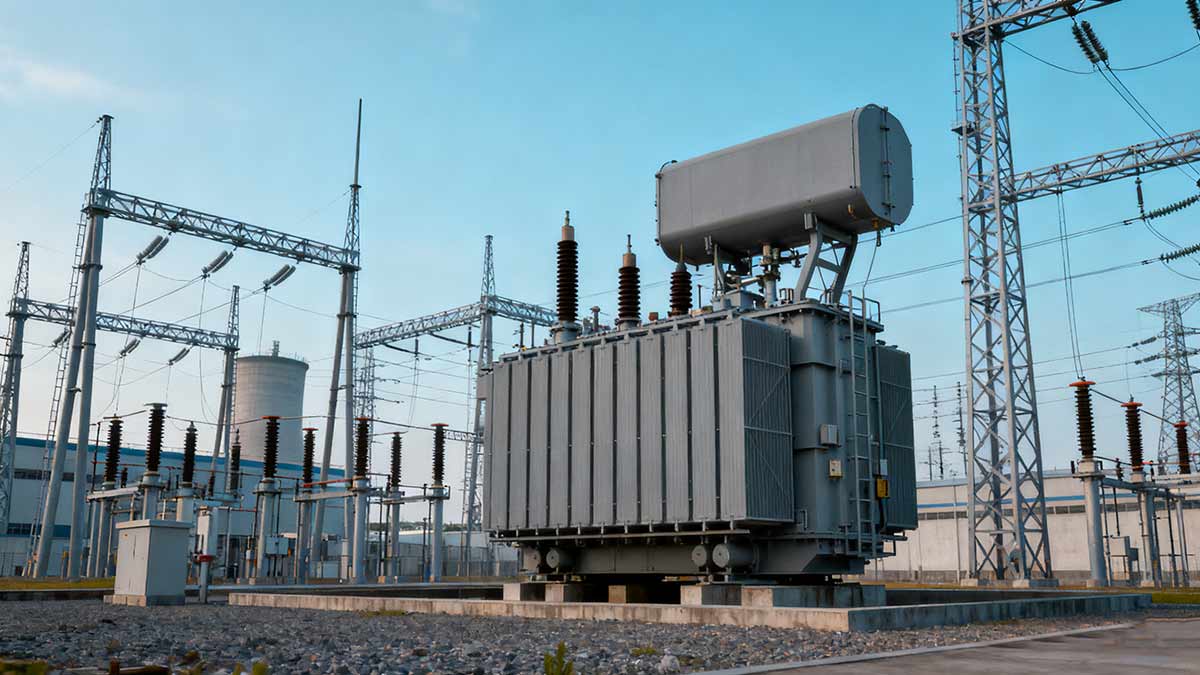
The majority of power transformers utilize oil-immersed insulation, a time-tested design that ensures effective heat dissipation and electrical insulation for high-voltage operations. Two primary structural designs dominate the market: core-type and shell-type transformers. While neither design holds an absolute advantage, core-type transformers are favored by most manufacturers due to their simplified construction, lower production costs, and easier maintenance. In contrast, shell-type transformers feature a more complex structure and manufacturing process, making them primarily the choice of established, traditional manufacturers with specialized expertise. However, shell-type designs excel in high-voltage, large-capacity applications, offering superior insulation performance, mechanical robustness, and heat resistance—qualities that make them ideal for mountainous hydropower stations, where transportation constraints often demand compact, durable equipment.
In power generation and transmission, power transformers serve two indispensable roles: step-up and step-down voltage conversion. At power plants, step-up transformers boost the voltage of generated electricity (typically from 10~35KV to hundreds of KV) to minimize transmission losses during long-distance delivery. Upon reaching regional substations, step-down transformers reduce the voltage to intermediate levels (e.g., 110KV, 35KV) before further reduction to distribution-level voltages (e.g., 10KV) for industrial use, and finally to 220V/380V for residential and commercial consumption. This voltage adjustment process is critical because, in power transmission, both voltage drop and power loss are directly influenced by the transmission voltage. For a given power load, voltage loss is inversely proportional to the transmission voltage, while power loss (primarily due to resistance in transmission lines) is inversely proportional to the square of the voltage. By increasing the transmission voltage through transformers, utility companies can cut power losses by up to 90% compared to low-voltage transmission, making long-distance power delivery economically and environmentally viable.
Distribution Transformers
Distribution transformers are the workhorses of power distribution networks, serving as static electrical devices that convert AC voltage and current to meet the specific needs of end-users. Globally, distribution transformers are available in a wide range of capacities, with top-tier models reaching up to 2500KVA. The core design of distribution transformers typically falls into two categories: round and oval core configurations. Round cores are the industry standard, offering optimal magnetic flux distribution and manufacturing simplicity. Oval cores, by contrast, feature a reduced core column spacing (known as M0), which allows for significant material savings—often reducing core material consumption by 10~15% compared to round cores. This design requires corresponding oval-shaped coils, which are engineered to maintain electrical performance while aligning with the core’s geometry.
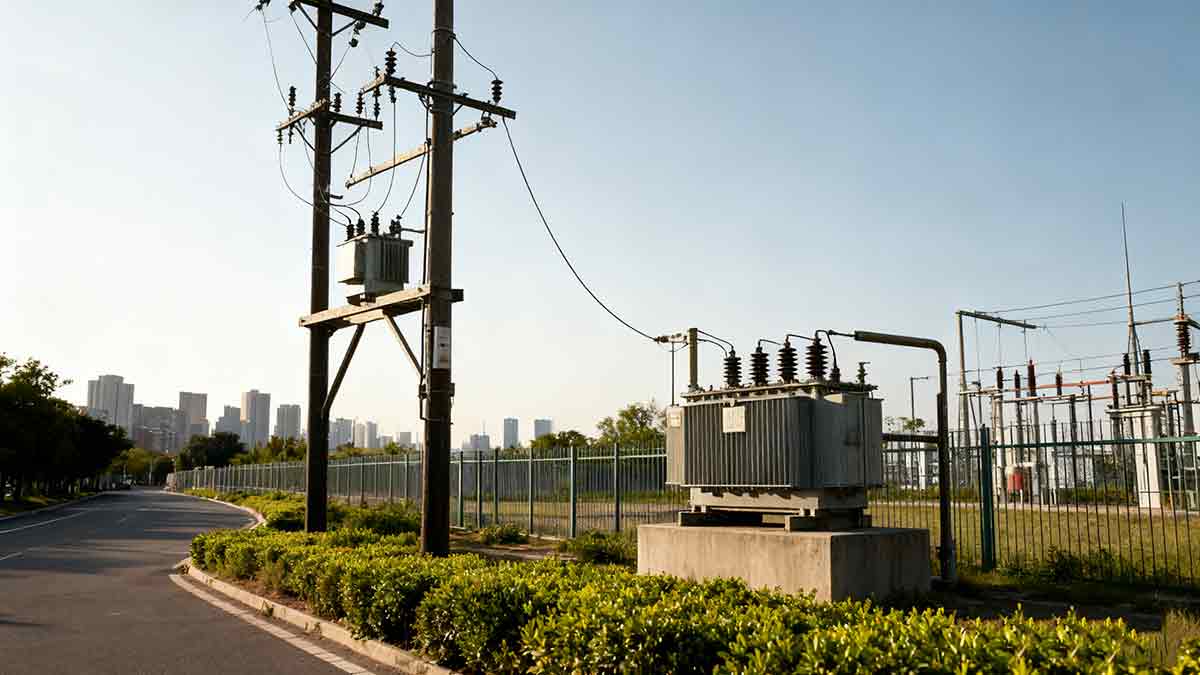
Low-voltage coils in distribution transformers are constructed using two primary materials: copper wire (valued for its high conductivity and durability) and copper foil (offering improved heat dissipation and space efficiency for specific applications). The transformer tank, which houses and protects the core and coils, also varies in design: a small number of models include heating tubes (for cold-climate operations to prevent oil freezing), while the vast majority feature corrugated tanks. Corrugated tanks are preferred for their enhanced heat dissipation capabilities, as the corrugated surface area increases heat transfer to the surrounding environment—ensuring stable operating temperatures even under heavy loads.
Distribution transformers are deployed in a variety of settings, including residential neighborhoods, commercial districts, industrial parks, and rural areas. Their primary role is to step down medium-voltage electricity (e.g., 10KV) to low-voltage levels (220V/380V) that are safe and suitable for everyday electrical devices, machinery, and appliances. As a key component of the power distribution system, distribution transformers must balance reliability, efficiency, and cost-effectiveness to ensure uninterrupted power supply to millions of users.
Dry-Type Transformers
Dry-type transformers are a specialized class of transformers distinguished by their air-insulated design, eliminating the need for insulating oil. These transformers are primarily composed of a laminated silicon steel core (optimized for low iron loss) and epoxy resin-cast coils. To enhance electrical insulation between high-voltage and low-voltage coils, an insulating cylinder is installed, creating a barrier that prevents arcing and ensures safe operation. Dry-type transformers are available in four main structural configurations: epoxy resin-cast, filler-cast, wrapped, and impregnated—each tailored to specific application requirements.
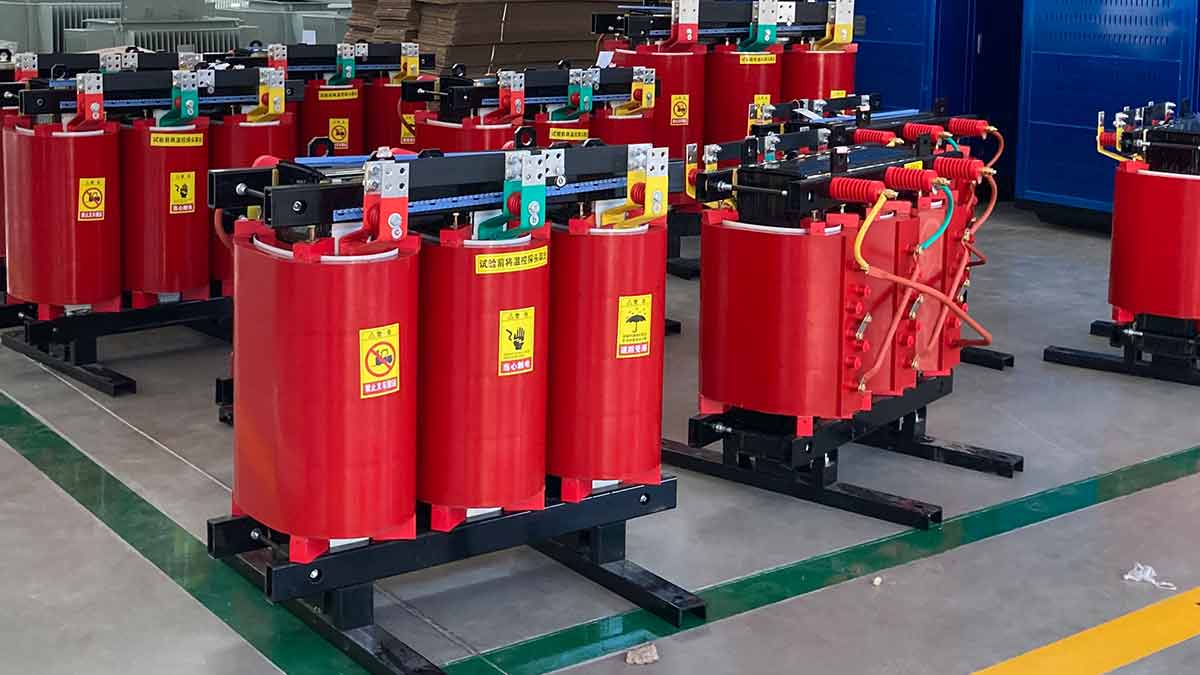
Epoxy resin-cast dry-type transformers are the most common, featuring coils that are cast in epoxy resin under high pressure and temperature. This process creates a rigid, moisture-resistant coating that protects the coils from dust, dirt, and environmental factors. Filler-cast transformers use a specialized filler material combined with epoxy resin to enhance mechanical strength, while wrapped transformers feature coils wrapped in insulating tape and impregnated with resin for improved insulation. Impregnated dry-type transformers undergo a vacuum impregnation process, ensuring that the insulation material penetrates all gaps in the coil windings for maximum protection.
Dry-type transformers offer a host of advantages that make them ideal for demanding environments. Their robust short-circuit resistance stems from the rigid epoxy resin structure, which prevents coil deformation during short-circuit events. They require minimal maintenance compared to oil-immersed transformers, as there is no need for oil testing, replacement, or leak repairs. Additionally, dry-type transformers boast high operating efficiency (often exceeding 99% for modern models), a compact footprint, and low noise levels—making them suitable for indoor installations where space and noise are concerns.
Due to their inherent fire and explosion resistance (no flammable oil), dry-type transformers are the preferred choice for applications with strict safety requirements. Common deployment scenarios include high-rise buildings, data centers, hospitals, airports, subway systems, and industrial facilities where fire safety is paramount (such as chemical plants, oil refineries, and mining operations). Their ability to operate in harsh environments—including high humidity, dust, and temperature fluctuations—further expands their utility, making them a versatile solution for both indoor and outdoor applications where oil-immersed transformers may pose risks.
In summary, main transformers are indispensable to modern power systems, with each classification—power, distribution, and dry-type—playing a unique role in ensuring efficient, safe, and reliable power transmission and distribution. By understanding the design, capabilities, and applications of these transformers, industry professionals can make informed decisions when selecting equipment for their specific needs, ultimately contributing to the stability and sustainability of the global power grid.