
Transformer oil is the lifeblood of oil immersed transformers—its quality directly impacts the transformer’s performance, safety, and lifespan. Neglecting transformer oil test and maintenance can lead to costly breakdowns, unplanned downtime, and expensive repairs for utilities, industrial facilities, and businesses.
The good news is that with proper testing protocols and regular maintenance, you can keep transformer oil in optimal condition, extend your transformer’s service life, and avoid unnecessary expenses. This guide breaks down everything you need to know about testing and maintaining transformer oil, with practical steps, expert tips, and real-world examples to help you protect your investment.
Why Transformer Oil Test & Maintenance Matters (And the Cost of Neglect)
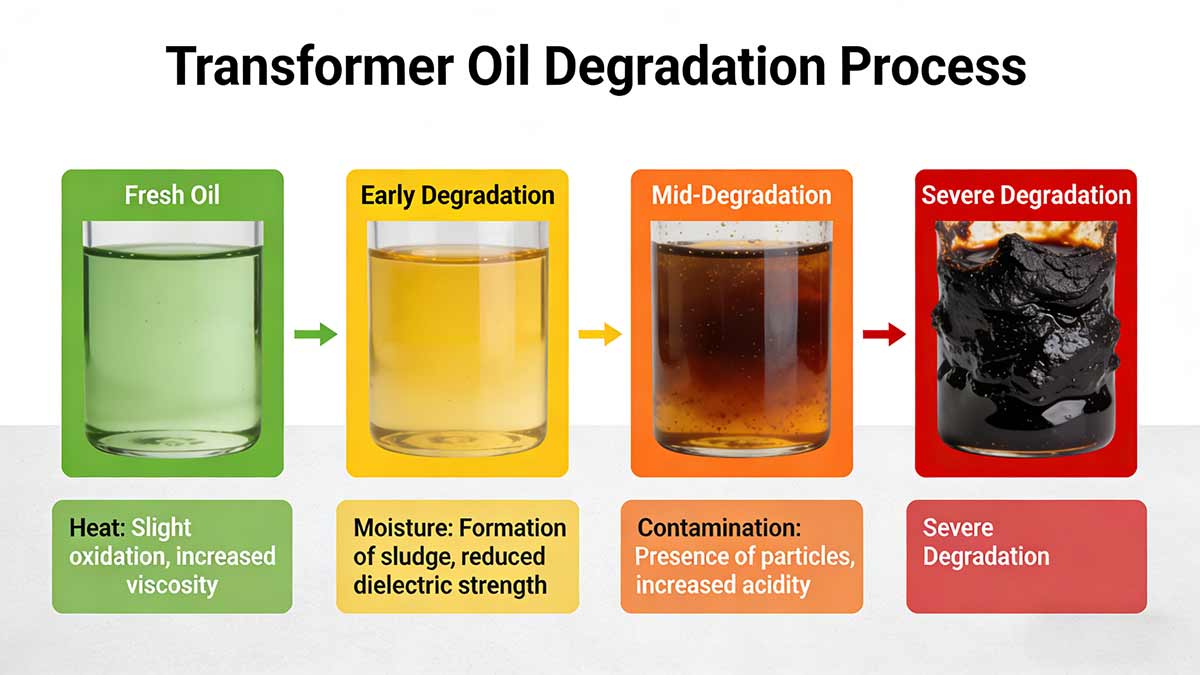
Transformer oil serves two critical roles: cooling the transformer’s core and windings, and insulating electrical components to prevent short circuits and arcing. Over time, oil degrades due to heat, moisture, contamination, and normal wear—and this degradation puts your transformer at risk. Skipping transformer oil test and maintenance doesn’t just shorten the oil’s lifespan; it leads to serious issues that can shut down your entire system.
The Hidden Costs of Poor Transformer Oil Care
Neglecting transformer oil maintenance can result in unexpected expenses that far exceed the cost of regular care. Common consequences include:
- Transformer breakdowns: A single major breakdown can cost $10,000–$50,000+ in repairs or replacement, not including the lost revenue from downtime.
- Reduced transformer lifespan: Degraded oil accelerates wear on internal components, cutting the transformer’s service life by 10–15 years (from 25–40 years to 15–25 years).
- Safety hazards: Contaminated or degraded oil increases the risk of electrical arcing, fires, or oil leaks, endangering personnel and equipment.
- Compliance issues: Many industries (e.g., utilities, manufacturing) have regulations requiring regular transformer oil testing—non-compliance can result in fines.
Case Study: A mid-sized manufacturing plant ignored transformer oil maintenance for three years. In 2023, their main oil immersed transformer suffered a winding short circuit due to moisture-contaminated oil. The breakdown shut down production for 5 days, costing the plant $80,000 in lost revenue plus $35,000 in repairs. A routine transformer oil test would have detected the moisture issue early, costing just $500 to resolve.
How Regular Maintenance Saves You Money
Investing in regular transformer oil tests and maintenance is a cost-effective way to protect your transformer. Here’s how it pays off:
- Early problem detection: Routine tests identify issues (e.g., moisture, contamination, oxidation) before they escalate into major failures.
- Extended oil lifespan: Proper maintenance (e.g., filtration, topping up) can extend transformer oil life by 5–10 years.
- Reduced downtime: Preventing breakdowns means no lost productivity or revenue from unplanned outages.
- Lower repair costs: Fixing small issues (e.g., removing moisture) costs a fraction of repairing a damaged transformer.
Table: Cost Comparison: Regular Maintenance vs. Breakdown Repairs
Activity | Cost | Benefit |
|---|---|---|
Quarterly transformer oil test | $300–$500/year | Early detection of issues |
Annual oil filtration | $800–$1,200/year | Extends oil life by 5–10 years |
Transformer breakdown repair | $10,000–$50,000+ | No benefit—only fixes damage |
Transformer replacement | $50,000–$200,000+ | Necessary only if damage is irreparable |
Key Transformer Oil Tests: What to Check and When
Transformer oil test protocols are designed to measure oil quality, detect contamination, and identify signs of degradation. Not all tests need to be done at the same frequency—some are routine, while others are only necessary if issues are suspected. Below are the most important transformer oil tests, how they work, and how often to perform them.
Routine Transformer Oil Tests (Quarterly/Annual)
These tests are performed regularly to monitor oil quality and catch minor issues early. They are simple, cost-effective, and essential for ongoing maintenance.
1. Visual Inspection
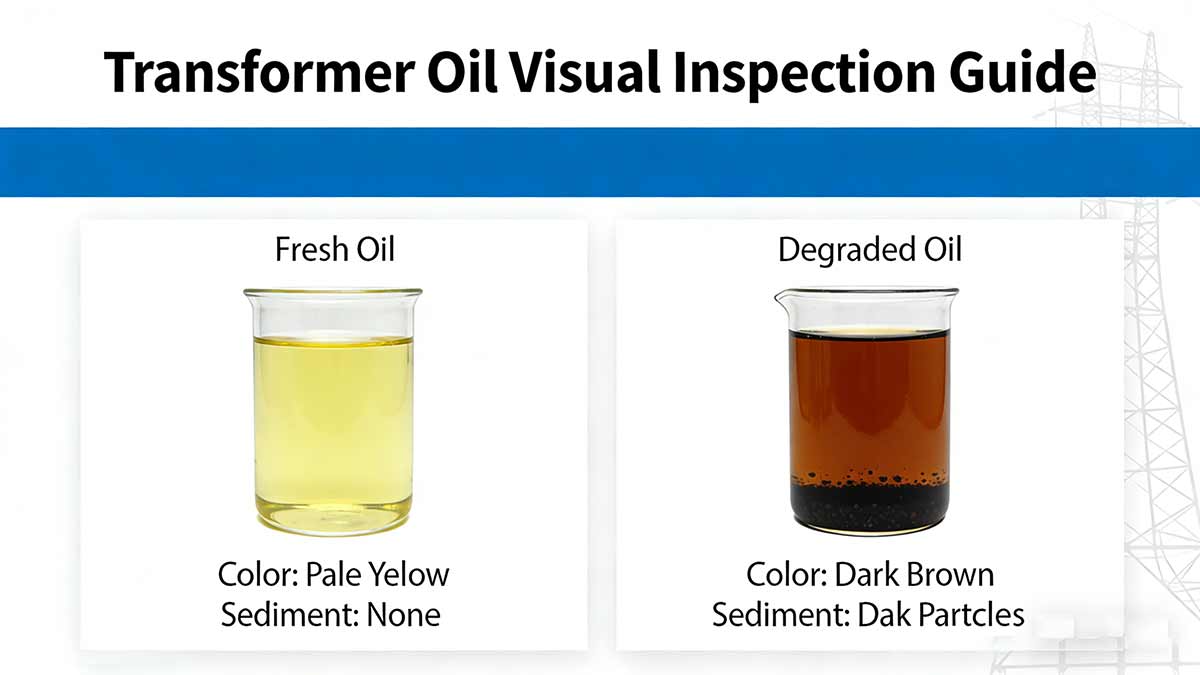
The simplest and most basic transformer oil test is a visual inspection. It requires no special equipment and can be done on-site in minutes:
- Check the oil’s color: Fresh transformer oil is clear or pale yellow. Dark brown, black, or cloudy oil indicates degradation or contamination.
- Look for sediment or particles: Any solid particles (e.g., dirt, metal shavings) in the oil suggest internal component wear or contamination.
- Check for water: Water in the oil will settle at the bottom of the tank (since water is denser than oil) or appear as a cloudy layer.
Frequency: Monthly (as part of routine checks) + quarterly as part of formal testing.
2. Dielectric Strength Test (Breakdown Voltage Test)
This test measures the oil’s ability to insulate electrical components—critical for preventing short circuits. It works by applying increasing voltage to a sample of oil until it breaks down (arcs).
- What it tells you: A high breakdown voltage (≥30 kV) means the oil has good insulating properties. A low voltage (≤25 kV) indicates moisture, contamination, or degradation.
- How it’s done: A sample of oil is placed in a test cell with two electrodes. Voltage is increased at a steady rate until arcing occurs. The voltage at which arcing happens is the breakdown voltage.
Frequency: Quarterly for most transformers; biannually for transformers in low-risk environments.
3. Water Content Test
Water is one of the most damaging contaminants for transformer oil—it reduces insulation strength, accelerates oxidation, and causes corrosion of internal components. This test measures the amount of water in the oil (in parts per million, ppm).
- What it tells you: Acceptable water content depends on the transformer’s voltage rating. For most distribution transformers (11kV–33kV), water content should be ≤30 ppm. Levels above 50 ppm require immediate action.
- Common methods: Karl Fischer titration (most accurate) or portable moisture meters (for on-site testing).
Frequency: Quarterly for outdoor transformers (exposed to moisture); semi-annually for indoor transformers.
Advanced Transformer Oil Tests (Annual/Bi-Annual)
These tests provide deeper insights into oil degradation and internal transformer health. They are typically performed annually or biannually, or if routine tests show issues.
1. Acid Number Test
The acid number (AN) measures the amount of acidic compounds in the oil, which form as the oil oxidizes over time. Acids corrode metal components and reduce the oil’s insulating properties.
- What it tells you: A low acid number (≤0.1 mg KOH/g) means the oil is in good condition. A high acid number (≥0.2 mg KOH/g) indicates significant oxidation and the need for oil treatment or replacement.
- Why it matters: High acid levels can damage the transformer’s windings and core, leading to premature failure.
Frequency: Annually.
2. Dissolved Gas Analysis (DGA)
DGA is an advanced test that measures the types and amounts of gases dissolved in transformer oil. When internal components (e.g., windings) overheat or fail, they produce specific gases—DGA detects these gases to identify potential issues.
- What it tells you: Different gases indicate different problems. For example, high levels of methane and ethane suggest overheating, while hydrogen and acetylene indicate arcing or short circuits.
- Who needs it: Recommended for large transformers (≥500 kVA) or transformers in critical applications (e.g., utility distribution, industrial power systems).
Frequency: Biannually for critical transformers; annually for standard transformers.
3. Viscosity Test
Viscosity measures the oil’s thickness and ability to flow—critical for cooling the transformer. As oil degrades, its viscosity increases, reducing its cooling efficiency.
- What it tells you: Viscosity should remain within the manufacturer’s specifications (typically 10–15 cSt at 40°C). A significant increase in viscosity means the oil is degraded and needs to be replaced.
- Impact: High viscosity reduces heat dissipation, leading to overheating and increased wear on internal components.
Common Question: When Should You Replace Transformer Oil?
Transformer oil doesn’t need to be replaced on a set schedule—replacement depends on test results. You should replace transformer oil if:
- Dielectric strength consistently falls below 25 kV.
- Water content exceeds 50 ppm (for most transformers).
- Acid number exceeds 0.2 mg KOH/g.
- DGA shows high levels of harmful gases (e.g., acetylene).
- The oil is dark black, cloudy, or contains significant sediment.
Step-by-Step Transformer Oil Maintenance Guide
Testing is only half the battle—proper maintenance ensures transformer oil remains in optimal condition. Below is a step-by-step guide to transformer oil maintenance, designed to be easy to follow even for non-experts.
1. Regular Oil Sampling (The Foundation of Maintenance)
Proper sampling is essential for accurate transformer oil test results. Follow these steps to collect a representative oil sample:
- Choose the right sampling point: Use the transformer’s dedicated sampling valve (usually located near the bottom of the tank) to collect the sample.
- Clean the valve: Wipe the valve with a clean cloth to remove dirt, debris, or old oil—this prevents contamination of the sample.
- Flush the valve: Open the valve and let a small amount of oil flow out (about 100–200 ml) to flush out any stagnant oil or contaminants.
- Collect the sample: Use a clean, dry, airtight container (glass or plastic) to collect the sample. Fill the container to the top to minimize air exposure.
- Label the sample: Mark the container with the transformer ID, sampling date, and location. This helps track results over time.
Tip: Always collect samples when the transformer is in operation (or within 2 hours of shutdown) to ensure the oil is well-mixed and representative of the entire tank.
2. Oil Filtration (Remove Contaminants)
Filtration removes solid particles, moisture, and sludge from transformer oil, extending its life and improving performance. Here’s how to do it:
- Choose the right filter: Use a high-efficiency filter (1–5 microns) to remove small particles. For moisture removal, use a vacuum filter or adsorbent filter (e.g., silica gel).
- Filter frequency: Filter the oil annually, or more often if test results show high contamination or moisture levels.
- On-site vs. off-site: Small transformers can be filtered on-site with portable filtration equipment. Large transformers may require off-site filtration by a professional.
Example: A utility company filters all its distribution transformers’ oil annually. After implementing this practice, they saw a 30% reduction in transformer breakdowns related to contamination.
3. Topping Up Oil Levels
Transformer oil levels can drop over time due to minor leaks, evaporation, or temperature changes. Low oil levels reduce cooling and insulation, so it’s important to top up regularly:
- Check oil levels monthly: Use the transformer’s oil level gauge to check levels. The oil should be between the “min” and “max” marks.
- Use the right oil: Always top up with the same type of oil as the existing oil (e.g., mineral oil, synthetic oil). Mixing different oil types can cause degradation.
- Top up carefully: Slowly add oil to avoid creating air bubbles, which can reduce insulation strength. Stop when the level reaches the “max” mark.
4. Leak Detection and Repair
Even small oil leaks can lead to low oil levels and environmental damage. Regular leak checks are an important part of transformer oil maintenance:
- Check for leaks monthly: Inspect the transformer tank, gaskets, valves, and fittings for oil stains or puddles.
- Repair leaks immediately: Small leaks can be fixed by replacing gaskets or tightening fittings. Larger leaks may require professional repair or tank replacement.
- Use leak sealants: For minor leaks, temporary leak sealants can be used until a permanent repair is made. However, sealants are not a long-term solution.
5. Storage and Handling of Transformer Oil
Poor storage and handling can contaminate transformer oil before it’s even used. Follow these tips to keep the new oil clean:
- Store oil in clean, sealed containers: Use dedicated containers for transformer oil—never reuse containers that held other fluids (e.g., gasoline, lubricants).
- Store containers in a cool, dry place: Avoid direct sunlight and extreme temperatures, which can degrade the oil.
- Handle with clean equipment: Use clean funnels, hoses, and containers when transferring oil to the transformer. Avoid touching the oil with your bare hands.
Common Transformer Oil Maintenance Mistakes to Avoid
Even with the best intentions, mistakes in transformer oil test and maintenance can negate your efforts. Below are the most common mistakes and how to avoid them:
Mistake 1: Skipping Routine Tests
Many facility managers skip quarterly transformer oil tests to save time or money. This is a costly mistake—small issues (e.g., moisture) can escalate into major breakdowns if not detected early. Solution: Schedule routine tests on a calendar and stick to them. Consider setting up reminders or working with a professional testing service.
Mistake 2: Using the Wrong Oil for Topping Up
Mixing different types of transformer oil (e.g., mineral oil and synthetic oil) can cause chemical reactions that degrade the oil’s performance. Solution: Always check the transformer’s manual to confirm the correct oil type, and use only that type for topping up or replacement.
Mistake 3: Neglecting Leaks
Small leaks are often ignored, but they can lead to low oil levels and contamination. Solution: Inspect for leaks monthly and repair them immediately. Even a tiny leak can lose several liters of oil over time.
Mistake 4: Poor Sampling Techniques
Contaminated or unrepresentative samples can lead to incorrect test results, which may cause you to miss serious issues. Solution: Follow proper sampling procedures (clean valve, flush, use clean containers) to ensure accurate results.
Mistake 5: Overlooking Environmental Factors
Transformers in harsh environments (e.g., coastal areas, industrial zones) are more prone to oil contamination. Solution: Adjust your maintenance schedule for these transformers—increase testing frequency, use corrosion-resistant tanks, and consider synthetic oil for better protection.
Real-World Example: How Proper Maintenance Prevented a Costly Breakdown
A utility company in the Southeast serves over 300,000 customers with a network of 500+ oil immersed transformers. In 2022, they implemented a comprehensive transformer oil test and maintenance program, including quarterly routine tests, annual filtration, and monthly leak checks. Here’s what happened:
- Quarterly dielectric strength tests detected 12 transformers with low oil insulation (≤25 kV). These transformers were filtered and had their oil topped up, preventing breakdowns.
- Annual DGA tests identified 3 transformers with early signs of winding overheating. Repairs were made before the issue escalated, saving $40,000+ in potential repairs.
- Monthly leak checks found 8 minor leaks, which were repaired immediately. This prevented low oil levels and environmental damage.
After one year, the utility saw a 45% reduction in transformer breakdowns, a 30% decrease in maintenance costs, and a 20% increase in transformer lifespan. The program paid for itself within 6 months.
Conclusion: Transformer Oil Test & Maintenance = Long-Term Savings
Proper transformer oil test and maintenance is not an expense—it’s an investment that protects your transformer, reduces downtime, and saves you money in the long run. By following the steps outlined in this guide, you can keep your transformer oil in optimal condition, avoid costly breakdowns, and extend your transformer’s service life. Remember, transformer oil is the lifeblood of your oil immersed transformer—taking care of it ensures your transformer operates safely and reliably for decades.
Whether you’re a utility, industrial facility, or business owner, implementing a regular transformer oil test and maintenance program is critical. If you’re unsure where to start, or if you need help with testing, maintenance, or choosing the right transformer oil, our team of experts is here to help. We offer tailored solutions to keep your transformers running smoothly and avoid unnecessary expenses.