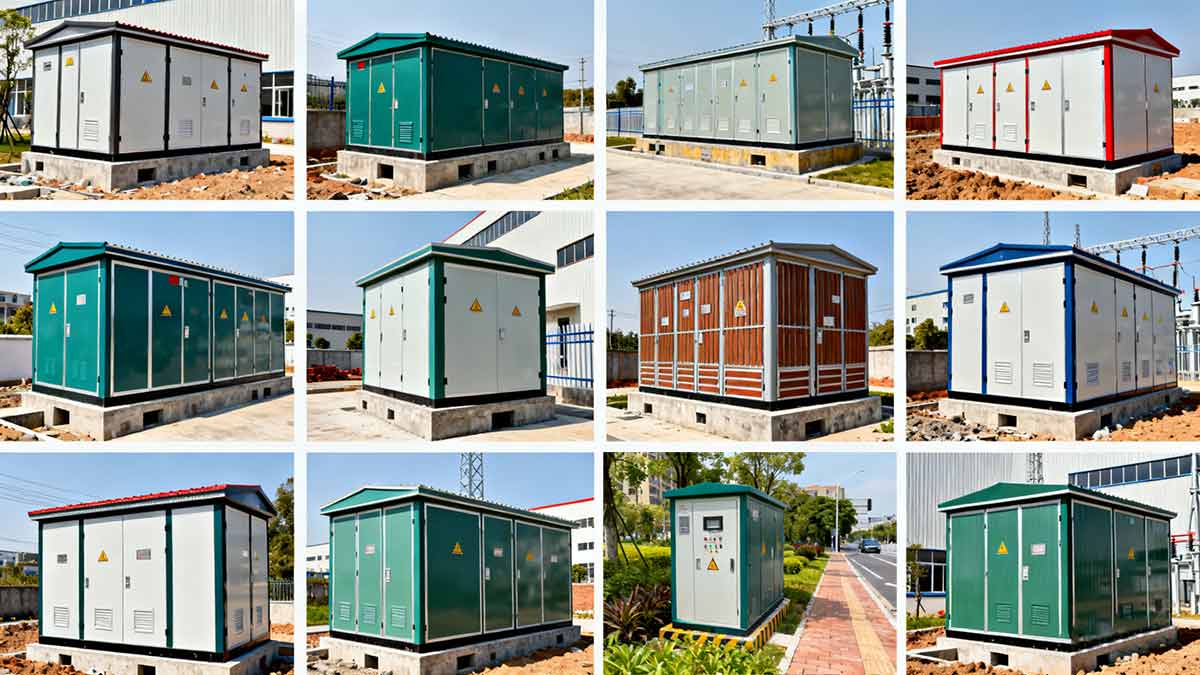
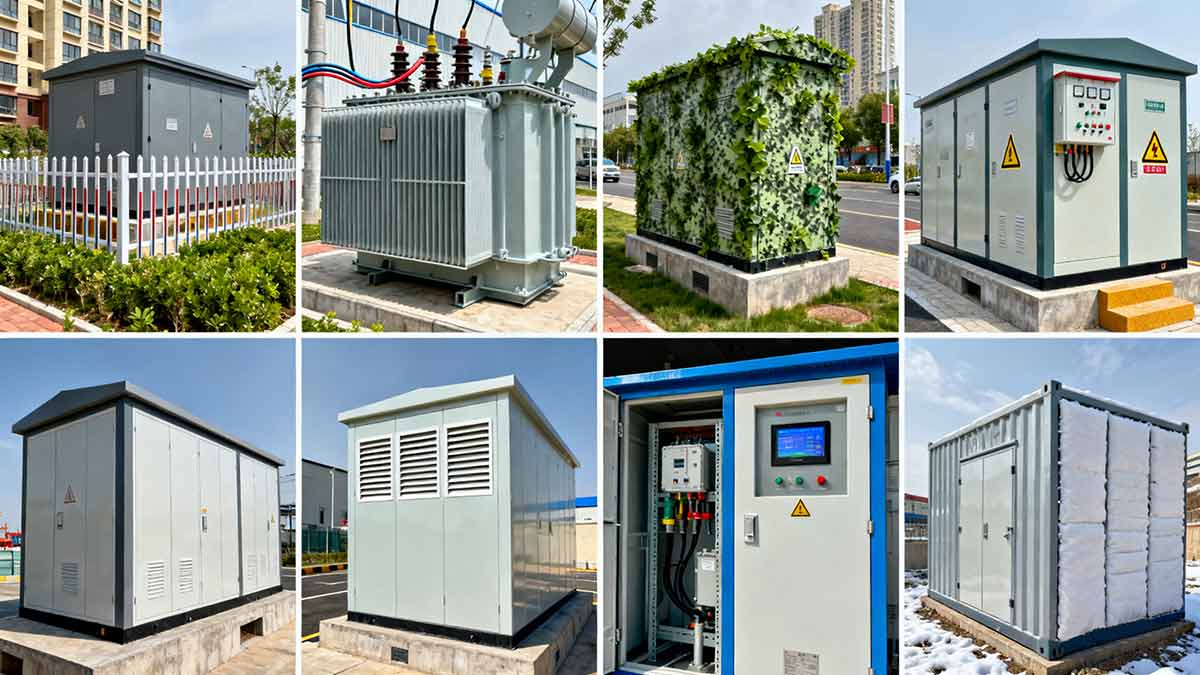
The European-style container substation (often called a combined substation) stands as the most widely adopted variant in everyday power distribution scenarios. Its design features a three-compartment layout, with high-voltage switchgear, distribution transformers, and low-voltage distribution equipment each housed in separate enclosures. These compartments are electrically interconnected via high-performance cables and busbars, ensuring reliable power transmission and simplified maintenance access.

As the dominant type in the global market, European-style substations are celebrated for their robust structure, flexible configuration options, and compliance with international safety standards. A standout example is the 10kV State Grid standardized series, which has become an industry benchmark for its compatibility with grid infrastructure and consistent performance. The popularity of this type is further underscored by the large number of manufacturers specializing in its production, offering a wide range of customization options to meet diverse project needs—from small-scale residential complexes to large industrial facilities.
Distinguished by its unique rear-protruding design, the American-style container substation (known as an integrated substation) offers a more compact footprint compared to its European counterpart. Typically composed of a power transformer, 10kV ring network switchgear, cable connectors, and low-voltage terminal boxes, this integrated system prioritizes space efficiency without compromising functionality.
One of the key advantages of the American-style substation is its simplified installation process, which significantly reduces on-site construction time and labor costs. Its standard dark green enclosure is specifically chosen for its ability to blend seamlessly with urban landscapes, residential communities, and natural environments, minimizing visual impact. Additionally, the integrated design eliminates the need for complex on-site wiring, making it an ideal choice for temporary power supply, emergency projects, or locations with limited space for traditional substations.
Also referred to as a landscape subterranean substation, the buried container substation shares structural similarities with the European-style variant but incorporates specialized optimizations to accommodate underground installation. Its defining feature is its minimal above-ground footprint—some models require no surface land at all—addressing the critical challenge of land scarcity in dense urban areas.
Buried substations are categorized into semi-buried and fully buried configurations. Semi-buried models feature above-ground enclosures that can be customized with advertising panels or decorative elements, functioning as both power distribution hubs and landscape-enhancing structures (hence the term “landscape substation”). Fully buried units, by contrast, are entirely submerged underground, with only maintenance hatches visible at ground level. Both types undergo rigorous waterproofing, corrosion resistance, and thermal insulation treatments to ensure reliable operation in harsh underground conditions, making them perfect for urban centers, parks, and high-end residential areas where space and aesthetics are top priorities.
The prefabricated cabin container substation—often shortened to a prefabricated cabin—represents a larger, more complex iteration of the standard container substation. Its name derives from its container-like exterior, which houses a comprehensive suite of power equipment and auxiliary systems. Developed by State Grid based on the core principle of “standardized distribution,” this smart substation is fully manufactured, assembled, wired, and tested in a factory setting before being transported to the project site for final installation.
Comprising prefabricated enclosures, secondary substation equipment, and on-board auxiliary facilities (such as climate control, lighting, and security systems), the prefabricated cabin offers unparalleled consistency and quality control. Its modular design allows for easy expansion or reconfiguration, adapting to evolving power demands. Ideal for large-scale infrastructure projects, industrial parks, and renewable energy installations (such as solar or wind farms), this type of substation ensures rapid deployment, reduced on-site construction risks, and long-term operational stability.
True to its name, the miniaturized container substation is engineered for ultra-compact performance, making it a game-changer for power distribution in space-constrained urban environments. Based on a “pin-type” layout derived from European-style designs, this innovative substation typically occupies a mere 3 square meters of surface area—roughly the size of a small parking space.
Despite its compact dimensions, the miniaturized substation delivers exceptional performance, thanks to its advanced electrical layout and intelligent control systems. Key features include optimized heat dissipation technology (ensuring stable operation even in high-temperature environments), user-friendly operation interfaces, and simplified maintenance access. Equipped with state-of-the-art intelligent monitoring units, it enables remote operation and real-time data analysis, reducing the need for on-site personnel. This type is particularly well-suited for power transmission and transformation in busy urban roads, commercial districts, and other locations where space is at a premium, proving that “small size” can indeed deliver “big performance.”