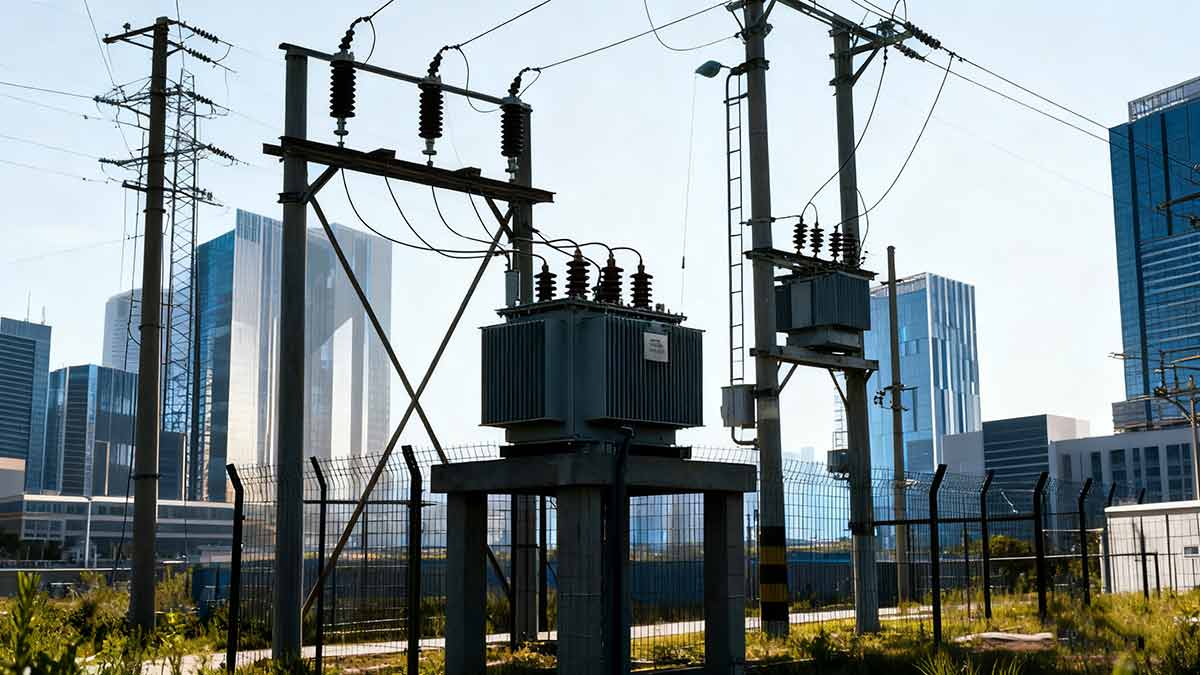
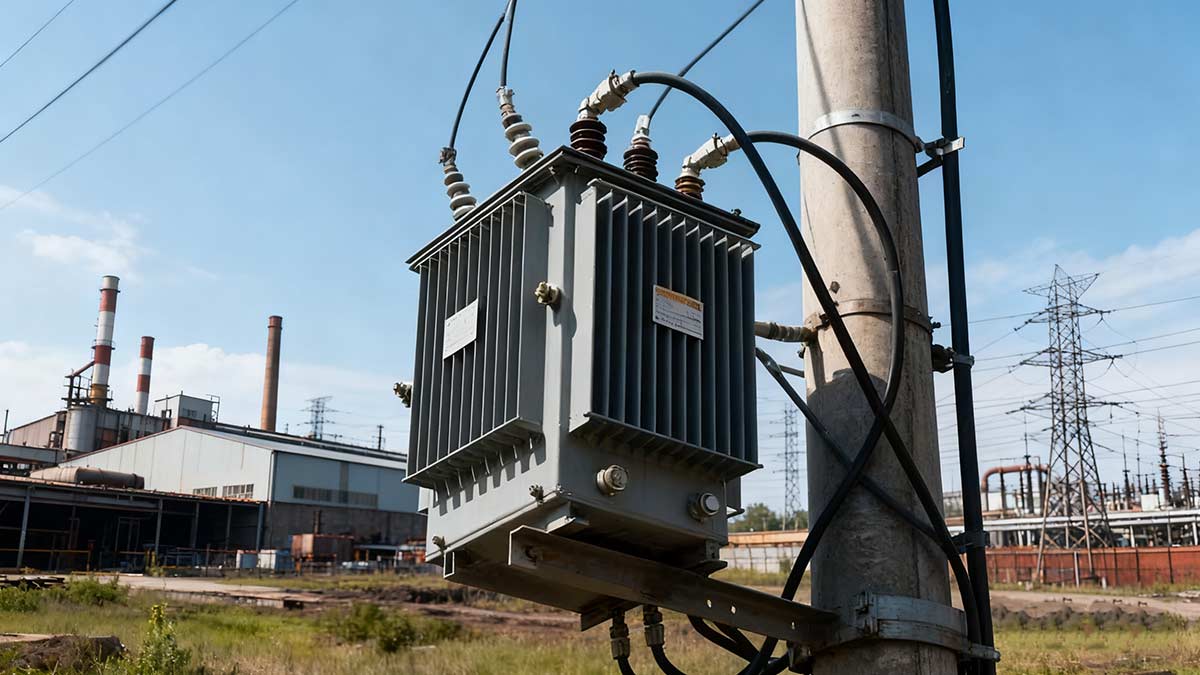
Fuses serve as the first line of defense against overcurrents and short circuits, yet many three-phase oil-immersed transformers lack adequate fusing on either their high-voltage (HV) or low-voltage (LV) sides. In some installations, even when drop-out fuses or horn-type fuses are initially fitted, they are often replaced with aluminum or copper wires— a practice driven by cost-cutting, ignorance of safety standards, or emergency makeshift repairs. Unlike certified fuses, which are engineered to melt at specific current thresholds to interrupt faulty circuits, copper and aluminum wires have extremely high melting points. This means they fail to trip during low-voltage short circuits or sustained overloads, allowing excessive current to flow through the transformer windings. The prolonged exposure to abnormal current levels generates intense heat, gradually degrading insulation and ultimately leading to winding burnout.

Proper fuse sizing is a critical aspect of transformer protection, as fuses must be matched to the transformer’s rated current and fault-clearing capacity. However, over-sizing of fuses is a widespread issue in many power distribution networks. When fuses are rated higher than the transformer’s maximum safe operating current, they lose their ability to respond to severe overloads. For example, a transformer designed for a 50A rated current fitted with a 100A fuse will not shut down even when the load exceeds 50A for extended periods. This prolonged overloading causes the windings to operate at elevated temperatures, accelerating insulation aging and increasing the risk of inter-turn short circuits. Over time, this cumulative damage culminates in transformer burnout.
Rural power distribution systems are particularly prone to phase unbalance, primarily due to the high concentration of single-phase loads (such as lighting, household appliances, and small-scale agricultural equipment). This issue is exacerbated by haphazard jumper connections during installation—wherein wires are often connected without proper load distribution planning—and inadequate ongoing load management. When a transformer operates with significant phase unbalance, one or two phases carry a disproportionate share of the total load. This results in uneven current distribution across the windings, with the overloaded phase experiencing higher current density. The localized overheating from this imbalance accelerates insulation degradation in the affected phase coil. Over months or years of continuous operation, the insulation becomes brittle and prone to breakdown, leading to short circuits and subsequent transformer burnout.
Tap changers are precision components in oil-immersed transformers, designed to adjust the output voltage by altering the number of winding turns in use. Malfunctions in these components are a leading cause of transformer failure:
- Unauthorized or Improper Adjustments: Many transformer failures occur due to unauthorized tap changer adjustments by untrained personnel. Tap changers require precise positioning to ensure proper electrical contact with the windings. When adjusted incorrectly—such as not being fully seated in the desired tap position—poor contact is created. This poor contact generates electrical resistance, which in turn produces localized heat. Over time, this heat damages the tap changer contacts and the adjacent winding insulation, leading to arcing, inter-turn short circuits, and eventual burnout.
- Low-Quality Components: Substandard tap changers, often used to reduce manufacturing costs, may suffer from defects such as incomplete star connection points or inconsistent contact surfaces. These flaws result in poor electrical continuity, causing intermittent arcing, short circuits, or ground discharges. Left unaddressed, these issues escalate rapidly, as arcing damages the winding insulation and can trigger catastrophic failures.
Oil leakage is a common external abnormality in oil-immersed transformers, and its impact extends far beyond mere fluid loss. Insulating oil plays two critical roles: it cools the transformer by dissipating heat generated during operation, and it maintains the insulation integrity of the windings, core, and other internal components. To prevent leakage, transformers use rubber gaskets, seals, and O-rings at all flange connections, valve points, and access covers. However, these rubber components are subject to natural aging due to prolonged exposure to temperature cycles (from cold ambient conditions to high operating temperatures), UV radiation, and chemical degradation from the insulating oil itself. Over time, the rubber hardens, cracks, or loses elasticity, leading to oil seepage or significant leakage. As the oil level drops, the insulation system is exposed to moisture ingress—either from atmospheric humidity or direct contact with water. Moisture degrades the insulation’s dielectric strength, increasing the risk of internal discharges and short circuits. In severe cases, this moisture-induced insulation breakdown can trigger immediate transformer burnout.
Most high-voltage and low-voltage lines connected to oil-immersed transformers are overhead, making them highly susceptible to lightning strikes. Lightning arresters—particularly 10kV-rated units for medium-voltage transformers—are essential protective devices designed to divert transient overvoltages caused by lightning to ground. These arresters limit the voltage surge to a level that the transformer’s insulation can withstand, preventing breakdown. However, in many installations, lightning arresters are either not installed at all, not properly maintained (e.g., damaged or expired components), or not promptly put into operation after maintenance. When a lightning strike occurs, the resulting surge voltage can reach hundreds of kilovolts—far exceeding the transformer’s insulation withstand capacity. This causes immediate insulation breakdown in the windings, bushings, or core, leading to internal short circuits and rapid burnout. Even indirect lightning strikes (e.g., to nearby power lines) can induce high transient voltages that damage the transformer if not protected by functional arresters.
Transformer cores are constructed from thin, insulated steel laminations and are designed to be grounded at a single point. This single-point grounding prevents the formation of circulating currents within the core, which can be induced by the alternating magnetic field during operation. When the core is grounded at multiple points (a common issue caused by mechanical displacement of laminations, contamination with metal particles, or faulty grounding system design), these circulating currents flow freely through the core. The resistance of the core material converts this electrical energy into heat, leading to core overheating. This elevated temperature not only wastes energy but also raises the overall operating temperature of the transformer, accelerating the aging of core insulation and adjacent winding insulation. In severe cases, the heat can cause local melting of core laminations or insulation breakdown, leading to internal short circuits and transformer burnout.
Ground faults or phase-to-phase short circuits on the low-voltage side of an oil-immersed transformer generate extremely high short-circuit currents—typically 20 to 30 times the transformer’s rated current. This sudden surge in current creates intense electromagnetic forces within the transformer, exerting tremendous mechanical stress on the high-voltage windings. The windings, which are tightly wound around the core, are compressed by these forces. When the short circuit is cleared (e.g., by a circuit breaker or fuse), the sudden release of stress causes the windings to rebound. Repeated exposure to this cyclic mechanical stress (from multiple short-circuit events) loosens or dislodges insulating gaskets and spacers, and can even loosen core clamping bolts. This leads to winding distortion, cracking, or physical damage to the insulation layer. Additionally, the high current density during a short circuit generates extreme heat in milliseconds—enough to melt copper windings and ignite insulating materials. The combination of mechanical damage and rapid overheating often results in immediate transformer burnout.
Human error and improper practices are significant contributors to transformer burnout, often stemming from inadequate training, negligence, or non-compliance with safety standards:
- Incompatible Conductive Connections: Transformer outgoing terminals are typically made of copper, while overhead power lines often use aluminum-core cables. When these two dissimilar metals are directly connected without proper transition fittings (such as copper-aluminum compression sleeves or anti-corrosion connectors), electrochemical corrosion occurs. This corrosion is accelerated by moisture, temperature changes, and electrical current flow, leading to the formation of oxide layers at the connection point. These oxide layers increase electrical resistance, generating localized heat. Over time, this heat can melt the connection, cause arcing, and damage the transformer’s terminal blocks or adjacent windings—ultimately leading to burnout.
- Bushing Flashover and Discharge: Bushings are insulating components that allow electrical conductors to enter or exit the transformer tank while maintaining insulation between the conductor and the tank. Flashover (an electrical discharge across the bushing surface) is a common issue caused by poor maintenance, improper installation, or low-quality bushings. Accumulated dirt, dust, salt deposits (in coastal areas), or moisture on the bushing surface reduces its dielectric strength, triggering flashover. Additionally, damaged bushings (e.g., cracks in the insulation) or incorrect spacing between bushings can lead to discharge between phases or to ground. Flashover causes arcing, which damages the bushing and can ignite insulating oil or damage windings—resulting in transformer burnout.
The burnout of oil-immersed transformers is rarely caused by a single factor; instead, it is often the result of cumulative damage from operational stresses, inadequate protection, poor maintenance, or human error. Understanding these root causes is critical for power utilities, industrial facilities, and transformer operators to implement effective preventive measures. By investing in proper fusing and lightning protection, conducting regular load balancing and maintenance (including tap changer inspections, oil level checks, and bushing cleaning), using high-quality components, and ensuring trained personnel handle installations and adjustments, the risk of transformer burnout can be significantly reduced. Proactive monitoring—such as using temperature sensors, oil quality analyzers, and partial discharge detectors—also plays a key role in identifying potential issues before they escalate into catastrophic failures. Ultimately, prioritizing the reliability and safety of oil-immersed transformers not only minimizes downtime and repair costs but also ensures the stable supply of electrical energy to end-users.