
Variable loads are a common challenge for anyone using transformers—whether you’re a utility managing fluctuating power demand, a business with changing operational needs, or a property manager overseeing multiple buildings. Maximizing transformer efficiency under variable loads is critical: it cuts energy costs, reduces wear and tear, and ensures your transformer operates reliably for years. But how exactly do you achieve this?
This article breaks down actionable strategies, common pitfalls to avoid, real-world examples, and expert tips to help you get the most out of your transformer—even when loads rise and fall. By focusing on practical, user-friendly solutions, we’ll help you boost efficiency without complex technical overhauls.
Understanding Transformer Efficiency Under Variable Loads
Before diving into optimization strategies, it’s important to understand what transformer efficiency means—and why variable loads make it harder to maintain. Transformer efficiency refers to how well a transformer converts input electrical energy to output energy, with less energy wasted as heat. Most transformers are designed for peak efficiency at 70–80% of their rated load, but variable loads (which swing between low, medium, and high levels) often push the transformer outside this optimal range, leading to higher energy waste and reduced performance.
Why Variable Loads Hurt Transformer Efficiency
Variable loads create two main efficiency challenges for transformers, both of which lead to unnecessary energy loss:
- Iron losses (no-load losses): These occur even when the transformer is under low load or no load, caused by magnetic core vibration and hysteresis. When loads are consistently low, iron losses make up a larger percentage of total energy use, dragging down efficiency.
- Copper losses (load losses): These increase with load—higher loads mean more current flowing through the windings, leading to more heat and energy waste. Sudden load spikes can cause copper losses to spike, overheating the transformer and reducing efficiency over time.
Transformer Losses Under Different Load Levels
Load Level | Iron Losses (No-Load Losses) | Copper Losses (Load Losses) | Overall Efficiency |
|---|---|---|---|
0–30% (Low Load) | High (constant, makes up 70–80% of total losses) | Low | 50–70% (Poor) |
31–80% (Optimal Load) | Constant (low percentage of total losses) | Moderate (balanced with iron losses) | 95–98% (Peak Efficiency) |
81–110% (High Load/Overload) | Constant (low percentage of total losses) | High (spikes significantly) | 85–94% (Reduced) |
110%+ (Severe Overload) | Constant | Very High (risk of overheating) | Below 85% (Critical) |
Common Question: Why does my transformer waste more energy when loads are low? At low loads, iron losses (which are constant, regardless of load) become the dominant source of energy waste. For example, a transformer with 1kW iron losses and 0.5kW copper losses at 30% load wastes more energy than one at 70% load (1kW iron losses + 2kW copper losses), because the iron losses make up a larger share of total energy use.
Key Factors That Impact Transformer Efficiency Under Variable Loads
Several factors influence how well a transformer handles variable loads—understanding these helps you target your optimization efforts:
- Transformer size: Using a transformer that’s too large for your average load leads to low-load inefficiency (high iron losses). Using one that’s too small causes frequent overloads (high copper losses).
- Age and maintenance: Older transformers have higher iron and copper losses, and poor maintenance (e.g., dirty radiators, old oil) worsens efficiency under variable loads.
- Load variability: How often loads swing, and how extreme the swings are (e.g., a factory with 10% load at night and 100% load during the day vs. a business with a steady 60% load).
- Cooling system performance: Overheating from poor cooling reduces efficiency, especially during load spikes.
Case Study: A small manufacturing plant in Indiana was using a 500kVA transformer, but their average load was only 150kVA (30% of the rated load). They noticed high energy bills and frequent transformer overheating during peak hours. An audit revealed the transformer was too large—iron losses were wasting 20% of their monthly energy use. By switching to a 250kVA transformer (better matched to their average load), they reduced energy waste by 35% and eliminated overheating issues.
Practical Strategies to Maximize Transformer Efficiency Under Variable Loads
Maximizing transformer efficiency under variable loads doesn’t require expensive upgrades or complex technical knowledge. The following strategies are easy to implement, cost-effective, and tailored to address the unique challenges of fluctuating loads. Each strategy includes actionable steps and real-world examples to help you apply it to your own transformer.
1. Choose the Right Transformer Size (Avoid Over-Sizing or Under-Sizing)
The single most effective way to maximize efficiency under variable loads is to use a transformer that’s properly sized for your average load—not your peak load. Over-sizing is the most common mistake, as many businesses and utilities choose a larger transformer “just in case,” but this leads to chronic low-load inefficiency.
- Action Steps:
- Calculate your average load over 1–3 months (use a clamp meter or energy monitoring system to track load levels).
- Choose a transformer with a rated capacity that’s 120–130% of your average load. This leaves room for peak load spikes without over-sizing.
- For extreme load variability (e.g., peak load is 3x average load), consider using two smaller transformers instead of one large one—switch one off during low-load periods to reduce iron losses.
- Example: A retail store in Florida had a 300kVA transformer, but their average load was 100kVA (33% of rated load), and peak load was 250kVA. They replaced the 300kVA unit with two 150kVA transformers. During low-load periods (night, weekends), they use one transformer; during peak hours (weekday afternoons), they switch on both. This reduced energy waste by 40% and cut monthly energy bills by $800.
2. Implement Load Management Techniques
Load management involves balancing load distribution to keep the transformer within its optimal efficiency range (70–80% load). This is especially effective for businesses and utilities with variable loads, as it prevents both low-load waste and high-load overheating.
- Action Steps:
- Identify non-critical equipment (e.g., backup generators, auxiliary lighting) that can be turned off during low-load periods to increase load on the transformer.
- Schedule high-load activities (e.g., manufacturing processes, HVAC systems) during off-peak hours to avoid simultaneous load spikes.
- Use load balancing software to monitor and adjust load distribution in real time—this is especially useful for large facilities or utility networks.
- Example: A hospital in Texas had variable loads ranging from 40% to 95% of their 1000kVA transformer’s rated capacity. They implemented load management by scheduling non-critical equipment (e.g., laundry machines, maintenance tools) to run during low-load periods (night shifts) and staggering high-load equipment (e.g., MRI machines, HVAC) to avoid peak overlap. This kept the transformer within the 70–80% optimal range 80% of the time, increasing efficiency by 12% and reducing energy costs by $12,000 annually.
3. Optimize Transformer Maintenance for Variable Loads
Poor maintenance amplifies the inefficiencies caused by variable loads. Regular maintenance keeps iron and copper losses low, ensures the cooling system works properly, and extends the transformer’s lifespan—all of which help maintain efficiency under fluctuating loads.
- Action Steps:
- For oil immersed transformers: Test oil quality quarterly (to detect contamination or degradation) and replace oil every 5–10 years. Clean radiators semi-annually to ensure proper cooling.
- For all transformers: Inspect windings and connections annually to prevent loose parts (which increase copper losses) and check for signs of overheating (e.g., discoloration, burning smells).
- Replace worn components (e.g., bushings, cooling fans) promptly—faulty parts reduce efficiency and can lead to costly failures during load spikes.
- Example: A utility company in Ohio was struggling with low efficiency in their distribution transformers (average 88% efficiency) due to variable loads. They implemented a targeted maintenance program: quarterly oil testing, semi-annual radiator cleaning, and annual winding inspections. Within six months, average efficiency increased to 94%, and they reduced transformer failures by 30%—saving $50,000 in repair costs and energy waste.
Recommended Maintenance Schedule for Transformers Under Variable Loads
Maintenance Task | Frequency | Purpose (Efficiency Focus) |
|---|---|---|
Oil sampling/testing (oil immersed) | Quarterly | Prevent oil degradation, which increases iron/copper losses |
Radiator/fan cleaning | Semi-annually | Ensure proper cooling, reduce overheating-related inefficiencies |
Winding/connection inspection | Annually | Prevent loose connections, which increase copper losses |
Load and efficiency monitoring | Monthly | Track efficiency trends and adjust load management strategies |
4. Upgrade to Energy-Efficient Transformer Models
If your transformer is older (10+ years), upgrading to a modern, energy-efficient model can significantly improve efficiency under variable loads. Newer transformers are designed with lower iron and copper losses, better cooling systems, and advanced core materials that perform better when loads fluctuate.
- Action Steps:
- Look for transformers labeled “high-efficiency” or “energy-saving”—these typically have lower no-load losses (iron losses) and load losses (copper losses) than older models.
- Consider amorphous core transformers for low-load applications—they have 70–80% lower iron losses than traditional silicon steel core transformers, making them ideal for variable loads with long low-load periods.
- For utility-scale transformers, look for models with on-load tap changers (OLTC)—these adjust voltage automatically as loads change, maintaining efficiency and stability.
- Example: A commercial office building in California had a 15-year-old 400kVA transformer with an average efficiency of 85% under variable loads. They upgraded to a high-efficiency amorphous core transformer of the same size. The new transformer had 75% lower iron losses, increasing average efficiency to 96% and cutting monthly energy bills by $1,200. The upgrade paid for itself in 18 months.
5. Improve Cooling System Performance
Overheating is a major efficiency killer for transformers under variable loads—especially during peak load spikes. A well-functioning cooling system keeps the transformer at optimal operating temperature, reducing iron and copper losses and preventing damage.
- Action Steps:
- For oil immersed transformers: Ensure cooling fans or pumps are working properly—replace faulty fans/pumps immediately. Add auxiliary cooling systems if peak loads consistently cause overheating.
- For dry type transformers: Install ventilation fans or air conditioning in the transformer room to maintain a stable temperature, especially during hot weather.
- Keep the transformer area clear of debris, vegetation, and other obstacles that block airflow—this is a simple, low-cost way to improve cooling.
- Example: A warehouse in Arizona had a 600kVA oil immersed transformer that frequently overheated during summer peak loads (105–110% of rated capacity), reducing efficiency to below 80%. They added auxiliary cooling fans and cleared debris around the transformer’s radiators. This kept the transformer temperature 15°F lower during peak loads, increasing efficiency to 92% and preventing overheating-related failures.
Common Mistakes to Avoid When Optimizing Transformer Efficiency Under Variable Loads
Even with the best strategies, common mistakes can undermine your efforts to maximize efficiency. Avoid these pitfalls to ensure your transformer performs well under variable loads:
Mistake 1: Over-Sizing Transformers “Just in Case”
Many businesses and utilities choose a larger transformer than they need to handle occasional peak loads, but this leads to chronic low-load inefficiency. As shown earlier, transformers at 30% load or lower waste significant energy due to high iron losses. Instead of over-sizing, use load management or multiple smaller transformers to handle peak loads.
Mistake 2: Ignoring Low-Load Periods
Low-load periods (e.g., nights, weekends, holidays) are often overlooked, but they’re a major source of energy waste. Leaving a large transformer running at 20–30% load for hours or days wastes more energy than occasional peak overloads. Use load management or switch off transformers during long, low-load periods to reduce iron losses.
Mistake 3: Skipping Maintenance to Save Costs
Cutting maintenance costs may seem like a short-term win, but it leads to higher energy waste and costly failures in the long run. Dirty radiators, old oil, and loose connections all increase losses under variable loads—investing in regular maintenance saves money on energy and repairs.
Mistake 4: Not Monitoring Load and Efficiency
You can’t optimize what you don’t measure. Without monitoring load levels and efficiency, you won’t know when your transformer is operating outside the optimal range or when maintenance is needed. Use simple tools (clamp meters, energy monitors) to track performance and adjust your strategies accordingly.
Real-World Success Stories: Maximizing Transformer Efficiency Under Variable Loads
These case studies show how businesses and utilities have successfully improved transformer efficiency under variable loads using the strategies outlined above. They demonstrate that with simple, targeted efforts, you can cut energy costs and extend your transformer’s lifespan.
Success Story 1: Utility Company Reduces Energy Waste by 45%
A utility company in Michigan managed 50 distribution transformers serving rural and suburban areas, with variable loads ranging from 20% to 90% of rated capacity. They were struggling with high energy waste and frequent transformer failures. Their solution:
- Replaced 15 oversized transformers with properly sized units (120% of average load).
- Implemented load balancing software to adjust power distribution and avoid peak overloads.
- Launched a quarterly maintenance program (oil testing, radiator cleaning, winding inspections).
Results: Average transformer efficiency increased from 86% to 95%, energy waste reduced by 45%, and transformer failures dropped by 35%. The utility saved $120,000 annually in energy and repair costs.
Success Story 2: Manufacturing Plant Cuts Energy Bills by $20,000/Year
A manufacturing plant in Illinois had two 800kVA transformers with variable loads (30% load at night, 100% load during production hours). They were wasting energy on low-load nights and experiencing overheating during peak hours. Their solution:
- Switched to two 500kVA high-efficiency transformers (better matched to the average load).
- Implemented load management: scheduled non-critical equipment to run during low-load periods and staggered production processes to avoid peak overlap.
- Added auxiliary cooling fans to prevent overheating during peak loads.
Results: Transformer efficiency increased from 82% to 96%, monthly energy bills dropped by $1,700 (total $20,400/year), and overheating failures were eliminated.
How to Monitor Transformer Efficiency Under Variable Loads
Monitoring is key to maintaining efficiency under variable loads. You don’t need complex equipment—simple tools can help you track performance and identify issues early. Here’s how to monitor effectively:
Tools for Monitoring
- Clamp meter: Measures current and load levels to ensure the transformer stays within the optimal 70–80% range.
- Energy monitor: Tracks energy use over time, helping you identify low-load and high-load patterns.
- Temperature sensor: Monitors transformer temperature to detect overheating before it reduces efficiency or causes damage.
- Oil quality tester (for oil immersed transformers): Checks for contamination or degradation that increases losses.
Key Metrics to Track
- Load factor: The ratio of average load to peak load (aim for 0.7–0.8 for optimal efficiency).
- Efficiency percentage: Calculate monthly using (output energy/input energy) x 100—track trends to identify drops.
- Temperature: Keep transformer temperature within the manufacturer’s recommended range (typically 60–80°C for oil immersed units).
- Energy waste: Track total energy loss (input energy – output energy) to measure the impact of your optimization efforts.
When to Consult a Professional for Transformer Efficiency Optimization
While many efficiency strategies can be implemented in-house, there are times when you should consult a transformer expert. Here are the signs it’s time to get professional help:
- Your transformer’s efficiency is consistently below 85% despite maintenance and load management.
- You’re experiencing frequent overheating or failures during peak loads.
- You’re unsure about the right transformer size or need help upgrading to a high-efficiency model.
- You manage a large number of transformers (e.g., utility networks) and need a customized optimization plan.
A professional transformer expert can conduct a detailed efficiency audit, recommend tailored solutions, and help you implement strategies that maximize efficiency while fitting your budget.
Conclusion: Maximize Transformer Efficiency Under Variable Loads With Simple, Targeted Efforts
Maximizing transformer efficiency under variable loads is not about complex technical upgrades—it’s about choosing the right size, managing loads wisely, maintaining your transformer properly, and monitoring performance. By following the strategies outlined in this article, you can cut energy costs, reduce wear and tear, and ensure your transformer operates reliably for years—even when loads rise and fall.
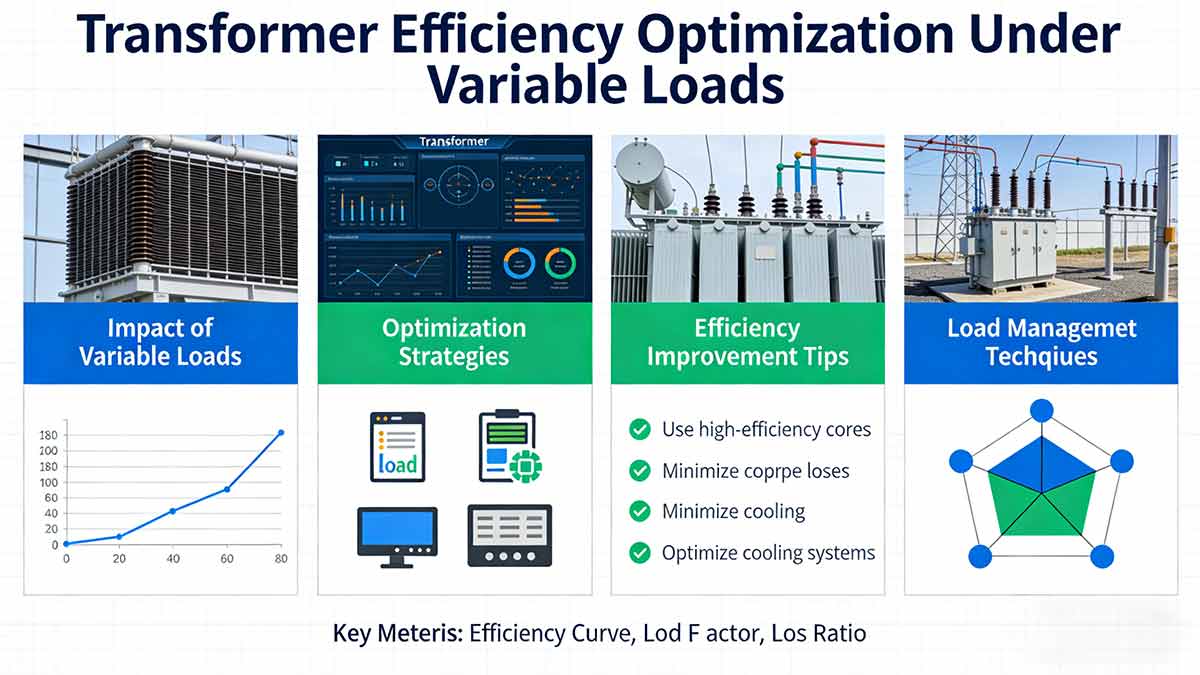
Remember, the key is to focus on balance: keeping your transformer within its optimal efficiency range (70–80% load) as much as possible, reducing iron losses during low-load periods, and preventing copper losses during peak loads. With regular maintenance and smart load management, you can get the most out of your transformer and avoid unnecessary expenses.
If you’re struggling to maximize transformer efficiency under variable loads, or if you need help choosing the right transformer size, upgrading to a high-efficiency model, or implementing a maintenance plan, our team of transformer experts is here to help. We offer tailored solutions to meet your specific needs, ensuring your transformer operates efficiently and reliably—no matter how loads fluctuate. To learn more, reach out to our team today and take the first step toward better transformer efficiency.