
Every watt of energy wasted by a transformer adds up—costing utilities, businesses, and property managers thousands of dollars annually. Transformer efficiency measurement and optimization are critical to reducing energy waste, lowering operational costs, and extending transformer lifespan. Most transformers operate at less than 100% efficiency, but small improvements can lead to significant savings over time.
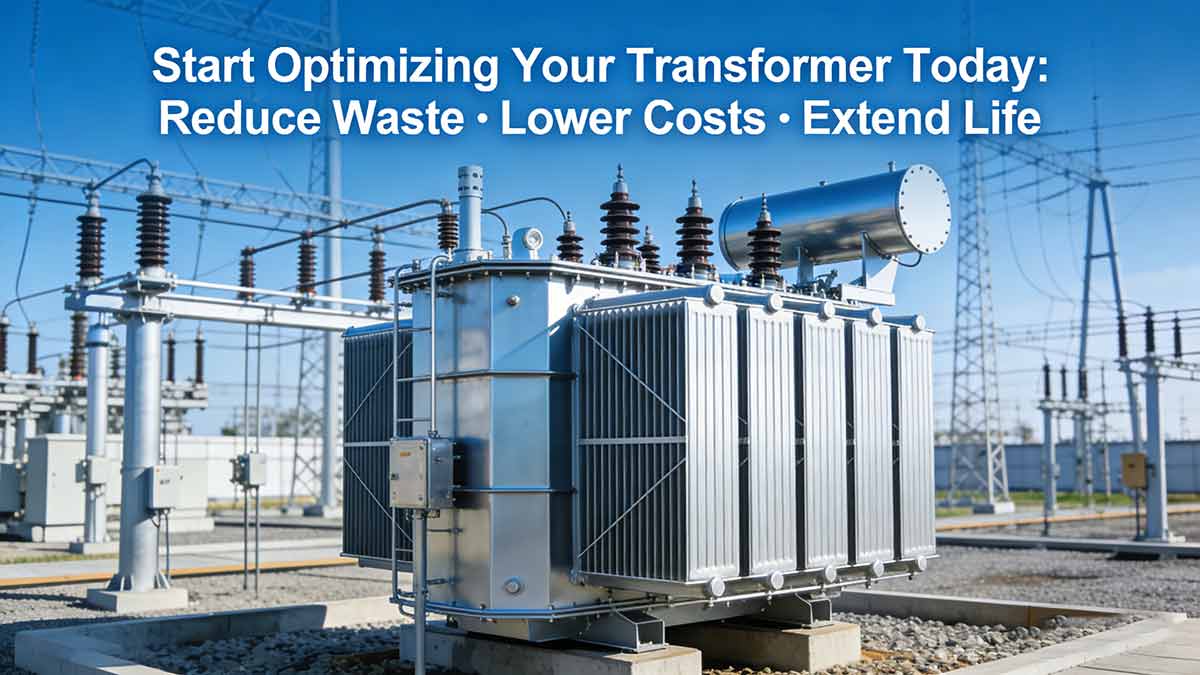
In this article, we break down how to measure transformer efficiency correctly, common factors that reduce efficiency, and actionable strategies to optimize performance—all in simple, easy-to-understand terms. By the end, you’ll know exactly how to stop wasting energy and get the most out of your transformer.
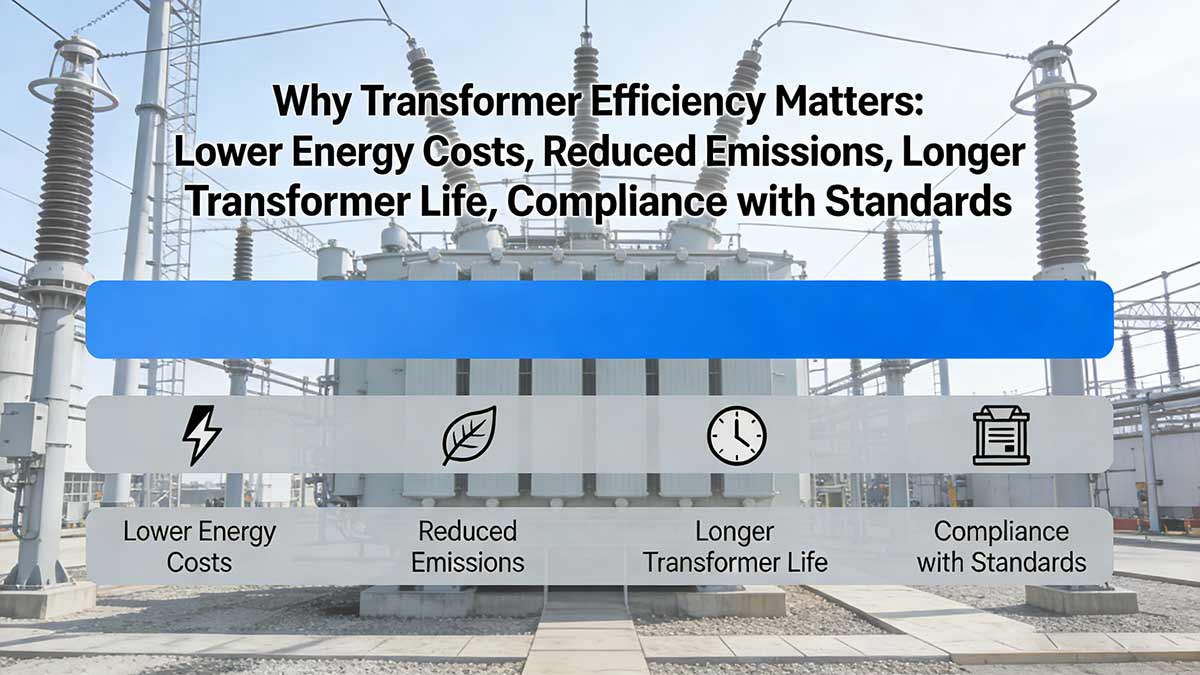
Why Transformer Efficiency Matters (And How Much Energy You’re Wasting)
Transformer efficiency refers to how well a transformer converts input electrical energy into output energy—expressed as a percentage. Even a 1% drop in efficiency can result in massive energy waste, especially for transformers that operate 24/7. For example, a 1000kVA transformer operating at 98% efficiency wastes 20,000 kWh of energy per year—that’s over $2,000 in unnecessary utility costs (based on average electricity rates). Understanding why efficiency matters is the first step to reducing waste:
- Lower energy costs: Efficient transformers use less electricity, cutting monthly utility bills for businesses and utilities.
- Reduced environmental impact: Less energy waste means fewer greenhouse gas emissions, aligning with sustainability goals.
- Extended transformer life: Efficient transformers run cooler, reducing wear and tear on internal components and avoiding costly breakdowns.
- Compliance with standards: Many regions have energy efficiency regulations for transformers—optimizing efficiency ensures compliance and avoids penalties.
Case Study: A mid-sized manufacturing plant in Indiana was using three 500kVA transformers operating at 96% efficiency. After optimizing their transformers to 99% efficiency, the plant reduced annual energy waste by 45,000 kWh—saving over $4,500 in utility costs and extending the transformers’ expected lifespan by 5 years.
Common Question: What is a good efficiency rating for a transformer? Most modern transformers have an efficiency rating between 95–99%. Distribution transformers (used by utilities) typically range from 97–99%, while industrial transformers may be slightly lower (95–98%) due to heavier load demands.
Transformer Efficiency Measurement: Step-by-Step Guide
Accurate transformer efficiency measurement is essential—you can’t optimize what you don’t measure. The process involves calculating the ratio of output power to input power, accounting for energy losses. Below is a simple, step-by-step guide to measuring efficiency, suitable for non-professionals (always consult a technician for high-voltage transformers).
Key Terms to Understand Before Measuring
Before you start measuring, familiarize yourself with these basic terms to avoid mistakes:
- Input Power (Pin): The electrical energy supplied to the transformer (measured in watts or kilowatts).
- Output Power (Pout): The electrical energy delivered by the transformer to the load (measured in watts or kilowatts).
- Energy Losses: The energy lost as heat, sound, or vibration during conversion—these reduce efficiency.
- Efficiency (η): Calculated as (Pout / Pin) x 100%—the higher the percentage, the more efficient the transformer.
Tools Needed for Transformer Efficiency Measurement
You don’t need expensive equipment to measure transformer efficiency—basic tools will work for most small to medium transformers:
- Voltage meter: To measure input and output voltage (in volts, V).
- Clamp meter: To measure input and output current (in amps, A)—safe for non-contact measurements.
- Power factor meter (optional): To account for power factor (critical for accurate measurements in industrial settings).
- Notebook or spreadsheet: To record measurements and calculate efficiency.
Step-by-Step Measurement Process
Follow these steps to measure transformer efficiency safely and accurately:
- Prepare the transformer: Ensure the transformer is operating at its normal load (not under or overloaded) for at least 30 minutes—this allows it to reach a stable temperature.
- Measure input power (Pin): Use the voltage meter to measure input voltage (Vin) and the clamp meter to measure input current (Iin). For single-phase transformers, calculate Pin = Vin x Iin x PF (PF = power factor, usually 0.8–0.9 for most applications). For three-phase transformers, use Pin = √3 x Vin x Iin x PF.
- Measure output power (Pout): Repeat the process for the transformer’s output—measure output voltage (Vout) and output current (Iout), then calculate Pout = Vout x Iout x PF (single-phase) or √3 x Vout x Iout x PF (three-phase).
- Calculate efficiency: Use the formula η = (Pout / Pin) x 100%. Round to one decimal place for clarity.
- Verify results: Repeat the measurements 2–3 times to ensure consistency. If results vary by more than 1%, check your tools or consult a professional.

Common Mistakes in Transformer Efficiency Measurement
Many people make these errors when measuring transformer efficiency, leading to inaccurate results:
- Measuring at non-steady load: If the transformer is under- or overloaded, measurements will be skewed. Always measure at normal operating load.
- Ignoring power factor: For inductive loads (e.g., motors, industrial equipment), power factor affects accuracy—always include it in calculations.
- Using faulty tools: Old or uncalibrated meters can give incorrect readings. Calibrate your tools annually.
- Forgetting temperature: Transformer efficiency drops as temperature rises—measure at the transformer’s normal operating temperature.
Measurement | Input (Pin) | Output (Pout) |
|---|---|---|
Voltage (V) | 480V | 240V |
Current (A) | 104.2A | 208.3A |
Power Factor (PF) | 0.85 | 0.85 |
Power (kW) | 42.5 kW | 41.6 kW |
Efficiency (η) | 97.9% | |
Key Factors That Reduce Transformer Efficiency
Understanding what causes low transformer efficiency is critical to optimization. Most energy losses fall into two categories: core losses (constant, even at low load) and load losses (increase with load). Below are the most common factors that reduce efficiency, along with how to identify them:
1. Core Losses (Iron Losses)
Core losses occur in the transformer’s magnetic core, even when the transformer is lightly loaded or no load is applied. They are caused by two main issues:
- Hysteresis loss: Energy lost when the magnetic field in the core reverses direction (caused by alternating current).
- Eddy current loss: Energy lost due to small electrical currents (eddies) induced in the core material.
Key Signs: Core losses are constant, so you’ll notice higher energy waste even when the transformer is not heavily loaded. Old transformers with outdated core materials (e.g., silicon steel) have higher core losses.
2. Load Losses (Copper Losses)
Load losses occur in the transformer’s windings (made of copper or aluminum) and increase as the load on the transformer increases. They are caused by:
- Resistance in the windings: Electrical current passing through the windings generates heat, wasting energy.
- Stray losses: Energy lost due to magnetic fields leaking from the windings.
Key Signs: Load losses increase during peak hours (e.g., morning/evening for utilities, production hours for factories). You may notice the transformer getting hot to the touch during high load.
3. Poor Maintenance
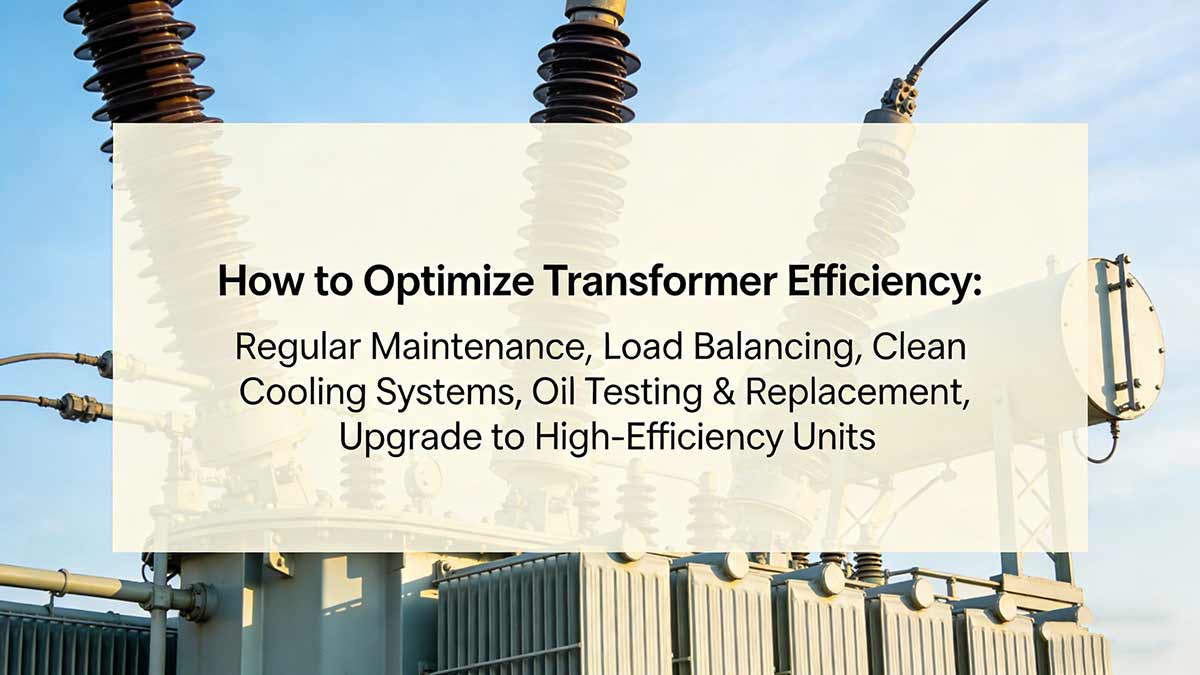
Neglecting maintenance is one of the biggest causes of reduced transformer efficiency. Common maintenance issues that waste energy include:
- Dirty radiators or cooling fans: Reduce heat dissipation, causing the transformer to run hotter and less efficiently.
- Contaminated transformer oil (oil immersed units): Dirty or degraded oil increases core and winding losses.
- Loose connections: Increases resistance in the windings, leading to higher load losses.
Example: A utility company in Florida noticed their 10-year-old oil immersed transformer’s efficiency dropped from 98% to 95% over two years. An inspection revealed dirty radiators (blocked by dust and debris) and contaminated oil. Cleaning the radiators and replacing the oil restored efficiency to 97.5%.
4. Overloading or Underloading
Transformers are designed to operate at their “rated load” (the load they’re designed to handle) for maximum efficiency. Operating above or below this load reduces efficiency:
- Overloading: Causes excessive heat, increases load losses, and shortens transformer life.
- Underloading: Core losses remain constant, but output power is low—resulting in lower efficiency (e.g., a 500kVA transformer operating at 20% load may have efficiency as low as 90%).
Transformer Efficiency vs. Load Level
Load Level (%) | Efficiency (%) (Typical 500kVA Transformer) | Energy Waste (kWh/Year) |
|---|---|---|
20% (Underloaded) | 90.5% | 43,800 |
50% (Moderate Load) | 97.2% | 10,220 |
75% (Optimal Load) | 98.5% | 5,110 |
100% (Rated Load) | 98.2% | 6,300 |
110% (Overloaded) | 97.0% | 12,600 |
5. Outdated Transformer Design
Older transformers (20+ years old) use outdated materials and designs that are far less efficient than modern units. For example, transformers built before 2000 often use standard silicon steel cores, while modern transformers use high-efficiency grain-oriented silicon steel, reducing core losses by 30–40%.
Transformer Efficiency Optimization: Practical Strategies to Stop Wasting Energy
Optimizing transformer efficiency doesn’t require expensive upgrades—many strategies are low-cost or even free. Below are actionable steps to reduce energy waste and boost efficiency, organized by priority:
1. Improve Maintenance Practices (Low Cost, High Impact)
Regular maintenance is the easiest way to maintain or improve transformer efficiency. Focus on these tasks:
- Clean cooling systems: For oil immersed transformers, clean radiators quarterly to remove dust, debris, and dirt. For dry type transformers, clean cooling fans and vents to ensure proper airflow.
- Test and replace transformer oil: For oil immersed units, test oil quarterly for contamination (e.g., water, dirt) and replace it every 5–10 years. Use high-quality transformer oil to reduce losses.
- Inspect and tighten connections: Check winding connections annually for looseness—tightening connections reduces resistance and load losses.
- Monitor temperature: Use a temperature sensor to track the transformer’s operating temperature. If it’s consistently above 80°C, investigate cooling issues.
Tip: Implement a maintenance schedule (see table below) to ensure you don’t miss critical tasks. This can improve efficiency by 1–3% with minimal cost.
2. Optimize Load Distribution
Matching the transformer’s load to its rated capacity is key to maximum efficiency. Use these strategies to optimize load distribution:
- Balance loads: If you have multiple transformers, distribute the load evenly between them to avoid overloading one unit and underloading another.
- Upgrade to the right size: If a transformer is consistently underloaded (below 50% load) or overloaded (above 100% load), replace it with a properly sized unit. For example, a 500kVA transformer operating at 20% load can be replaced with a 100kVA unit, reducing core losses by 80%.
- Use load management tools: For industrial or commercial facilities, use load monitoring software to track load patterns and adjust usage during peak hours.
Case Study: A retail store chain had two 300kVA transformers operating at 30% and 90% load, respectively. By balancing the load to 60% for each transformer, they improved overall efficiency from 95% to 97.8%, reducing annual energy waste by 18,000 kWh.
3. Upgrade to High-Efficiency Components
For older transformers, upgrading key components can significantly improve efficiency. Focus on these upgrades:
- High-efficiency core materials: Replace outdated silicon steel cores with grain-oriented silicon steel or amorphous steel—reduces core losses by 30–40%.
- Copper windings: If your transformer has aluminum windings, replace them with copper windings—copper has lower resistance, reducing load losses by 15–20%.
- Advanced cooling systems: Install forced air cooling (FAC) or forced oil cooling (FOC) systems to improve heat dissipation, especially for high-load applications.
Note: Upgrades have upfront costs, but they pay for themselves through energy savings. For example, a $5,000 core upgrade can save $1,500–$2,000 annually in energy costs.
4. Replace Outdated Transformers
If your transformer is 20+ years old and has efficiency below 95%, replacing it with a modern high-efficiency transformer is the most cost-effective long-term solution. Modern transformers (e.g., IE3 or IE4 efficiency classes) have efficiency ratings of 97–99%, reducing energy waste by 50–70% compared to older units.
Recommended Maintenance Schedule for Transformer Efficiency
Maintenance Task | Frequency | Efficiency Impact |
|---|---|---|
Clean radiators/fans | Quarterly | 0.5–1.0% |
Oil sampling/testing (oil immersed) | Quarterly | 0.3–0.8% |
Inspect/tighten connections | Annually | 0.2–0.5% |
Temperature monitoring | Monthly | Prevents efficiency loss |
Full efficiency measurement | Bi-annually | Tracks improvements |
Common Myths About Transformer Efficiency (Debunked)
There are many misconceptions about transformer efficiency that prevent businesses and utilities from optimizing their units. Below are the most common myths, debunked with facts:
Myth 1: Higher Efficiency Means Higher Cost
Fact: While high-efficiency transformers may have a slightly higher upfront cost (10–15% more than standard units), they save money in the long run. A high-efficiency transformer pays for itself in 2–5 years through energy savings, and it has a longer lifespan (25–40 years vs. 15–20 years for standard units).
Myth 2: Transformers Operate at 100% Efficiency
Fact: No transformer is 100% efficient—some energy is always lost as heat, sound, or vibration. The best modern transformers reach 99% efficiency, but even small losses add up over time. Measuring and optimizing efficiency ensures you’re minimizing these losses.
Myth 3: Maintenance Doesn’t Affect Efficiency
Fact: Poor maintenance is one of the biggest causes of reduced efficiency. A dirty transformer with contaminated oil can lose 2–3% efficiency, which translates to thousands of dollars in annual energy waste. Regular maintenance is the easiest way to keep efficiency high.
Myth 4: Underloading a Transformer Saves Energy
Fact: Underloading a transformer wastes more energy than operating it at optimal load. Core losses remain constant, so a transformer operating at 20% load wastes more energy per unit of output than one operating at 75% load. Always match the transformer size to the load.
How to Calculate Energy Savings from Transformer Efficiency Optimization
Calculating how much you can save by optimizing transformer efficiency is simple. Use this formula to estimate annual energy savings:
Annual Energy Savings (kWh) = (Current Efficiency – Optimized Efficiency) / 100 x Annual Input Power (kWh)
Example: A 1000kVA transformer operates at 96% efficiency and uses 8,760,000 kWh of input energy annually (24/7 operation). Optimizing to 99% efficiency saves:
(96 – 99) / 100 x 8,760,000 = 262,800 kWh/year. At $0.10/kWh, that’s $26,280 in annual savings.
Tip: Use an online transformer efficiency calculator to simplify this process—many utilities and manufacturers offer free calculators.
When to Replace vs. Optimize a Transformer
Not all transformers are worth optimizing—sometimes replacement is the better option. Use these guidelines to decide:
- Optimize if: The transformer is less than 15 years old, efficiency is 95% or higher, and maintenance/upgrades can improve efficiency by 1–3%.
- Replace if: The transformer is 20+ years old, efficiency is below 95%, repairs/upgrades cost more than 50% of a new transformer, or it’s consistently overloaded/underloaded.
Example: A utility company had a 25-year-old transformer with 94% efficiency. Upgrading the core and windings would cost $8,000, while a new high-efficiency transformer costs $12,000. The new transformer saved $3,000 annually in energy costs, paying for itself in 4 years—making replacement the better choice.
Conclusion: Start Optimizing Transformer Efficiency Today
Transformer efficiency measurement and optimization are critical to reducing energy waste, cutting costs, and extending transformer lifespan. By following the step-by-step measurement guide, addressing common efficiency-reducing factors, and implementing practical optimization strategies, you can stop wasting energy and get the most out of your transformer. Remember, even small improvements in efficiency (1–2%) can lead to significant long-term savings.
Whether you need help measuring your transformer’s efficiency, optimizing an existing unit, or choosing a new high-efficiency transformer, our team of experts is here to help. We offer practical solutions tailored to your needs, ensuring you reduce energy waste and improve performance without unnecessary costs. Don’t let inefficient transformers drain your budget—start optimizing transformer efficiency today and enjoy the benefits of lower energy bills, extended equipment life, and a smaller environmental footprint.