
Oil-immersed transformers are the backbone of power transmission and distribution systems, relied on by industries, utilities, and commercial facilities worldwide. Their long-term reliability directly impacts operational efficiency, safety, and cost control—but achieving this depends on consistent, proper O&M practices. Many facility managers and technicians struggle with preventable faults, such as oil leakage, overheating, or insulation degradation, which lead to unplanned downtime and high repair costs. Below are the top 10 O&M practices for oil-immersed transformers, designed to enhance reliability, extend service life, and minimize operational risks—all explained in simple, actionable terms.
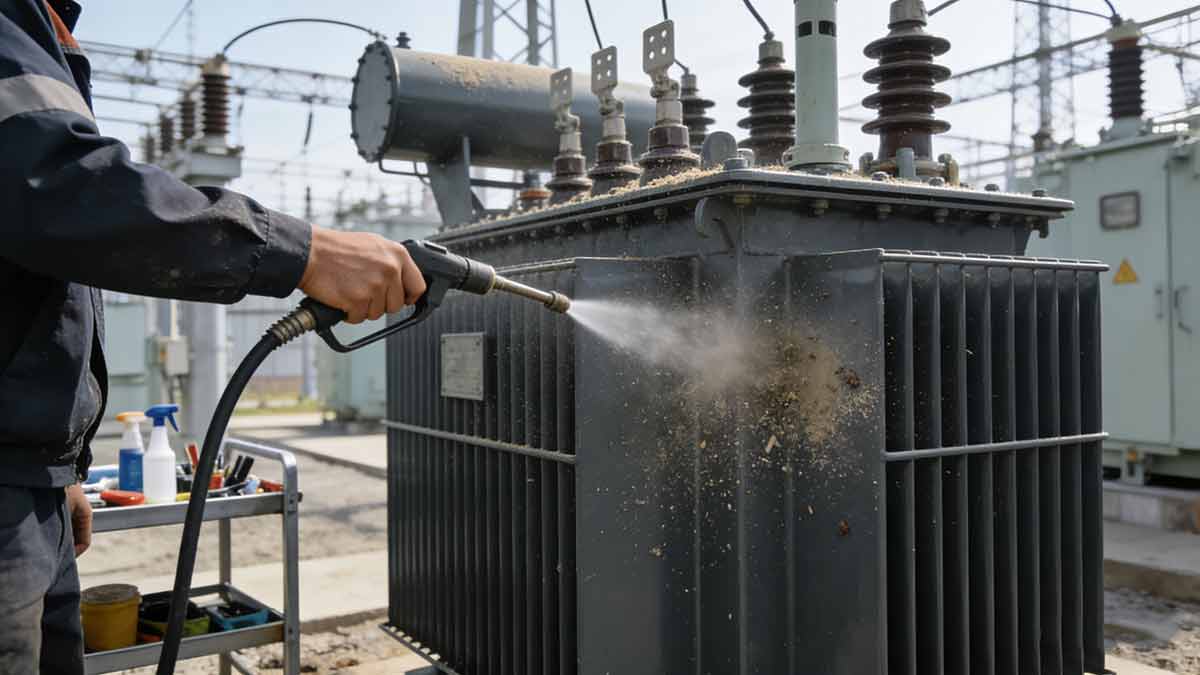
1. Regular Oil Inspection and Maintenance: The Foundation of Oil-Immersed Transformer Reliability
Transformer oil serves three critical roles: insulation, cooling, and arc suppression. Poor oil quality is the leading cause of premature failures in oil-immersed transformers, making regular oil inspection and maintenance non-negotiable. To ensure oil remains effective, follow these key steps:
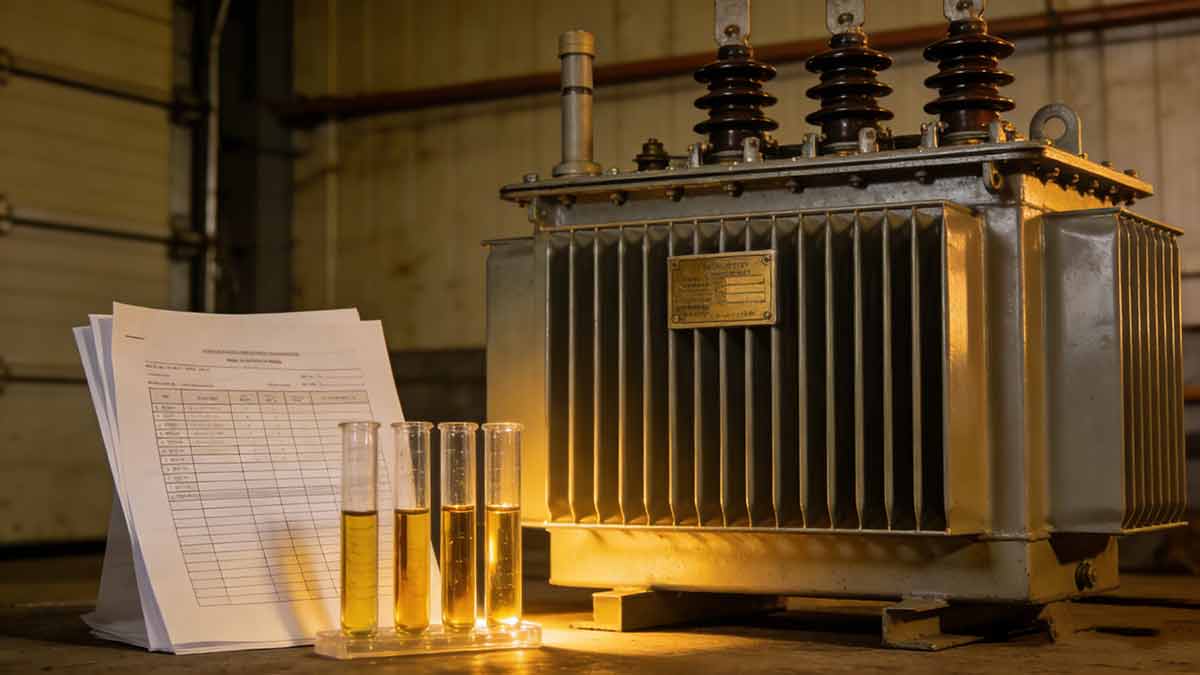
- Visual Inspection: Check oil color and clarity monthly—healthy oil is pale yellow and transparent. Cloudy, dark, or emulsified oil indicates contamination (water, dirt, or degradation) and requires immediate attention.
- Oil Sampling and Testing: Conduct quarterly oil sampling to measure key indices, such as moisture content, acid value, and breakdown voltage. Use a certified lab to analyze samples; follow these thresholds to determine action:
Oil Parameter | Acceptable Threshold | Action if Exceeded |
|---|---|---|
Moisture Content | ≤10 ppm | Filter oil or replace with new oil |
Acid Value | ≤0.1 mgKOH/g | Oil regeneration or full replacement |
Breakdown Voltage | ≥35 kV | Filter and re-test; replace if still low |
Case Study: A manufacturing plant in Ohio ignored oil testing for 18 months. When the transformer failed unexpectedly, lab analysis showed moisture content at 35 ppm and acid value at 0.25 mgKOH/g—causing insulation breakdown and a $45,000 repair bill. After implementing quarterly oil testing and filtration, the plant avoided further failures over the next 3 years.
A common question: How often should I replace transformer oil? Most oil-immersed transformers require full oil replacement every 5–7 years, but this varies based on usage, environment, and test results. Always follow manufacturer guidelines and test data to decide.
2. Temperature Monitoring: Prevent Overheating and Extend Oil-Immersed Transformer Life
Overheating is a silent killer for oil-immersed transformers—every 8°C increase above the rated temperature cuts the transformer’s service life in half. Effective temperature monitoring and control are essential to maintain long-term reliability. Here’s how to implement it:
- Install Reliable Temperature Sensors: Use top-oil temperature sensors and winding temperature indicators (WTI) to monitor real-time temperatures. Ensure sensors are calibrated annually to avoid inaccurate readings.
- Set Temperature Thresholds: The normal top-oil temperature for most oil-immersed transformers is ≤85°C (temperature rise ≤55°C, based on 40°C ambient temperature). Set alarms for 90°C (warning) and 95°C (emergency shutdown) to prevent damage.
- Optimize Cooling Systems: Regularly inspect cooling fans, radiators, and oil pumps (if equipped):
- Clean radiators monthly to remove dust, dirt, and debris—blocked radiators reduce cooling efficiency by up to 40%.
- Test cooling fans quarterly to ensure they start automatically when temperatures rise. Replace faulty fans immediately to avoid overheating.
- For outdoor transformers, install sunshades or protective covers to reduce direct sunlight exposure, which can increase ambient temperature around the unit.
Tip: Use infrared thermometers to spot hotspots on the transformer case, bushings, or connections—these can indicate poor contact or internal issues before they escalate. This simple tool helps catch problems early, reducing the risk of costly failures.
3. Leakage Prevention and Detection: Protect Oil-Immersed Transformer Integrity
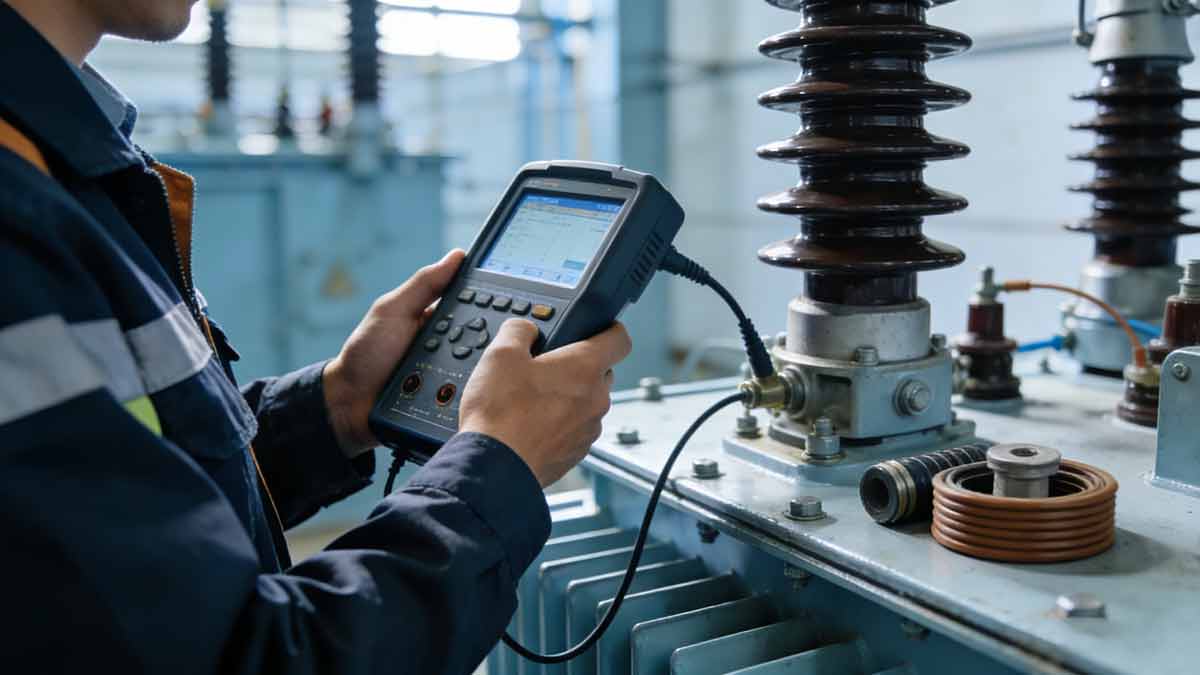
Oil leakage not only reduces insulation and cooling capacity but also poses safety hazards (fire risk) and environmental concerns. Preventing and detecting leaks early is a key O&M practice for long-term reliability. Follow these steps:
- Regular Visual Inspections: Check all seals, gaskets, flange connections, and valves weekly for oil stains or dampness. Focus on high-risk areas, such as the oil tank, conservator, and bushing connections.
- Maintain Seals and Gaskets: Replace aging or damaged seals (preferably butyronitrile rubber or silicone) every 2–3 years, even if no leaks are visible. Over time, seals harden and crack, leading to slow leaks that are hard to detect.
- Use Leak Detection Tools: For large or hard-to-reach transformers, use ultrasonic leak detectors or oil-absorbent pads to identify small, hidden leaks. These tools can detect leaks as small as 0.1 liters per day.
- Address Leaks Promptly: If a leak is found:
- For minor leaks (small stains), clean the area and apply high-temperature sealant to the affected joint.
- For major leaks (visible dripping), shut down the transformer, drain the oil, and repair or replace the faulty component (e.g., gasket, valve, or tank weld).
Common mistake: Ignoring small leaks—over time, a minor leak can lead to significant oil loss, causing overheating and insulation failure. A food processing plant in Texas once overlooked a small leak in a 1000kVA transformer; within 6 months, oil levels dropped 30%, leading to a costly shutdown and $20,000 in repairs.
4. Insulation System Maintenance: Safeguard Oil-Immersed Transformer Performance
The insulation system (oil, windings, and core) is critical to preventing short circuits and electrical failures. Over time, insulation degrades due to heat, moisture, and electrical stress—so regular maintenance is essential. Here’s what to do:
- Winding Insulation Testing: Conduct annual insulation resistance tests using a 2500V megohmmeter. The minimum acceptable resistance for 10kV transformers is ≥100MΩ; for 35kV transformers, it’s ≥300MΩ. A sudden drop in resistance indicates insulation damage.
- Core Insulation Inspection: Check for core grounding issues annually—core grounding current should be ≤100mA. Excess current indicates a short circuit in the core, which can cause overheating and damage.
- Bushing Maintenance: Inspect bushings (porcelain or composite) monthly for cracks, dirt, or corrosion. Clean bushings with a dry cloth orinsulation rod to prevent flashover (electrical discharge). If cracks are found, replace the bushing immediately.
- Prevent Moisture Intrusion: Ensure the conservator (oil expansion tank) is properly sealed, and the breather (silica gel) is replaced when it turns from blue to pink. Silica gel absorbs moisture from the air, preventing it from entering the transformer oil.
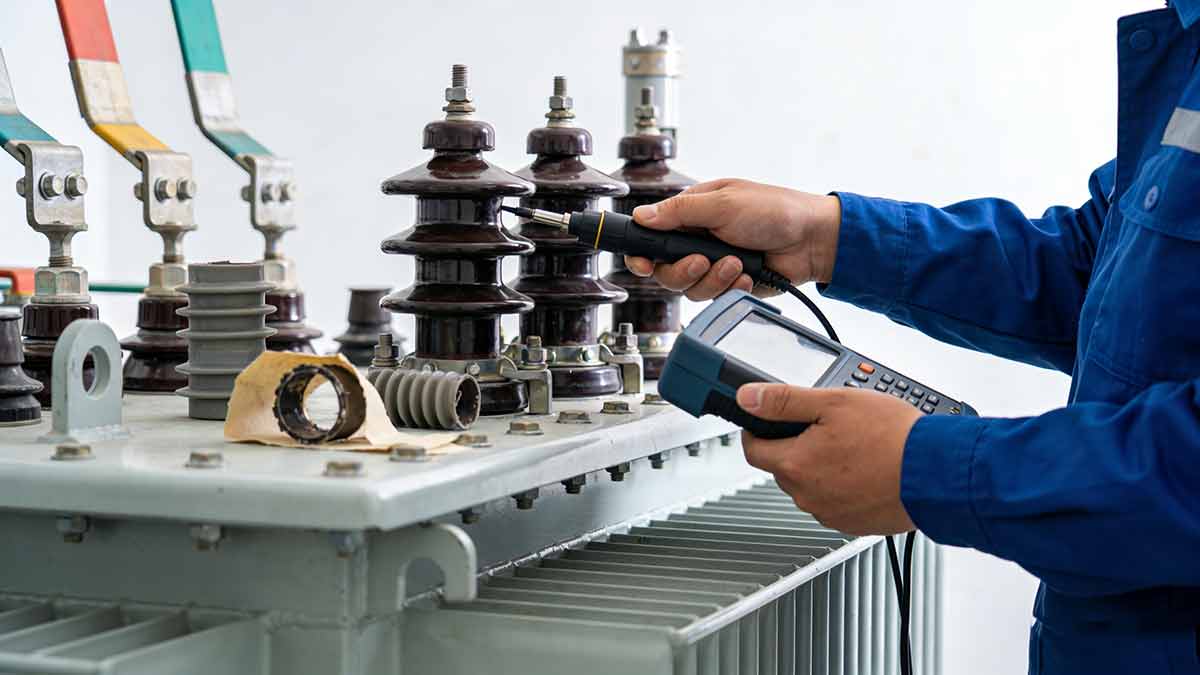
Question: What causes insulation degradation in oil-immersed transformers? Common causes include overheating, moisture, chemical contamination (from poor oil quality), and electrical overloads. By addressing these factors through regular O&M, you can extend the life of the insulation system by 5–10 years.
5. Load Management: Avoid Overloading Oil-Immersed Transformers
Overloading is a common cause of transformer failures—operating a transformer above its rated load for extended periods increases heat generation, degrades oil and insulation, and shortens service life. Proper load management is a simple yet effective O&M practice to ensure long-term reliability:
- Monitor Load Levels: Use ammeters to track load current daily. Ensure the load does not exceed 100% of the transformer’s rated capacity for more than 2 hours at a time. For short-term peaks (e.g., during peak power demand), limit overloads to 110% of rated capacity for no more than 30 minutes.
- Balance Three-Phase Loads: Unbalanced three-phase loads cause additional stress on the transformer, leading to overheating and increased losses. Ensure the load on each phase is within 10% of the others. Use load balancing tools to adjust distribution if needed.
- Plan for Future Load Growth: When installing or upgrading oil-immersed transformers, account for future load increases (e.g., new equipment, expanded operations). Oversizing the transformer slightly (10–15% above current load) can prevent overloading and extend reliability.
Load Level (% of Rated Capacity) | Maximum Allowable Duration | Potential Risks if Exceeded |
|---|---|---|
100–110% | 30 minutes | Minor oil degradation, increased heat |
110–120% | 10 minutes | Insulation overheating, short-term damage |
>120% | Not recommended | Severe insulation damage, immediate failure |
Case Study: A commercial building in Florida consistently operated its 500kVA transformer at 125% of rated capacity during summer peak hours. Within 12 months, the transformer experienced a winding short circuit, requiring a full replacement costing $32,000. After implementing load management (reducing non-essential loads during peaks), the new transformer operated reliably for 7 years.
6. Regular Cleaning: Prevent Debris Buildup and Improve Oil-Immersed Transformer Efficiency
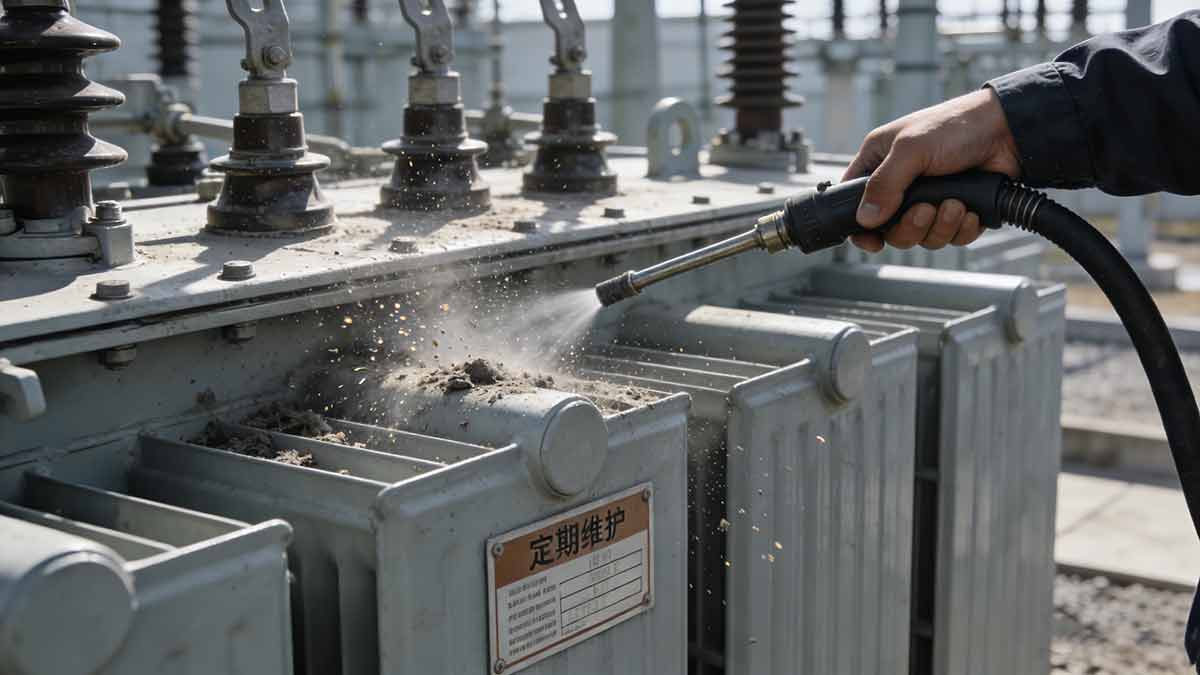
Dust, dirt, leaves, and debris buildup on transformers reduces cooling efficiency, blocks vents, and increases the risk of electrical faults. Regular cleaning is a low-cost, high-impact O&M practice for long-term reliability:
- Monthly External Cleaning: Use a dry cloth or compressed air to remove debris from the transformer case, radiators, and vents. Avoid using water, as it can cause moisture intrusion or electrical shorts.
- Quarterly Deep Cleaning: For outdoor transformers, clear vegetation (grass, bushes) within 1.5 meters of the unit to ensure proper airflow. Trim tree branches that hang over the transformer to prevent debris buildup and damage from falling limbs.
- Clean Bushings and Connections: Every 6 months, clean bushings and electrical connections with a dry brush or insulation cloth to remove dirt and dust. Dirty connections can cause hotspots and electrical arcing.
Tip: For transformers in dusty or industrial environments (e.g., factories, construction sites), increase cleaning frequency to bi-weekly. This simple step can reduce the risk of overheating by 30% and extend the transformer’s service life.
7. Gas Relay Inspection: Detect Internal Faults Early in Oil-Immersed Transformers
Gas relays (also called Buchholz relays) are critical safety devices that detect internal faults in oil-immersed transformers, such as winding short circuits, core overheating, or oil decomposition. Regular inspection of gas relays ensures they function properly when needed:
- Monthly Visual Inspection: Check the gas relay for oil leaks, damage, or loose connections. Ensure the relay is properly mounted, and the alarm and trip contacts are clean.
- Quarterly Function Test: Test the gas relay’s alarm and trip functions to ensure they activate when gas accumulates. Follow manufacturer guidelines for testing procedures—most relays can be tested without shutting down the transformer.
- Interpret Gas Accumulation: If the gas relay alarms (light gas action), collect and analyze the gas:
- Air: Harmless, likely from maintenance or installation—release the gas and monitor for recurrence.
- Flammable gas (methane, acetylene): Indicates internal overheating or arcing—shut down the transformer and conduct a full inspection.
Important: Never ignore a gas relay trip (heavy gas action)—this indicates a severe internal fault (e.g., winding short circuit). Immediately shut down the transformer and contact a professional technician to avoid catastrophic failure.
8. Grounding System Maintenance: Ensure Safety and Reliability of Oil-Immersed Transformers
A proper grounding system protects oil-immersed transformers from electrical surges, lightning strikes, and equipment damage. Poor grounding can lead to electrical shocks, equipment failure, and even fires. Follow these maintenance steps:
- Annual Grounding Resistance Testing: Use a ground resistance tester to measure the resistance of the transformer’s grounding system. The maximum acceptable resistance is 4Ω—higher resistance reduces protection against surges.
- Inspect Grounding Connections: Check grounding cables and connections quarterly for corrosion, loose bolts, or damage. Replace corroded cables and tighten loose connections to ensure a secure ground.
- Lightning Protection: For outdoor transformers, ensure lightning arresters are installed and functioning properly. Test arresters annually to ensure they can divert lightning strikes away from the transformer.
Question: How do I improve grounding for oil-immersed transformers? If grounding resistance is too high, add additional ground rods, use ground enhancement materials (e.g., bentonite), or extend the grounding grid. Consult a professional electrician for complex grounding issues.
9. Emergency Preparedness: Minimize Downtime for Oil-Immersed Transformers
Even with proper O&M, unexpected failures can occur. Having an emergency plan in place minimizes downtime, reduces repair costs, and ensures safety. Here’s how to prepare:
- Create an Emergency Checklist: Include steps to shut down the transformer safely, contact emergency technicians, and restore power using backup equipment (if available). Train staff on the checklist to ensure quick action during a failure.
- Stock Essential Spare Parts: Keep common spare parts on hand, such as seals, gaskets, transformer oil, fuses, and bushings. This reduces wait time for repairs and minimizes downtime.
- Establish a Relationship with a Reliable Service Provider: Partner with a professional transformer service company that offers 24/7 emergency repairs. This ensures quick response times and expert support when failures occur.
- Conduct Emergency Drills: Practice emergency shutdowns and repair procedures annually to ensure staff are prepared. This reduces confusion and errors during real emergencies.
Example: A utility company in California had an emergency plan in place for its oil-immersed transformers. When a lightning strike caused a transformer failure during a storm, the team followed the checklist, shut down the unit safely, and used backup equipment to restore power within 2 hours. Without the plan, downtime would have exceeded 8 hours, costing the company $100,000 in lost revenue.
10. Documentation and Record-Keeping: Track O&M Activities for Oil-Immersed Transformers
Documentation is often overlooked but is critical for long-term reliability. Keeping detailed records of O&M activities helps identify trends, predict failures, and ensure compliance with industry standards. Here’s what to document:
- Inspection Reports: Record all visual inspections, including dates, findings, and actions taken (e.g., “03/15/2026: Cleaned radiators, no leaks found”).
- Test Results: Keep copies of oil test reports, insulation resistance tests, temperature logs, and grounding resistance tests. Note any trends or changes over time.
- Maintenance Activities: Document all maintenance tasks, such as oil replacement, seal replacement, and cooling system repairs. Include dates, parts used, and technician information.
- Fault History: Record all failures, including causes, repair actions, and downtime. This helps identify recurring issues and improve O&M practices.
Tip: Use a digital record-keeping system (e.g., spreadsheet, CMMS software) to organize documentation. This makes it easy to access records, track trends, and share information with technicians or auditors.
Conclusion: Prioritize O&M for Long-Term Reliability of Oil-Immersed Transformers
The long-term reliability of oil-immersed transformers depends on consistent, proactive O&M practices. By following the 10 practices outlined above—from regular oil inspection and temperature monitoring to emergency preparedness and documentation—you can reduce faults, extend service life, and minimize downtime. Remember, preventive maintenance is far more cost-effective than repairing or replacing a failed transformer: a typical annual O&M budget for a 1000kVA transformer is $5,000, while a single failure can cost $15,000–$50,000 in repairs and lost revenue. Whether you’re managing industrial, commercial, or utility transformers, these practices are designed to be simple, actionable, and tailored to real-world needs. By prioritizing O&M, you can ensure your oil-immersed transformers operate reliably for years to come, supporting your operations and reducing operational risks. For expert guidance on implementing these O&M practices or to learn more about reliable oil-immersed transformer solutions, reach out to our team of professionals.