
This article fully explains the function of neutral point of transformer, clarifies its electrical principles, compares common grounding configurations, and answers the most frequently asked questions in engineering practice to provide authoritative, practical guidance for power system design, operation, and maintenance.

What Is the Neutral Point of Transformer?
The neutral point of a transformer is the geometric and electrical center where the three-phase windings of a wye-connected transformer intersect. Under balanced three-phase operation, the algebraic sum of phase voltages at this point equals zero, keeping its ground potential near zero in properly designed systems. It acts as a fixed electrical reference for the entire three-phase network, forming the foundation for stable voltage distribution and reliable system control.
Basic Definition of Transformer Neutral Point
- In three-phase wye-connected transformers, the neutral point is the common connection of the three-phase winding terminals
- It provides a fixed reference potential for phase voltage measurement and regulation
- It only exists physically in wye-connected windings; delta-connected transformers have no natural neutral point
- Under ideal balanced load conditions, the neutral point carries little to no current
Electrical Characteristics of Neutral Point Under Normal Operation
- Steady-state ground potential remains at or very near zero volts
- Three-phase voltage symmetry is maintained, preventing phase-to-ground voltage drift
- Neutral current stays minimal under balanced loading
- It forms a dedicated return path for unbalanced currents in low-voltage distribution systems
Core Functions of Neutral Point of Transformer
The function of neutral point of transformer covers voltage control, fault management, equipment protection, personnel safety, and power quality. Each function supports system stability and reduces operational risks in transmission and distribution networks.
Voltage Balance and Phase Symmetry Maintenance
Stable phase voltage is essential for consistent power delivery. The neutral point locks the phase-to-ground voltage at a fixed level, avoiding fluctuations that damage loads and shorten equipment life.
Balancing Three-Phase Voltage Distribution
- Fixes the phase-to-ground voltage at a rated value, preventing overvoltage in healthy phases during faults
- Eliminates voltage drift caused by unbalanced single-phase or mixed loads
- Supports dual-voltage supply (line-to-line and line-to-neutral) in commercial and residential grids
- Improves transformer utilization by allowing mixed three-phase and single-phase loads
Fault Current Control and System Protection
The neutral point defines fault current paths and levels, enabling protective relays to quickly detect and isolate faults.
Short-Circuit Current Limitation and Coordination with Protection Devices
- Establishes a clear path for single-phase-to-ground fault currents
- Allows selective grounding to limit or adjust fault current magnitude
- Works with circuit breakers, fuses, and relays for fast fault clearing
- Prevents fault spread and reduces damage to transformer windings and core
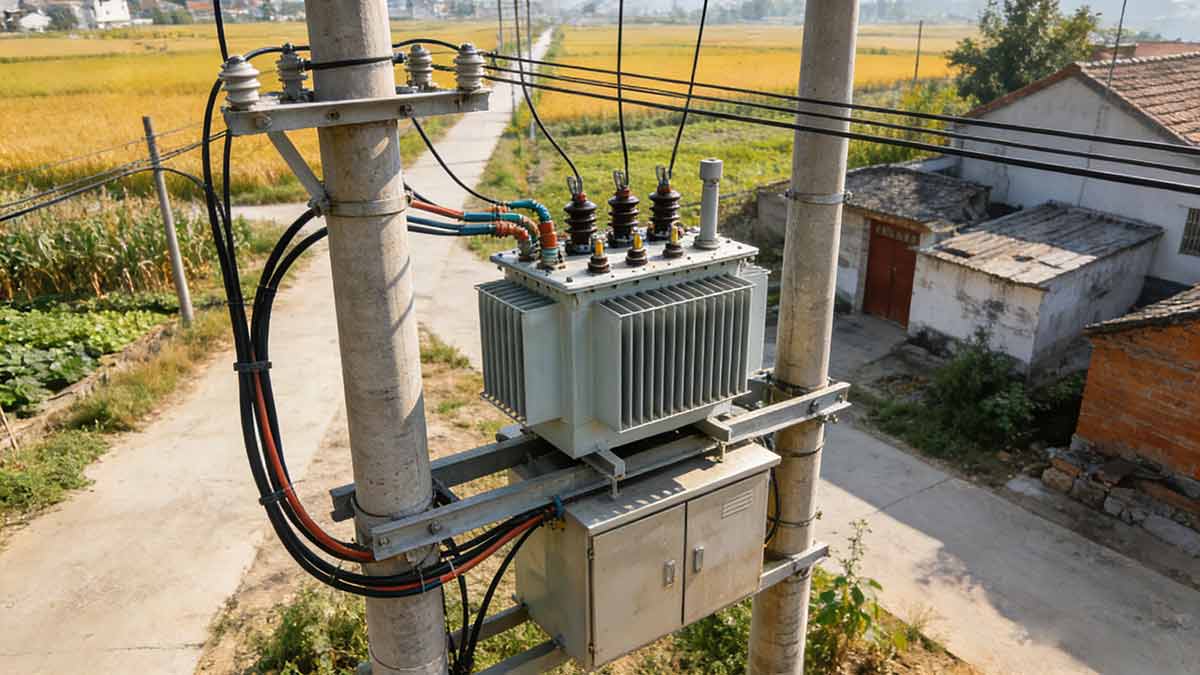
Safety Assurance for Equipment and Personnel
Neutral-point configuration directly affects insulation stress and touch voltage, making it vital for safety.
Overvoltage Suppression and Insulation Protection
- Limits lightning and switching overvoltage across winding insulation
- Reduces insulation design requirements and lowers transformer manufacturing costs
- Stabilizes ground potential to avoid dangerous touch and step voltages
- Prevents insulation breakdown and extends transformer service life
Stable Operation of Power Distribution Network
A reliable neutral point improves grid continuity, especially in urban and industrial distribution.
Power Quality Improvement
- Reduces waveform distortion and voltage unbalance
- Supports sensitive electronic equipment in data centers and industrial automation
- Minimizes neutral overheating caused by harmonic currents
- Enhances overall power system efficiency and reliability
Neutral Point Grounding Methods and Their Functional Differences
Grounding topology directly shapes the function of neutral point of transformer. Below is a comparison of four widely used methods.
| Grounding Method | Application Voltage Level | Core Function | Advantage | Disadvantage |
|---|---|---|---|---|
| Solidly Grounded Neutral | Medium & High Voltage (110kV+) | Fix neutral at ground potential; large fault current | Simple structure; reliable protection; low cost | High fault current may damage equipment |
| Low-Resistance Grounded Neutral | Medium Voltage (6–35kV) | Limit fault current to 10–100A | Fast fault detection; moderate overvoltage | Requires dedicated resistor; higher cost |
| High-Resistance Grounded Neutral | Industrial & Generator Systems | Restrict fault current below 10A | Allow short-time operation; low overvoltage | Needs monitoring; not for public networks |
| Peterson Coil Grounded Neutral | Distribution Networks | Compensate capacitive current | Eliminate arc overvoltage; reduce outage | Complex tuning; higher maintenance |
| Isolated Neutral Point | Special Industrial Systems | No direct ground connection | No fault current; simple | High overvoltage risk; hard fault location |
Solidly Grounded Neutral Point
- Directly connects neutral to ground grid with no impedance
- Widely used in high-voltage transmission and low-voltage distribution
- Ensures phase-to-ground voltage does not exceed rated phase voltage
- Simplifies relay protection and reduces insulation cost
Resistance Grounded Neutral Point
- Inserts a resistor between neutral and ground to control current
- Low resistance: fast tripping, medium-voltage industrial systems
- High resistance: low current, allows temporary operation
- Balances overvoltage control and fault clearance
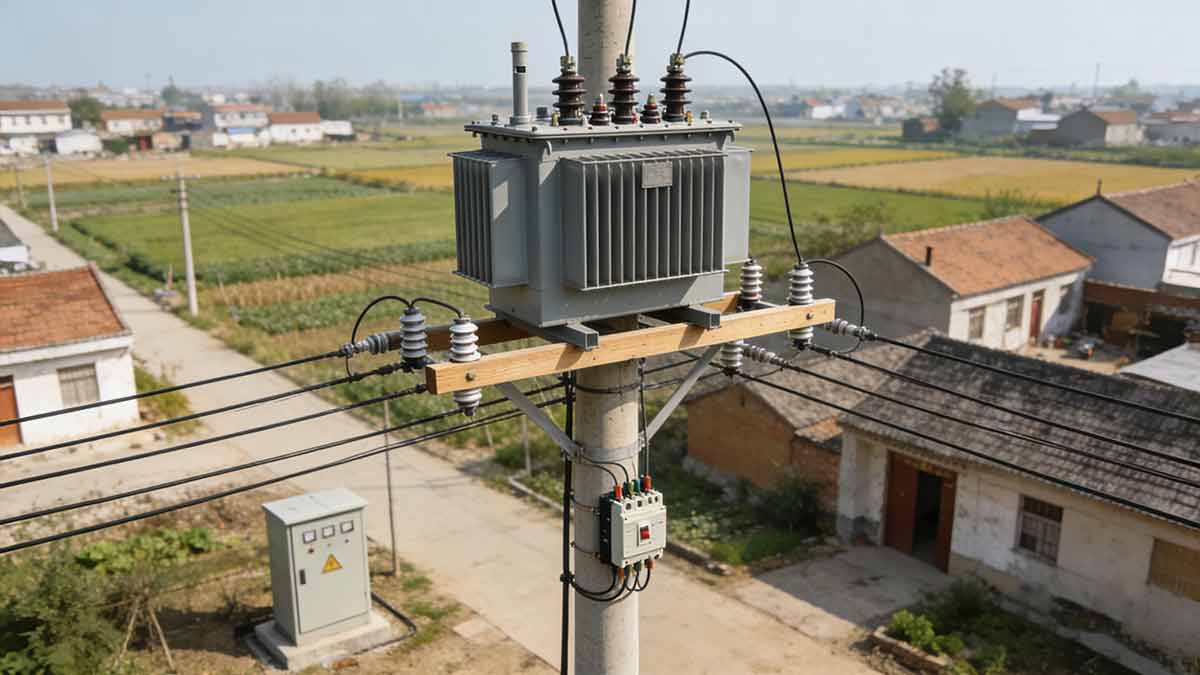
Reactance Grounded Neutral Point
- Uses an inductive coil (Peterson coil) to cancel capacitive current
- Effectively suppresses intermittent arc overvoltage
- Common in 6–35kV overhead distribution networks
- Requires automatic tuning for varying system capacitance
Isolated Neutral Point
- Neutral has no direct connection to ground
- Used in special industrial systems with high continuity demand
- Phase-to-ground voltage rises to line voltage during a single-phase fault
- High risk of overvoltage and insulation failure
How Does Transformer Neutral Point Affect Power System Performance?
The neutral-point design and grounding method directly impact stability, protection, safety, and cost.
Impact on System Voltage Stability
- Determines steady-state and transient voltage behavior
- Grounded neutral clamps phase voltage; isolated neutral allows voltage shift
- Unbalanced loads cause neutral potential shift and voltage unbalance
- Proper grounding reduces voltage fluctuation and improves power quality
Impact on Relay Protection Operation
- Defines fault current magnitude and path for relay operation
- Solid grounding enables fast, selective protection
- High-impedance grounding reduces sensitivity, requiring special relays
- Incorrect configuration leads to protection failure or malfunction
Impact on Equipment Service Life
- Controls overvoltage and insulation stress
- Poor grounding accelerates insulation aging and failure
- Balanced neutral current reduces winding and lead overheating
- Stable potential extends transformer, cable, and switchgear life
Key Factors for Selecting Neutral Point Grounding Scheme
Choosing the right configuration optimizes the function of neutral point of transformer for specific applications.
- System voltage level and network structure
- Load type: balanced three-phase or mixed single-phase
- Fault current tolerance and continuity requirements
- Overvoltage risk and insulation design level
- Protection scheme and grid operation standards
- Installation environment and maintenance capacity
Frequently Asked Questions About Function of Neutral Point of Transformer
| Question | Authoritative Answer |
|---|---|
| What is the primary function of neutral point of transformer? | Core roles: voltage balance, fault current control, safety, and system stability |
| Do all transformers have a neutral point? | Only wye-connected transformers have a physical neutral; delta transformers do not |
| Why is the neutral point grounded? | To fix potential, limit overvoltage, enable fault protection, and ensure safety |
| What happens if the neutral point is damaged? | Voltage imbalance, overheating, overvoltage, insulation risk, and protection failure |
| Can the neutral point carry current under normal load? | Small current under balanced load; higher current with unbalanced or nonlinear loads |
| How does neutral grounding affect transformer cost? | Solid grounding reduces insulation cost; impedance grounding adds component cost |
Best Practices for Neutral Point Operation and Maintenance
To preserve the function of neutral point of transformer over its service life, follow these practices.
- Regularly test neutral grounding resistance and continuity
- Inspect neutral connections for looseness, corrosion, or overheating
- Monitor neutral current to detect imbalance or harmonics
- Verify grounding grid integrity during periodic maintenance
- Update the grounding scheme with system expansion or load changes
- Train staff on neutral-point safety and fault response
Conclusion
The function of neutral point of transformer is irreplaceable in three-phase power systems. It serves as the voltage reference, balance hub, fault controller, and safety foundation for wye-connected transformers. Proper neutral-point design and grounding ensure stable voltage, reliable protection, equipment longevity, and personnel safety. Selecting the right grounding method based on voltage level, load type, and operation requirements maximizes transformer performance and grid reliability. Understanding and maintaining the neutral point is essential for power engineers, designers, and operators to build safe, efficient, and stable power systems.