
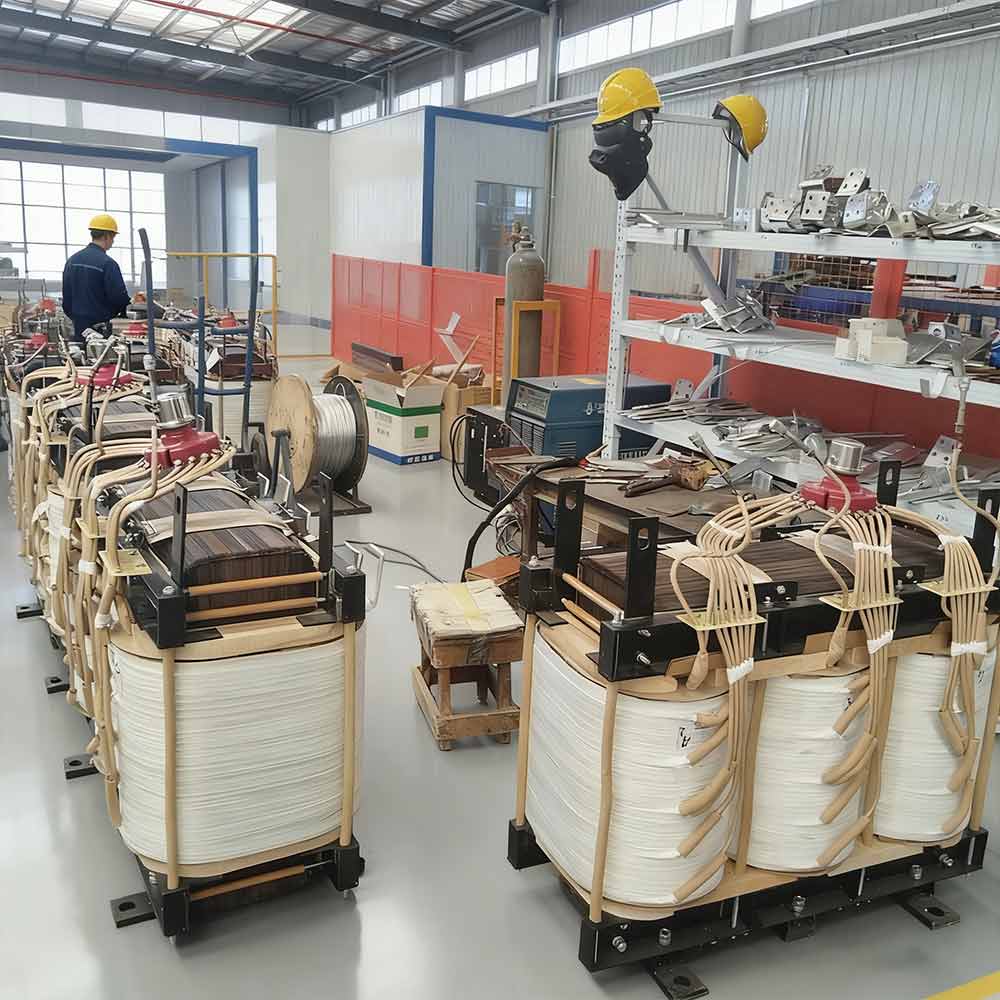
Understanding the Electric Phase of Transformer Winding: Core Concepts and Key Terminology
- Winding Phase Sequence (A/B/C, a/b/c): The sequential arrangement of the three-phase windings (A, B, C for high-voltage; a, b, c for low-voltage) based on the phase angle of the induced EMF, the most common being positive phase sequences (ABC, BCA, CAB) in industrial transformers.
- Fixed Winding Position: The physical position of the winding with a specific phase sequence (A/B/C or a/b/c) on the transformer’s core limbs remains unchanged during the manufacturing and wiring process, a basic requirement for ensuring consistent magnetic circuit performance.
- Winding Phase Lag: The phase angle difference generated by the separation of windings on different core limbs, which requires corresponding clockwise phase adjustment to restore the normal phase relationship of the three-phase windings.
- Homonymous Terminals: The terminals of the primary and secondary windings where the current is injected (or discharged) when the magnetic flux in the two windings is superimposed (synthesized), the identification of which is the core link to avoid reverse connection of the transformer windings.
Phase Sequence Arrangement of Transformer Winding: Fixed Position and Variable Order Rules
Core Requirements for Transformer Winding Phase Sequence Arrangement
- The primary winding (A/B/C phase) is sorted by phase sequence multiple times during wiring, and its physical position on the core limb remains absolutely unchanged—this is a hard rule to ensure the stability of the three-phase magnetic circuit and the symmetry of the winding resistance.
- The secondary winding (a/b/c phase) can be sorted by positive phase sequences (ABC, BCA, CAB) according to engineering needs, and its physical position may or may not change—the variable order is based on the power distribution system’s phase sequence requirements, and the position change must follow the principle of “same phase on the same core limb”.
- For both primary and secondary windings, the winding resistance assigned to the same core limb must be of the same phase (e.g., A and a on the same core limb) and maintain the same physical position—this ensures that the induced EMF of the primary and secondary windings on the same core limb is in the same phase, and the magnetic flux is fully superimposed.
Transformer Winding Positive Phase Sequence Arrangement Types and Position Characteristics
| Positive Phase Sequence Type | Physical Position Change of Secondary Winding (a/b/c) | Core Limb Phase Matching Principle | Applicable Engineering Scenarios |
|---|---|---|---|
| ABC | No position change (consistent with A/B/C primary winding) | A-a, B-b, C-c on the same core limb | Standard three-phase power distribution systems with consistent primary and secondary phase sequence requirements |
| BCA | Position adjusted in turn (no cross-core limb) | B-a, C-b, A-c on the same core limb | Power distribution systems that require phase sequence translation for load matching |
| CAB | Position cyclic adjustment (no cross-core limb) | C-a, A-b, B-c on the same core limb | Industrial power systems with multi-transformer parallel operation and phase sequence coordination needs |
Phase Lag Calculation for Transformer Winding: Clockwise Elevation Adjustment for Core Limb Separation
| Transformer Winding Phase Lag Value | Number of Separated Core Limbs | Required Clockwise Elevation Hours | Phase Lag Compensation Effect |
|---|---|---|---|
| 1500 (phase angle units) | 1 | 4h | Complete compensation of the single core limb separation phase lag; restored the same-phase relationship of windings |
| 3200 (phase angle units) | 2 | 8h | Complete compensation of the double core limb separation phase lag; three-phase winding EMF phase symmetry restored |
Key Implementation Details of Clockwise Elevation Adjustment
- Elevation Operation Object: The adjustment is targeted at the winding with phase lag (usually the secondary winding a/b/c), and the primary winding A/B/C remains in the original fixed position to avoid changing the basic phase sequence of the power input side.
- Clockwise Rotation Standard: The elevation hour is calculated based on the transformer’s clock face direction (the high-voltage winding A phase is the 12 o’clock position), and each hour of clockwise elevation corresponds to a fixed phase angle compensation value in the industry.
- Post-Adjustment Verification: After completing the clockwise elevation adjustment according to the standard, the phase angle of the three-phase winding induced EMF must be tested with a phase meter—only when the phase lag value is reduced to 0, and the three-phase phase symmetry error is within ±5‰, can the adjustment be deemed qualified.
- Core Limb Separation Avoidance: In the manufacturing process, try to avoid the separation of more than two core limbs (three core limbs separation is prohibited) to prevent excessive phase lag that cannot be compensated by the existing hour adjustment rules, which will lead to irreversible damage to the electric phase of the winding.
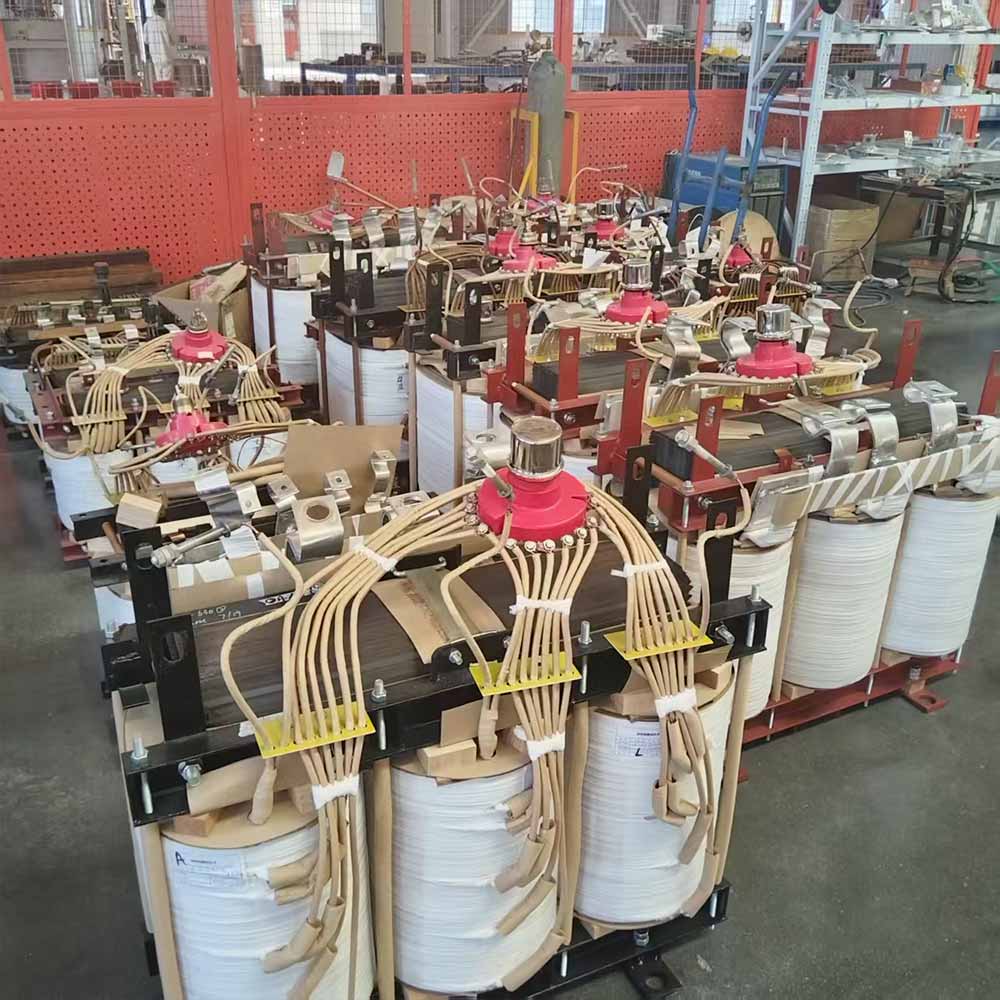
Homonymous Terminals of Transformer Winding: Core Principles and Practical Identification Method
Fundamental Principle of Transformer Winding Homonymous Terminals
The definition of homonymous terminals is based on the magnetic flux superposition principle of the transformer’s primary and secondary windings, and its industrially accurate description is:
When the alternating current (or the alternating electromagnetic field generated by the stationary AC) passes through the transformer’s primary and secondary windings, the two winding terminals where the current is injected when the magnetic flux in the core is superimposed (synthesized) are the homonymous input terminals; the two winding terminals where the current is discharged when the magnetic flux is superimposed are the homonymous output terminals. Collectively, these input and output terminals are referred to as the homonymous terminals of the transformer winding.
Practical AC Series Bulb Test Method for Homonymous Terminal Identification
Step 1: Prepare Test Equipment and Meet Frequency Matching Requirements
- Core Test Equipment: A test AC power supply, a light bulb (an incandescent bulb is recommended for a more intuitive brightness change), a set of insulated wiring terminals, and a multimeter (for measuring winding resistance and ensuring no open circuit).
- Critical Frequency Requirement: The frequency of the test AC power supply must be completely consistent with the rated frequency of the transformer core—this is the key to ensuring the accuracy of the test, because the transformer’s core magnetic permeability and winding induced EMF are frequency-dependent, and frequency mismatch will lead to distorted test results.
- Special Transformer Power Supply Rules: For transformers with a DC core (a small number of special-purpose transformers), the test uses a DC power supply instead of AC; for switch power transformers (applied to power supply systems), the test uses the on-site power transformer supply system (matching the actual working frequency) as the test power supply.
Step 2: Series Connection of Transformer Windings and Test Circuit
- Select any two windings of the transformer (primary winding A/B/C and secondary winding a/b/c are the best choice, and two secondary windings can also be selected for testing) and connect them in series—ensure that the winding resistance is in a normal on-state (test with a multimeter before connection to eliminate open circuit).
- Connect the series winding circuit in series with the prepared light bulb, and then connect the entire series circuit to the test power supply (AC/DC, according to the transformer type) to form a closed test loop.
- Check the wiring of the entire loop to ensure no short circuit, reverse connection of the power supply, or poor contact—these problems will lead to the bulb not lighting up or false brightness changes, affecting the judgment of homonymous terminals.
Step 3: Perform Two Wiring Tests and Record Bulb Brightness
- First Wiring: Connect the two windings in series according to the initial terminal matching mode, turn on the test power supply, and observe and record the brightness (chroma) of the bulb (mark it as Brightness 1).
- Second Wiring: Keep the test circuit unchanged, swap any two terminals of one of the windings (only swap the two ends of a single winding, do not change the connection of the other winding and the bulb), turn on the test power supply again, and observe and record the bulb’s brightness (mark it as Brightness 2).
- Test Repeat: Repeat the two wiring tests 2-3 times to eliminate the influence of accidental factors (such as power supply voltage fluctuation) on the bulb’s brightness, and take the average brightness as the final test result.
Step 4: Judge Homonymous Terminals Based on Bulb Brightness Difference
- When the winding terminals are connected as homonymous terminals, the induced EMF of the two series windings is superimposed, the total EMF in the test loop is offset (the actual voltage across the bulb is reduced), and the bulb is in a dark state.
- When the winding terminals are connected as heteronymous terminals (reverse connection), the induced EMF of the two series windings is in the same direction, the total EMF in the test loop is increased (the actual voltage across the bulb is higher), and the bulb is in a bright state.
Common Mistakes in the AC Series Bulb Test and Avoidance Methods
- Frequency Mismatch: The most common mistake, which leads to the bulb’s brightness not changing obviously. Avoidance: Check the transformer’s nameplate for the rated core frequency before the test, and configure the corresponding test power supply.
- Winding Short Circuit/Open Circuit: The bulb does not light up or is always dark. Avoidance: Test the winding resistance with a multimeter before wiring to ensure the winding is intact.
- Swapping Terminals of Two Windings: Leads to no effective brightness difference. Avoidance: Only swap the terminals of one single winding in the second test, and keep the other winding unchanged.
- Low Power Supply Voltage: The bulb’s brightness change is not intuitive. Avoidance: Select a test power supply with a voltage matching the transformer’s rated test voltage (usually 220V AC for low-voltage transformers).
Common Pitfalls in Mastering the Electric Phase of Transformer Winding and Troubleshooting Tips
Pitfall 1: Random Change of Winding Physical Position on Core Limbs
Problem Performance: The physical position of the A/B/C or a/b/c phase winding is randomly changed during wiring, leading to the same core limb with different phase windings, magnetic flux disorder, and increased transformer no-load loss.
Troubleshooting Tip: Recheck the core limb and winding phase matching relationship, and restore the winding to the original fixed position according to the “same phase on the same core limb” principle; test the three-phase winding resistance symmetry with a multimeter, and the error must be within ±3‰.
Preventive Measure: Mark the core limb and winding phase clearly during transformer manufacturing (e.g., engraving A/B/C on the core limb), and fix the winding with insulating clamps to avoid position displacement during wiring.
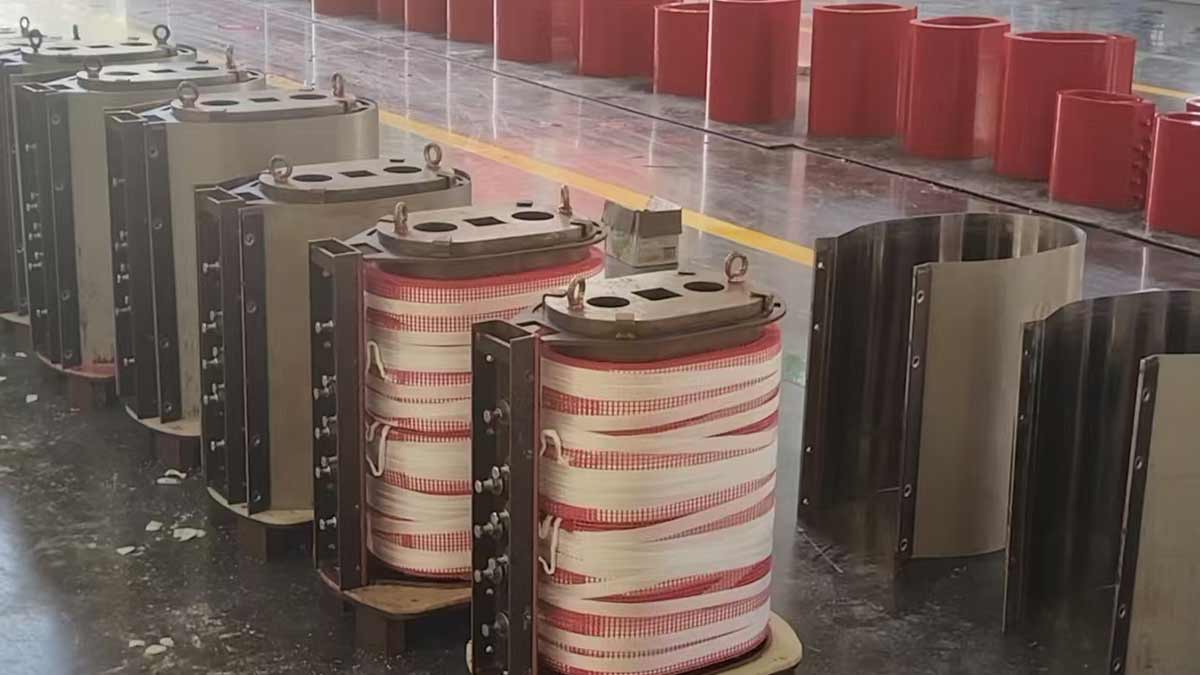
Pitfall 2: Incorrect Phase Lag Adjustment (Wrong Elevation Hours or Rotation Direction)
Problem Performance: The clockwise elevation hours are miscalculated, or the adjustment is performed counterclockwise, leading to incomplete phase lag compensation, three-phase voltage imbalance, and transformer heating during operation.
Troubleshooting Tip: Recalculate the required elevation hours according to the phase lag value and the number of separated core limbs (refer to the phase lag adjustment table), and perform clockwise elevation adjustment again with the transformer’s A phase as the 12 o’clock position; test the three-phase phase angle with a phase meter after adjustment, and ensure the phase lag value is 0.
Preventive Measure: Make a clear clock face mark on the transformer’s core frame, and record the phase lag value, core limb separation number, and elevation hours in the manufacturing process document for traceability.
Pitfall 3: Misjudgment of Homonymous Terminals (Bulb Brightness Misobservation)
Problem Performance: Misjudging the bright state as the dark state during the AC series bulb test, leading to reverse connection of homonymous terminals, magnetic flux offset, and a sharp drop in transformer transformation efficiency.
Troubleshooting Tip: Repeat the AC series bulb test with a high-sensitivity incandescent bulb (replace LED bulbs, which have poor brightness change intuition); if conditions permit, use a professional phase meter to verify the homonymous terminals to ensure the judgment result is correct.
Preventive Measure: Train the on-site operators on the bulb brightness judgment standard, and make a test operation card at the test site with clear pictures and text of the bright/dark states.
Pitfall 4: Use of Negative Phase Sequence for Secondary Winding Arrangement
Problem Performance: The secondary winding is sorted by negative phase sequences (ACB, BAC, CBA) in wiring, leading to the power distribution system’s phase sequence disorder, and the reverse rotation of three-phase motors and other loads.
Troubleshooting Tip: Readjust the secondary winding phase sequence to the positive phase sequence (ABC, BCA, CAB) according to the engineering requirements, and test the phase sequence with a phase sequence meter to ensure consistency with the power input side.
Preventive Measure: Clearly mark the positive phase sequence type on the transformer’s wiring diagram, and prohibit the use of negative phase sequences in normal power distribution systems (unless there are special engineering requirements and written approval).
Engineering Significance of Mastering the Electric Phase of Transformer Winding
- Guarantee the Transformer’s Normal Operation: Correct winding phase sequence arrangement, phase lag compensation, and homonymous terminal connection ensure that the transformer’s magnetic flux is fully superimposed, the winding resistance loss is minimized, and the transformer can realize voltage transformation and power transmission according to the rated parameters, avoiding overheating, burnout, and other faults.
- Ensure the Stability of the Power Distribution System: A consistent transformer winding electric phase ensures the phase sequence symmetry of the three-phase power supply, avoiding phase sequence disorder and three-phase voltage imbalance in the power distribution system, and protecting three-phase loads (such as motors, pumps, and compressors) from reverse rotation or damage.
- Improve the Reliability of Multi-Transformer Parallel Operation: In large-scale power distribution systems with multi-transformer parallel operation, the consistent electric phase of the winding is a prerequisite for parallel operation—only when the phase sequence, phase angle, and homonymous terminals of each transformer are matched can the parallel operation current be balanced, and the risk of circulating current leading to transformer damage be eliminated.
- Reduce the Cost of Transformer Manufacturing and Maintenance: Mastering the electric phase rules of the winding can reduce wiring errors in the manufacturing process, improve the qualified rate of transformer products, and reduce the on-site maintenance cost caused by phase sequence reverse connection, phase lag, and other problems—for transformer manufacturers, this is an important way to improve production efficiency and reduce production costs.