
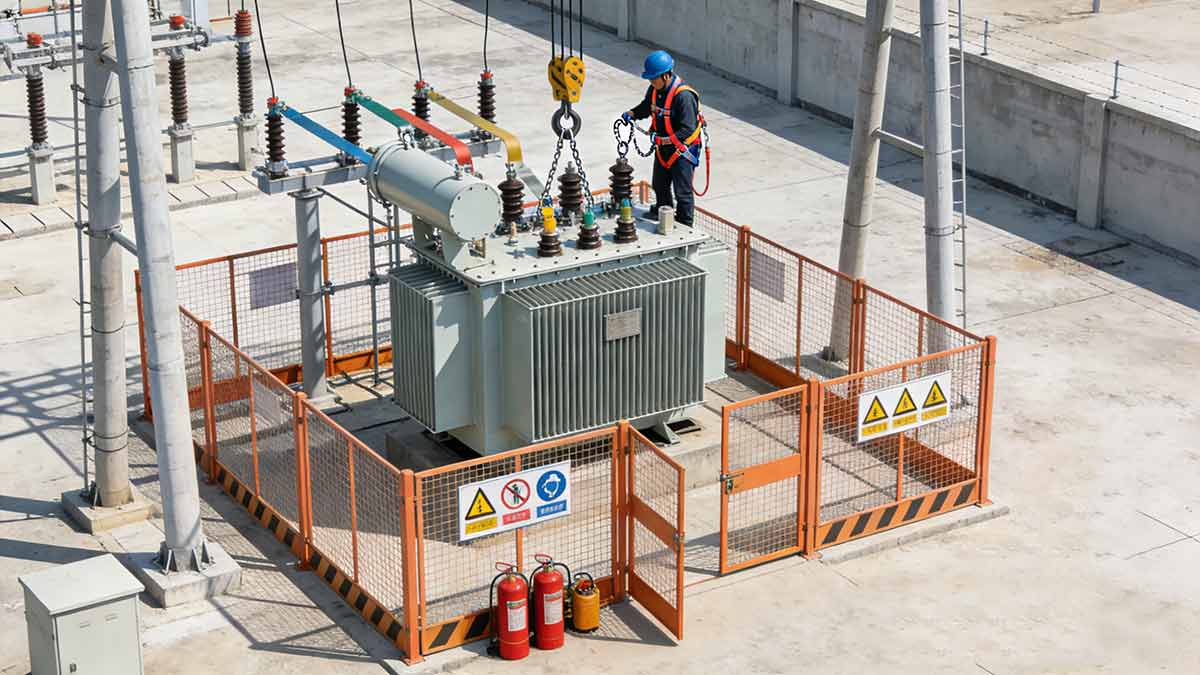
Key Considerations Before Embarking on Power Transformer Installation
Site Suitability Assessment for Power Transformer Installation
Regulatory Compliance and Permit Requirements for Power Transformer Installation
Step-by-Step Power Transformer Installation Process: Expert Guidance for Success
Foundation Preparation for Power Transformer Installation
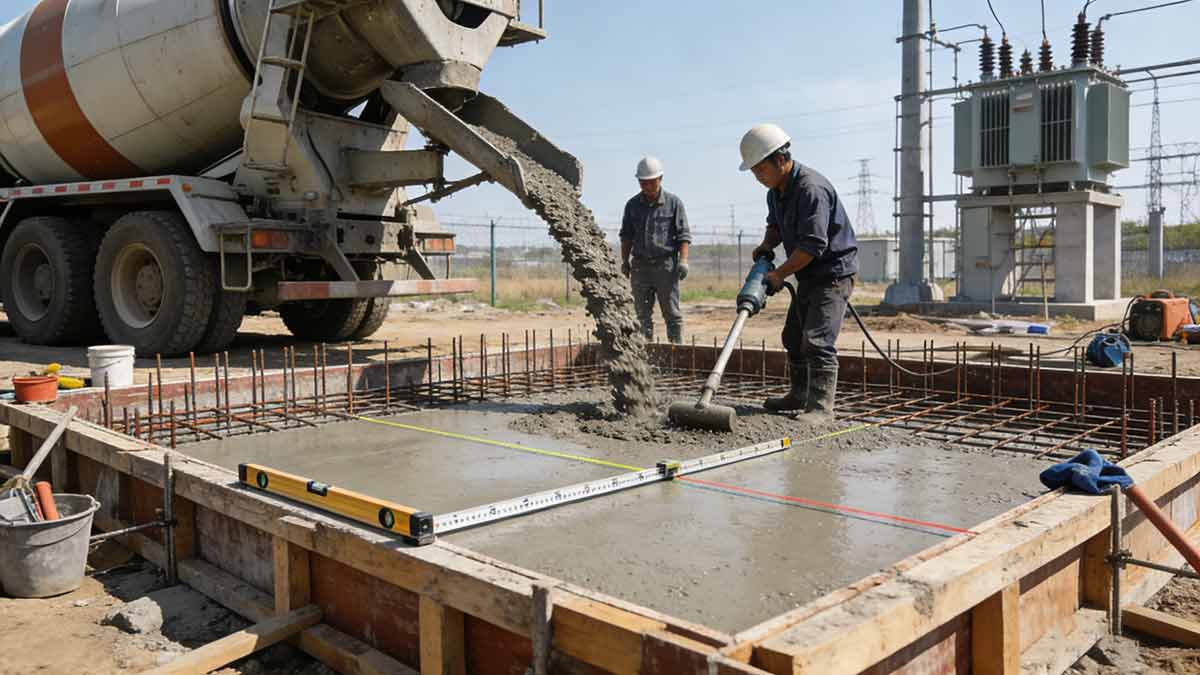
- Excavation: The ground is excavated to the required depth, ensuring that the excavation is level and free of debris.
- Base Preparation: A layer of compacted gravel is added to the bottom of the excavation to improve drainage and prevent soil settlement.
- Reinforcement: Steel reinforcement bars (rebars) are placed in the excavation to enhance the concrete’s tensile strength. The rebars are tied together to form a grid that matches the foundation’s design.
- Formwork Installation: Wooden or metal formwork is installed around the excavation to contain the concrete during pouring.
- Concrete Pouring: High-strength concrete (typically with a compressive strength of 30 MPa or higher) is poured into the formwork. The concrete is vibrated to remove air bubbles and ensure uniform compaction.
- Curing: The concrete is allowed to cure for a minimum of 28 days to achieve its full strength. During curing, the concrete is kept moist to prevent cracking.
Pre-Installation Preparation for Power Transformer Installation
- Equipment and Material Procurement: Gather all necessary equipment and materials, including high-voltage (HV) and low-voltage (LV) cables, cable lugs, conduits, grounding materials, control panels, and testing equipment (such as insulation resistance testers and megohmmeters).
- Equipment Inspection: Inspect all equipment and materials to ensure they meet the required specifications and are free of damage. For example, check cables for cuts, abrasions, or insulation damage, and verify that control panels are properly calibrated.
- Transformer Inspection: Before the transformer is lifted onto the foundation, conduct a thorough inspection of the transformer itself. Check the tank for leaks, verify that the windings are intact, and ensure that all accessories (such as bushings, radiators, and conservators) are properly installed and undamaged. If the transformer was shipped with a nitrogen blanket (to prevent moisture ingress), check the nitrogen pressure to ensure it’s within the recommended range.
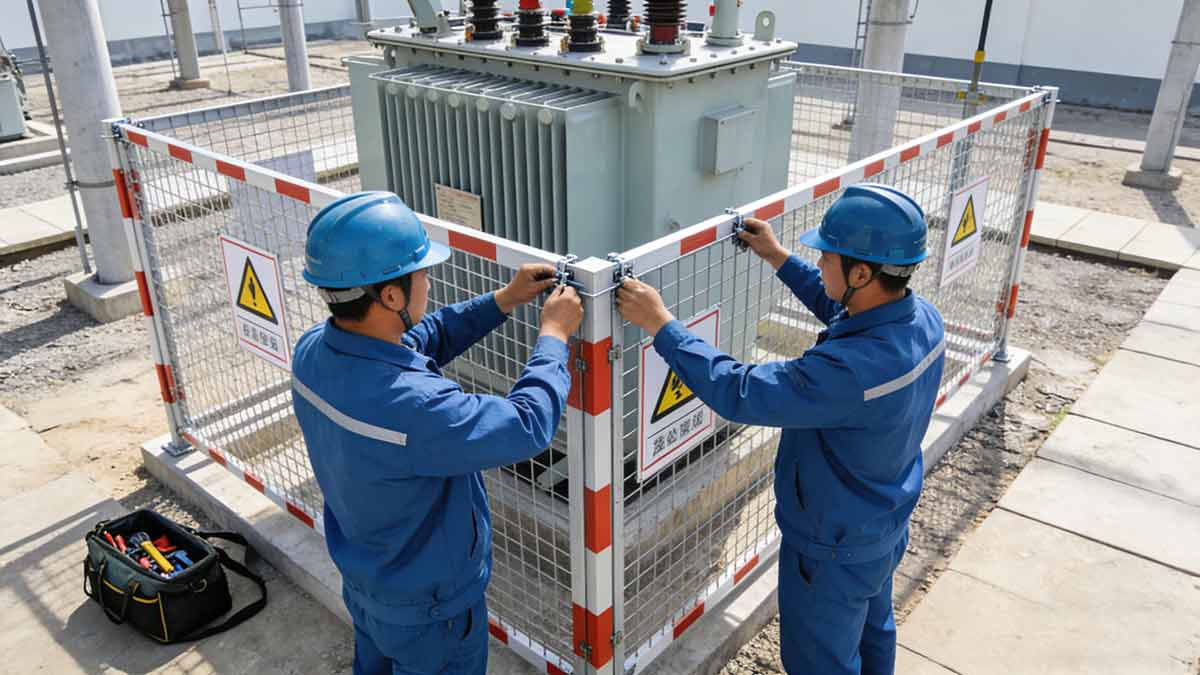
- Safety Preparation: Set up safety barriers around the installation site to prevent unauthorized access. Ensure that all workers are properly trained in safety procedures, including the use of personal protective equipment (PPE) such as hard hats, safety glasses, and gloves. Additionally, arrange for emergency response equipment (such as fire extinguishers and first aid kits) to be on-site.
Lifting and Placing the Transformer During Installation
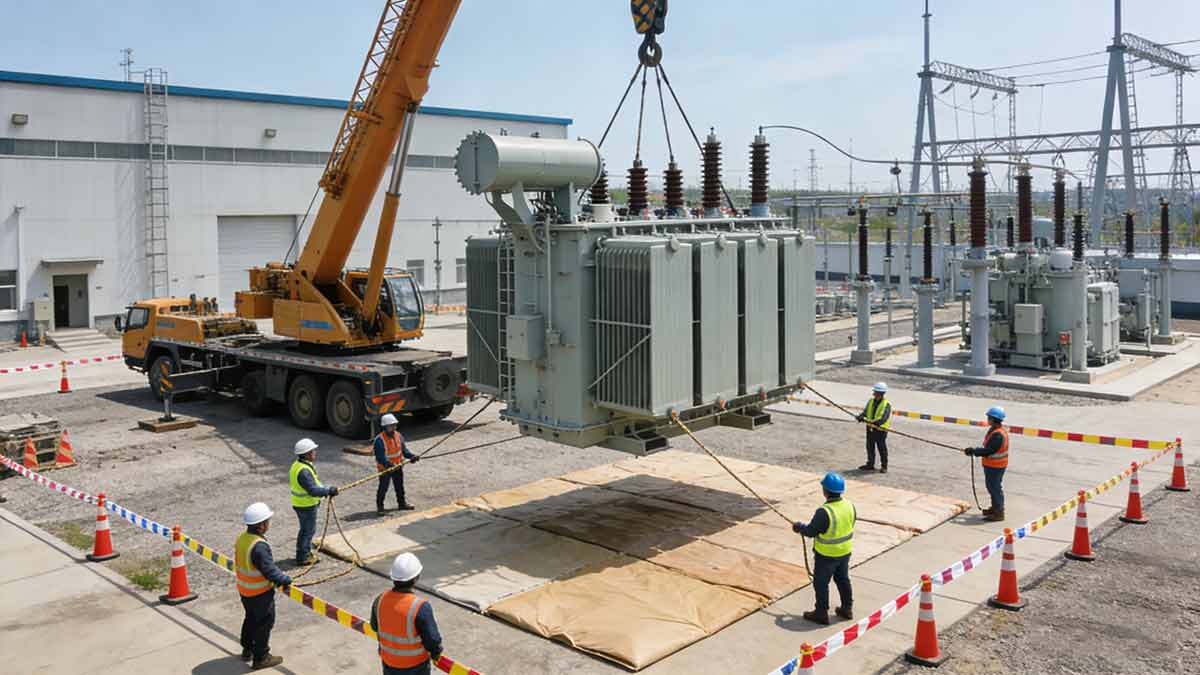
- Equipment Selection: Choose a crane with a lifting capacity that exceeds the transformer’s weight. The crane should be equipped with a spreader beam to distribute the weight evenly and prevent damage to the transformer’s tank. Additionally, use high-strength rigging equipment (such as slings and shackles) that is rated for the transformer’s weight.
- Lifting Plan: Develop a detailed lifting plan that outlines the lifting points, the angle of the slings, and the path of the crane. The lifting points should be clearly marked on the transformer’s tank (as specified by the manufacturer) to ensure that the weight is distributed evenly.
- Trial Lift: Before lifting the transformer to its final position, perform a trial lift. Lift the transformer a few inches off the ground and check for any signs of instability or damage. Verify that the crane and rigging equipment are functioning properly.
- Placement: Slowly lift the transformer and move it to the foundation. Ensure that the transformer is aligned correctly with the foundation’s anchor bolts. Lower the transformer gently onto the foundation, taking care not to impact the foundation or the transformer’s components.
- Securing: Once the transformer is in place, secure it to the foundation using anchor bolts. Tighten the bolts to the manufacturer’s recommended torque to ensure a secure fit.
Electrical Connections for Power Transformer Installation
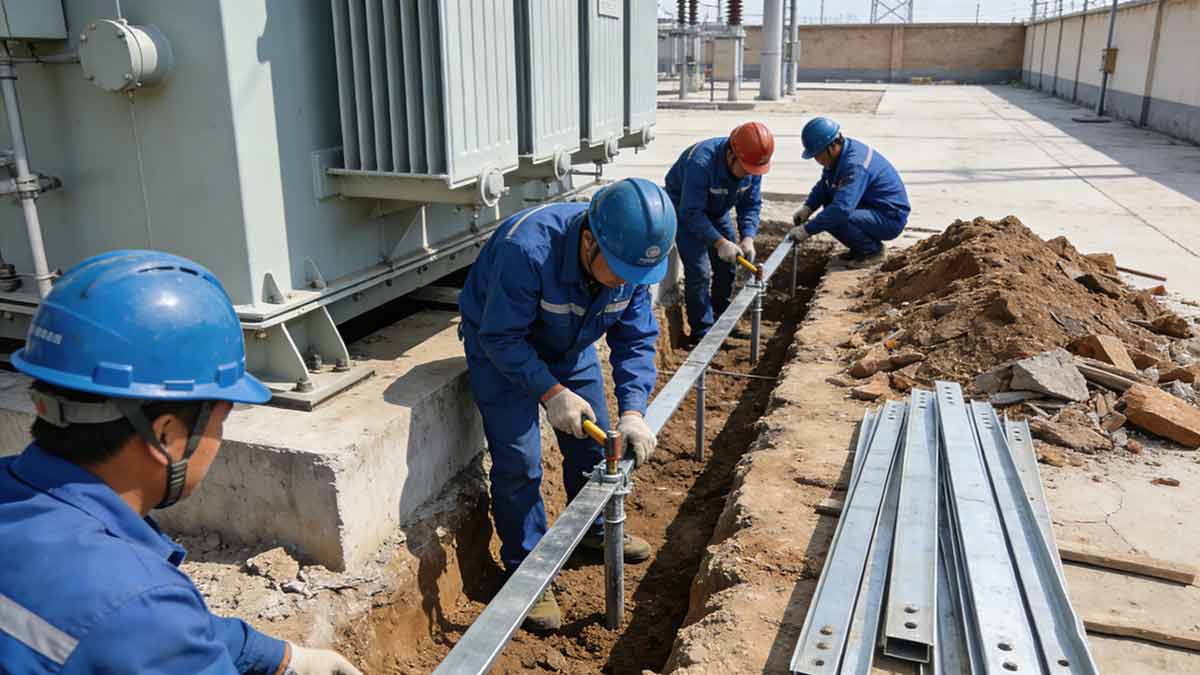
- Cable Preparation: Strip the insulation from the ends of the HV and LV cables to expose the conductors. Use a cable stripping tool to avoid damaging the conductors. Clean the conductors to remove any dirt or oxidation, which can cause poor electrical contact.
- Terminal Connection: Connect the HV cables to the transformer’s HV bushings and the LV cables to the LV bushings. Use cable lugs to secure the conductors to the terminals. Tighten the lug bolts to the manufacturer’s recommended torque to ensure a secure connection. Avoid over-tightening, as this can damage the terminals or conductors.
- Grounding: Proper grounding is critical for safety and to protect the transformer from lightning strikes and voltage surges. Connect the transformer’s tank and core to a grounding electrode using a grounding conductor. The grounding conductor should be of sufficient size (as specified by NEC or local codes) to carry fault currents safely.
- Control and Monitoring Connections: Connect the control and monitoring equipment (such as temperature gauges, oil level indicators, and fault detection devices) to the transformer. Ensure that the wiring is routed correctly and secured to prevent damage. Test the control and monitoring equipment to verify that it’s functioning properly.
Testing and Commissioning for Power Transformer Installation
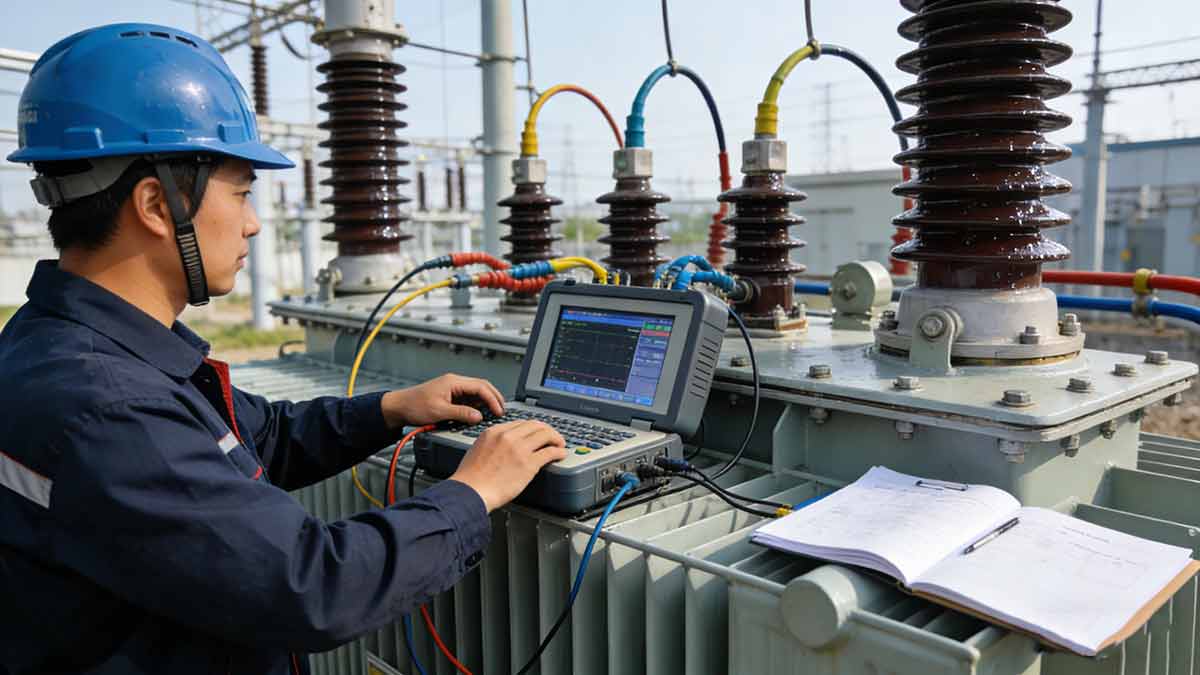
- Insulation Resistance Test: This test measures the resistance of the transformer’s insulation to electrical current. Use a megohmmeter to apply a high voltage (typically 5 kV or 10 kV) to the windings and measure the insulation resistance. A low insulation resistance indicates a problem with the insulation (such as moisture ingress or damage), which can lead to short circuits.
- Voltage Ratio Test: This test verifies that the transformer’s voltage ratio matches the specified value. Apply a test voltage to the primary winding and measure the voltage on the secondary winding. The ratio of the primary voltage to the secondary voltage should be within the manufacturer’s tolerance (typically ±0.5%).
- Short-Circuit Test: This test measures the transformer’s impedance and copper losses. Short-circuit the secondary winding and apply a low voltage to the primary winding. Measure the current and voltage to calculate the impedance and copper losses. This test helps to verify that the transformer can handle fault currents safely.
- Load Test: This test verifies the transformer’s performance under load conditions. Apply a load to the secondary winding and measure the voltage, current, and temperature. The transformer’s performance should be within the manufacturer’s specifications, and the temperature should not exceed the maximum allowable limit.
- Oil Analysis (for Liquid-Immersed Transformers): For liquid-immersed transformers, analyze the insulating oil to check for moisture, dissolved gases, and contaminants. Moisture in the oil can degrade the insulation, while dissolved gases (such as methane and ethane) can indicate internal faults (such as overheating or arcing).
Common Challenges in Power Transformer Installation and How to Overcome Them
Challenge 1: Moisture Ingress During Installation
- Keep the transformer sealed during transportation and storage. If the transformer is shipped with a nitrogen blanket, maintain the nitrogen pressure until installation.
- Install the transformer in a dry environment. If installation is being done outdoors, avoid working during rainy or humid weather.
- Use a dehumidifier to reduce the humidity in the installation area.
- After installation, perform an insulation resistance test to check for moisture ingress. If moisture is detected, dry the transformer using a vacuum drying system.
Challenge 2: Improper Alignment of the Transformer
- Use a laser level to check the foundation’s flatness before installation.
- Align the transformer’s anchor bolt holes with the foundation’s anchor bolts before lowering the transformer.
- After placing the transformer on the foundation, check the alignment using a spirit level. Adjust the transformer if necessary.
- Secure the transformer to the foundation using anchor bolts tightened to the manufacturer’s recommended torque.
Challenge 3: Inadequate Cable Sizing
- Calculate the transformer’s full load current using the formula: I = (kVA × 1000) / (√3 × V). Where I is the full load current, kVA is the transformer’s rating, and V is the voltage.
- Select cables that can carry the full load current without exceeding the maximum allowable temperature. Refer to NEC or local codes for cable sizing guidelines.
- Consider the length of the cables. Longer cables have higher resistance, which can cause voltage drop. If the cables are long, use a larger gauge cable to reduce voltage drop.
Critical Testing and Commissioning After Power Transformer Installation
- Moisture ingress
- Damaged windings
- Loose connections
- Improper cable sizing
- Manufacturing defects
- If moisture is the cause, dry the transformer using a vacuum drying system.
- If the windings are damaged, repair or replace the windings (this should be done by a qualified transformer technician).
- If connections are loose, tighten the connections to the manufacturer’s recommended torque.
- If cable sizing is inadequate, replace the cables with the correct size.
- If the failure is due to a manufacturing defect, contact the manufacturer to arrange for repairs or replacement.
Long-Term Maintenance Tips Post Power Transformer Installation
- Regular Inspections: Conduct visual inspections of the transformer on a monthly basis. Check for oil leaks, damage to the tank, and signs of overheating (such as discoloration of the tank). Inspect the bushings for cracks or contamination.
- Oil Analysis: For liquid-immersed transformers, analyze the insulating oil on a quarterly basis. Check for moisture, dissolved gases, and contaminants. If the oil quality deteriorates, replace or filter the oil.
- Temperature Monitoring: Monitor the transformer’s temperature during operation. Use temperature gauges or a remote monitoring system to track the temperature. If the temperature exceeds the maximum allowable limit, investigate the cause (such as overloading or poor ventilation).
- Load Monitoring: Monitor the transformer’s load to ensure it’s not operating beyond its rated capacity. Overloading can cause overheating and damage to the windings.
- Grounding System Inspection: Inspect the grounding system on an annual basis. Check for loose connections, corrosion, or damage to the grounding electrode. Ensure that the grounding system is functioning properly to protect the transformer from lightning strikes and voltage surges.
FAQs About Power Transformer Installation
Q1: Can a power transformer installation be done without professional help?
Q2: How long does a typical power transformer installation take?
Q3: What is the cost of power transformer installation?
Q4: What is the difference between indoor and outdoor power transformer installation?
Q5: How often should a power transformer be re-commissioned after installation?
Q6:What are the key site preparation requirements for power transformer installation?
A6: Proper site preparation is foundational to safe and reliable transformer operation. The site must be flat, well-ventilated, and capable of supporting the transformer’s weight, with a solid concrete foundation that meets local codes and manufacturer specifications. Clearances from combustible materials and obstacles must comply with NEC 450 standards—for example, dry-type transformers over 112.5 kVA require a one-hour fire-rated transformer room. Outdoor installations must adhere to eCFR § 57.12067, which mandates that transformers be at least 8 feet above ground or surrounded by a 6-foot-tall fence 3 feet from energized parts.
Q7:What are the critical steps for transformer wiring and connections?
A7: Wiring and connections demand strict adherence to diagrams and electrical codes to ensure safety and performance. First, verify that primary and secondary voltages match the system design and transformer nameplate. Use torque wrenches to fasten connections to manufacturer-specified levels—loose terminals cause overheating and arcing. Phase sequence must be correct to prevent equipment malfunction, and neutral and ground wires must be properly separated and connected per NEC 450 guidelines. Post-connection, insulation resistance tests (typically 2500V) should confirm no leaks or short circuits.
Q8: Why is proper grounding essential for power transformer installation?
A8: Grounding is a critical safety measure that protects against electrical faults and voltage surges. The grounding system must have a low resistance (typically ≤4Ω) to divert fault currents safely to the earth. Ground wires must be securely connected to the transformer’s grounding bolt and a properly installed ground electrode, with connections free of corrosion. Compliance with IEC 60076-3 ensures that grounding minimizes touch voltage risks for personnel and prevents damage to the transformer’s core and windings from lightning or short circuits.