
Power Transformer Working Principle: A Comprehensive Guide for Electrical Professionals
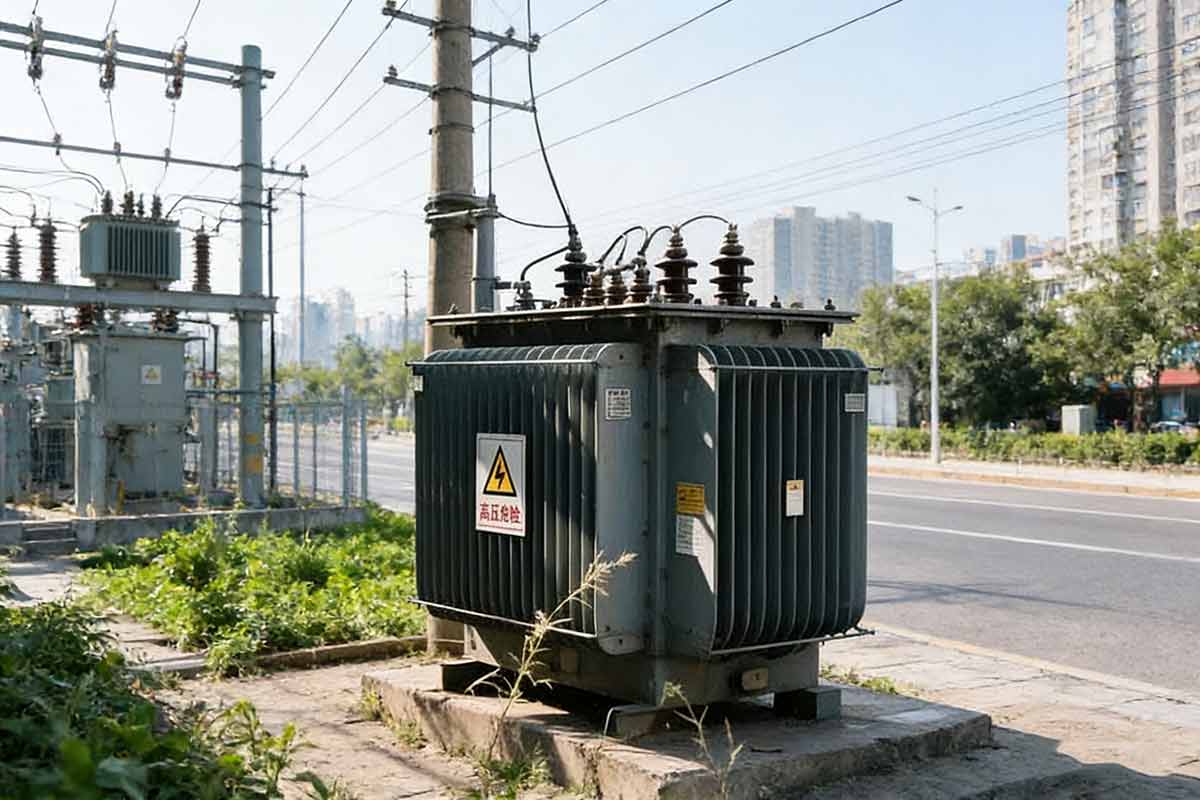
Power transformers stand as the unsung backbone of global electrical infrastructure, facilitating the reliable transmission and distribution of electricity that powers homes, businesses, industries, and critical services worldwide. In an era where energy demand is soaring—driven by urbanization, industrialization, and the rise of renewable energy sources—these devices play a non-negotiable role in bridging the gap between power generation and end-user consumption. Unlike other electrical components that focus on energy conversion or control, transformers specialize in adjusting voltage levels, a function that is indispensable for minimizing energy loss during long-distance transmission and ensuring safety at the point of use.
Introduction to Power Transformers
The Role of Power Transformers in Modern Power Systems
Why Power Transformers Are Indispensable
The Fundamental Working Principle of Power Transformers
Faraday’s Law of Electromagnetic Induction: The Foundation
How Mutual Induction Enables Voltage Conversion
- Step-Up Transformers: In power transmission applications, step-up transformers have more turns in the secondary winding than the primary winding (N₂ > N₁). For example, a transformer with a turns ratio of 25:1 (25 secondary turns for every 1 primary turn) will convert a primary voltage of 20 kV to a secondary voltage of 500 kV. This high voltage reduces the current (since power P = V×I, assuming ideal conditions with no losses), minimizing resistive losses in transmission lines. A typical power plant might use a step-up transformer to boost voltage from 15 kV to 765 kV for long-distance transport across hundreds of kilometers.
- Step-Down Transformers: In distribution networks, step-down transformers have fewer turns in the secondary winding than the primary winding (N₂ < N₁). For instance, a transformer with a turns ratio of 1:50 (1 secondary turn for every 50 primary turns) will reduce a 132 kV transmission voltage to 2.64 kV for local distribution, which is then further stepped down to 415 V for industrial use or 230 V for residential use. Step-down transformers are also used in industrial settings to power machinery that requires lower voltages than the grid supply.
Magnetic Flux and Core Coupling: Key to Efficient Operation
Key Components of a Power Transformer
Primary Winding: The Input Side
- Copper vs. Aluminum Windings: Copper is the preferred material for windings due to its higher electrical conductivity (approximately 58 MS/m compared to aluminum’s 37 MS/m) and lower resistance, which reduces copper losses. Copper also has better thermal conductivity and mechanical strength, making it suitable for high-power, high-temperature applications. However, aluminum is a more cost-effective alternative, with a density of only 2.7 g/cm³ (compared to copper’s 8.96 g/cm³), which reduces the transformer’s overall weight. For low- to medium-power transformers or applications where cost and weight are critical, aluminum windings are a viable option.
- Winding Design: Primary windings are wound in layers around the magnetic core, with each layer insulated from adjacent layers to prevent short circuits. The number of turns in the primary winding is calculated based on the desired voltage ratio—more turns for lower input voltages, fewer turns for higher input voltages. The wire gauge (cross-sectional area) is determined by the rated current: larger gauge wires for higher currents to reduce resistance and heat generation. For high-voltage transformers, the primary winding may include a tap changer—a device that allows adjusting the number of turns to compensate for voltage fluctuations in the grid.
Secondary Winding: The Output Side
- Insulation Requirements: Secondary windings must be insulated from the primary winding and the magnetic core to prevent electrical leakage and short circuits. The insulation material depends on the transformer’s voltage rating: low-voltage transformers may use paper or enamel insulation, while high-voltage transformers require more robust materials such as oil-impregnated paper, epoxy resin, or ceramic insulators. The insulation must also withstand thermal stress, as windings generate heat during operation.
- Multiple Secondary Windings: Some transformers are designed with multiple secondary windings to provide multiple output voltages. For example, a distribution transformer might have a primary winding rated for 11 kV and two secondary windings: one rated for 415 V (for industrial use) and another for 230 V (for residential use). This design eliminates the need for multiple transformers, reducing cost and space requirements.
Magnetic Core: The Flux Conductor
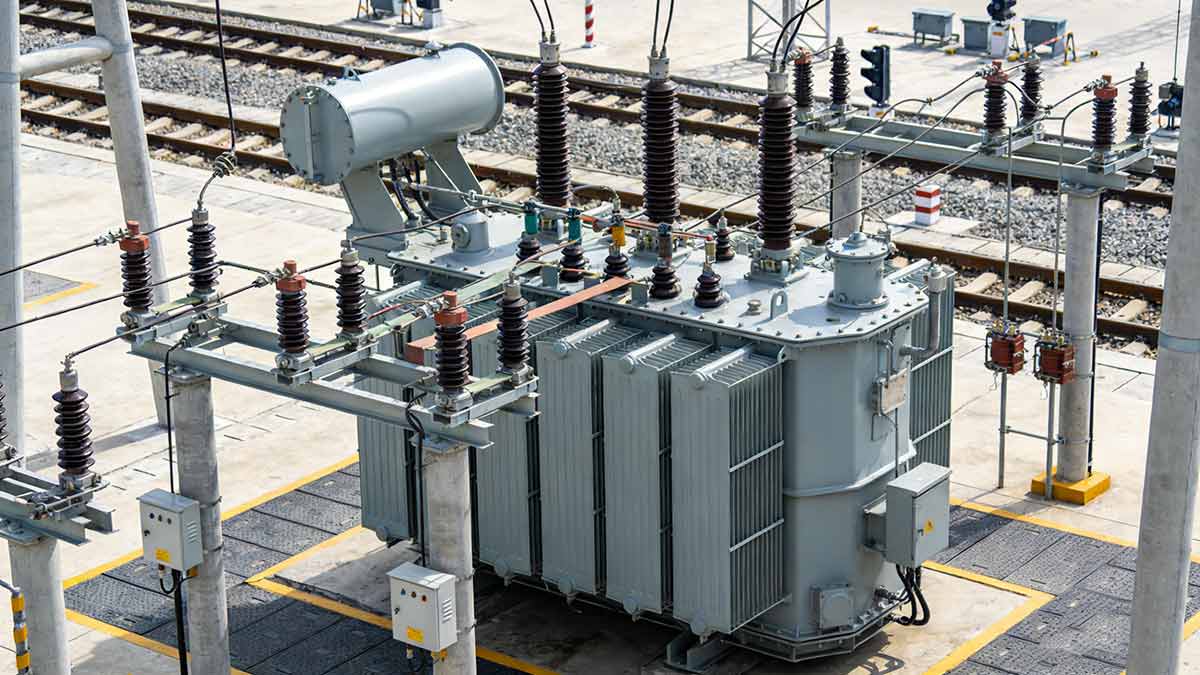
- Silicon Steel Laminations: Silicon steel is an alloy of iron and silicon, with silicon content ranging from 3% to 5%. The addition of silicon increases the material’s electrical resistance, which reduces eddy current losses by limiting the flow of induced currents within the core. The laminations are thin (0.35-0.5 mm) to minimize the cross-sectional area available for eddy currents, further reducing losses. The laminations are stacked in a way that aligns their grain structure with the magnetic flux direction, maximizing magnetic permeability and flux linkage.
- Core Construction: The two most common core constructions are core-type and shell-type. In core-type transformers, the windings are wrapped around the core’s limbs (vertical sections), with the core forming a rectangular frame. This design is simple and cost-effective, making it suitable for most power transformers. In shell-type transformers, the core surrounds the windings, forming a shell-like structure. This design provides better flux coupling and mechanical strength, but it is more complex and expensive, making it ideal for high-voltage, high-power applications.
Additional Critical Components
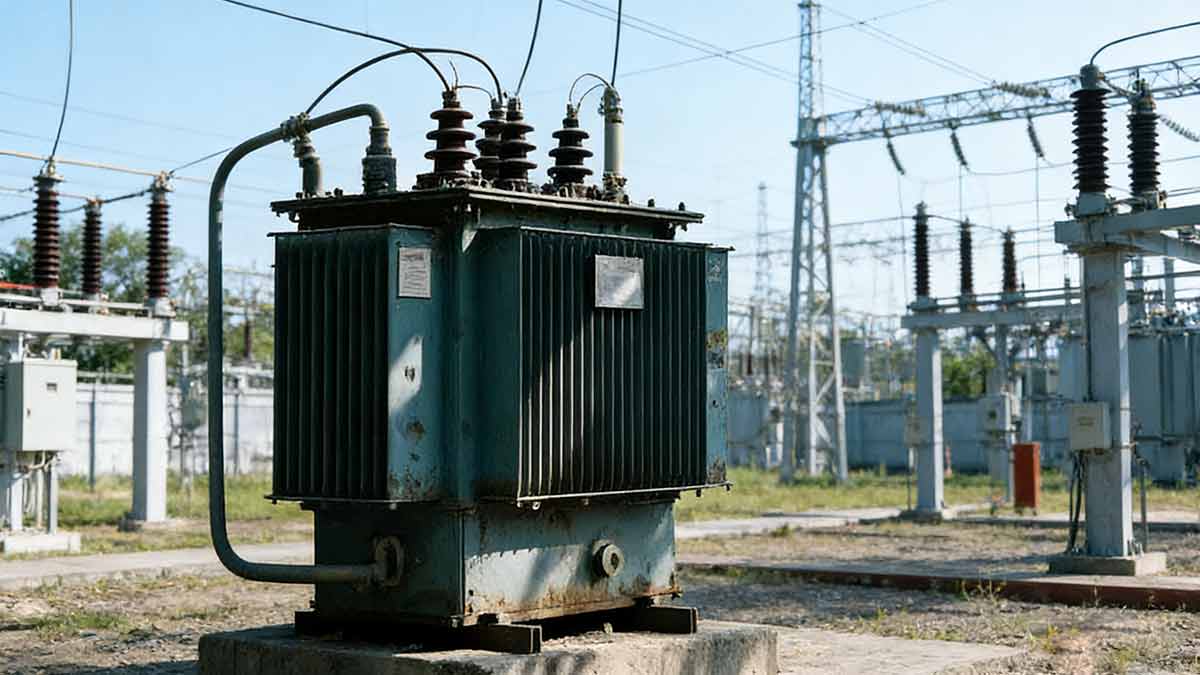
- Transformer Tank: For oil-immersed transformers (the most common type for high-power applications), the tank contains the core and windings and is filled with transformer oil. The oil serves two key purposes: insulation (between windings and core) and heat dissipation (absorbing heat from the windings and core and transferring it to the tank walls, which are cooled by air or water). The tank is typically made of steel and may include fins or radiators to increase heat dissipation surface area.
- Insulation Materials: In addition to winding insulation, transformers use insulation materials to separate the windings from the core and the tank. Common insulation materials include paper, pressboard, and epoxy resin. For oil-immersed transformers, the oil itself acts as a liquid insulator, with additives to improve its dielectric strength and oxidation resistance.
- Tap Changer: As mentioned earlier, a tap changer allows adjusting the number of turns in the primary or secondary winding to compensate for voltage variations in the grid. Tap changers can be either on-load (adjustable while the transformer is in operation) or off-load (requiring the transformer to be disconnected from the grid for adjustment). On-load tap changers are used in high-voltage transformers to maintain a stable output voltage despite grid fluctuations.
- Buchholz Relay: A safety device installed in oil-immersed transformers to detect faults such as internal short circuits or oil leaks. The relay monitors the transformer oil for gas bubbles (produced by overheating or arcing) and oil level drops, triggering an alarm or shutting down the transformer to prevent damage.
- Cooling System: Transformers generate heat during operation, so effective cooling is essential to prevent overheating and extend lifespan. Low-power transformers may rely on natural convection (air cooling), while high-power transformers require forced cooling systems. Common cooling methods include oil-forced air-forced (OFAF), oil-forced water-forced (OFWF), and air-forced (AFAF) cooling.
Factors Influencing Transformer Efficiency
Core Losses: Hysteresis and Eddy Current Losses
- Hysteresis Losses: Hysteresis loss occurs when the magnetic core is repeatedly magnetized and demagnetized by the alternating current in the primary winding. Each cycle of magnetization and demagnetization requires energy to reverse the magnetic domains in the core material, which is dissipated as heat. The magnitude of hysteresis loss depends on the core material’s hysteresis loop area—materials with narrow hysteresis loops (such as silicon steel) have lower hysteresis losses. Hysteresis loss can be calculated using Steinmetz’s formula: P_h = k_h × B_max^n × f × V, where k_h is the hysteresis constant, B_max is the maximum magnetic flux density, n is the Steinmetz exponent (typically 1.6-2.0), f is the frequency, and V is the core volume.
- Eddy Current Losses: Eddy currents are induced currents that flow in the magnetic core due to the changing magnetic flux. Since the core is a conductor (iron), the changing flux induces circular currents within the core, which generate heat due to resistance. Eddy current losses are proportional to the square of the magnetic flux density, the square of the frequency, the square of the core thickness, and the inverse of the core material’s electrical resistance. To reduce eddy current losses, transformer cores are made of thin, insulated laminations—this increases the core’s effective resistance and limits the size of eddy currents. Eddy current loss can be calculated using the formula: P_e = k_e × B_max² × f² × d² × V, where k_e is the eddy current constant, d is the lamination thickness, and other variables are the same as in the hysteresis loss formula.
Copper Losses: Resistive Losses in Windings
- Causes of Copper Losses: The primary cause of copper losses is the resistance of the winding wire. As current flows through the wire, electrons collide with the metal atoms, converting electrical energy into heat. The resistance of the winding depends on several factors:
- Wire Material: Copper has lower resistance than aluminum, so copper windings have lower copper losses.
- Wire Gauge: Larger gauge wires have lower resistance (since resistance is inversely proportional to cross-sectional area).
- Winding Length: Longer windings have higher resistance (resistance is proportional to length).
- Temperature: Winding resistance increases with temperature—copper’s resistance increases by approximately 0.4% per °C, while aluminum’s increases by 0.42% per °C.
- Reducing Copper Losses: To minimize copper losses, transformer designers optimize the winding design by:
- Using high-conductivity materials (copper) for high-power transformers.
- Selecting the appropriate wire gauge to balance resistance and cost.
- Using concentric winding designs to minimize the length of wire needed.
- Cooling the windings effectively to reduce temperature rise and resistance.
Stray Losses: Leakage Flux and Other Losses
- Sources of Stray Losses:
- Leakage Flux: As mentioned, leakage flux from the core induces eddy currents in the tank, frame, and other metal parts. The magnitude of stray losses due to leakage flux depends on the transformer’s design—transformers with better flux coupling (e.g., toroidal cores) have lower leakage flux and stray losses.
- Dielectric Losses: These losses occur in the insulation materials due to the alternating electric field. Dielectric losses are negligible in low-voltage transformers but become significant in high-voltage transformers, especially those using oil or solid insulation.
- Mechanical Losses: These losses are caused by vibration and noise in the transformer, primarily due to the magnetostriction of the core (expansion and contraction of the core material with magnetic flux changes) and the electromagnetic forces between the windings. Mechanical losses are small compared to core and copper losses but can affect the transformer’s lifespan and noise level.
- Reducing Stray Losses: Stray losses can be minimized by:
- Designing the core and windings to minimize leakage flux (e.g., using closed-core designs, optimizing winding placement).
- Shielding the tank and frame with magnetic materials to redirect leakage flux.
- Using low-loss insulation materials for high-voltage transformers.
- Damping vibrations with soundproofing materials or anti-vibration mounts.
Calculating Transformer Efficiency
Applications of Power Transformers
Power Transmission and Distribution Networks
- Generation Stage: Power plants generate electricity at moderate voltages (10-30 kV) using generators. Step-up transformers at the power plant boost this voltage to ultra-high levels (110-1,200 kV) for long-distance transmission. High-voltage transmission reduces current flow, minimizing resistive losses in the transmission lines. For example, a 500 kV transmission line can carry the same amount of power as a 110 kV line with only 5% of the current, reducing copper losses by 95%.
- Transmission Stage: Ultra-high-voltage transmission lines carry electricity across hundreds or thousands of kilometers to regional substations. These lines are typically overhead (supported by towers) or underground (for urban areas or environmentally sensitive regions). Along the way, additional transformers may be used to compensate for voltage drops or to connect multiple power sources to the grid.
- Distribution Stage: Regional substations use step-down transformers to reduce the ultra-high voltage to medium voltage (11-33 kV) for local distribution. Medium-voltage lines carry electricity to urban and rural distribution substations, where another set of step-down transformers reduces the voltage to low voltage (230-415 V) for residential, commercial, and industrial use.
Industrial Applications
- Manufacturing Industry: Factories use transformers to power machinery such as motors, pumps, and conveyor belts. For example, a car manufacturing plant may require 480 V for assembly line motors and 24 V for control systems, with transformers converting the grid’s 415 V supply to these voltages. High-power transformers are also used in welding equipment, which requires high current at low voltage to melt metal.
- Mining Industry: Mining operations, especially those in remote areas, often require large transformers to power heavy machinery such as excavators, crushers, and conveyor systems. These transformers must be rugged and reliable, capable of withstanding harsh environmental conditions (extreme temperatures, dust, moisture) and high loads. Step-down transformers at mining sites reduce the grid’s medium voltage (11-33 kV) to low voltage (415 V) for machinery and 230 V for lighting and office equipment.
- Metallurgical Industry: Steel mills and aluminum smelters require enormous amounts of power to melt and process metals. Arc furnaces, used to melt steel, require high voltage (up to 33 kV) and high current (up to 100 kA), with specialized transformers designed to handle these extreme conditions. Transformers in metallurgical plants are often oil-immersed for efficient cooling and insulation.
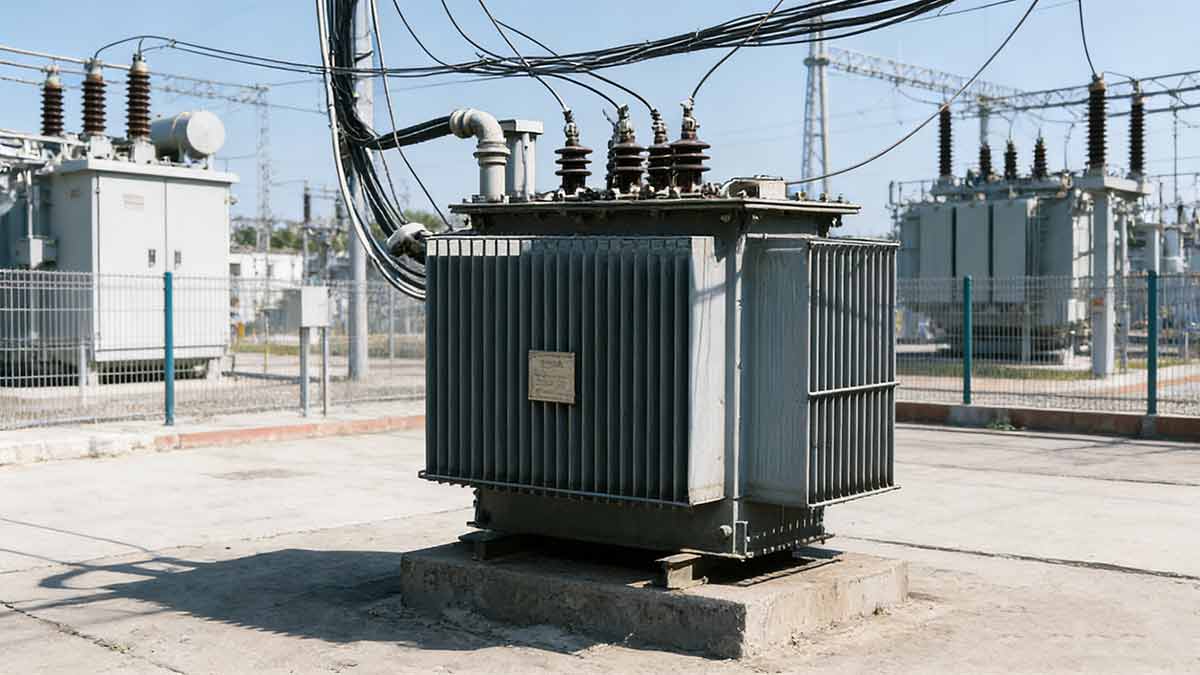
Renewable Energy Systems
- Solar Power Systems: Solar panels generate direct current (DC) electricity, which is converted to alternating current (AC) using inverters. The AC output of the inverter is typically 230-415 V, which is then stepped up to medium voltage (11-33 kV) using transformers for integration into the grid. Large-scale solar farms (solar parks) use multiple transformers to combine the output of hundreds or thousands of solar panels, while rooftop solar systems use small transformers to connect to the residential grid.
- Wind Power Systems: Wind turbines generate electricity at variable voltages and frequencies due to changing wind speeds. A step-up transformer at the base of each turbine converts the variable voltage to a constant medium voltage (33-66 kV), which is then transmitted to a central substation. At the substation, additional transformers step up the voltage to ultra-high levels for integration into the national grid. Offshore wind farms use specialized marine-grade transformers that can withstand saltwater corrosion and harsh weather conditions.
- Hydroelectric Power Systems: Hydroelectric dams generate electricity at moderate voltages (10-30 kV) using turbines. Step-up transformers at the dam boost this voltage to ultra-high levels for long-distance transmission. Hydroelectric transformers are designed to handle high power levels (often 100+ MVA) and must be reliable, as downtime can result in significant power shortages.
Commercial and Residential Buildings
- Commercial Buildings: Malls, office towers, and hospitals have high power demands, requiring transformers to supply electricity to multiple floors and systems. For example, a large hospital may require transformers to power medical equipment (MRI machines, X-ray machines), HVAC systems, and emergency backup generators. These transformers must be reliable and efficient, with backup systems to ensure uninterrupted power in case of failure.
- Residential Buildings: Residential areas are served by distribution transformers that reduce the medium voltage (11 kV) from the grid to 230 V (single-phase) or 415 V (three-phase) for homes. These transformers are often mounted on utility poles or in underground vaults, with each transformer serving multiple households. In densely populated urban areas, pad-mounted transformers (installed on concrete pads) are used to save space.
Advancements in Power Transformer Technology
Smart Transformers: Integration with IoT and Digital Systems
- Key Features of Smart Transformers:
- Real-Time Monitoring: IoT sensors embedded in the transformer monitor parameters such as temperature (oil temperature, winding temperature), voltage, current, power factor, and oil level. This data is transmitted to a central control system via wireless or wired communication (e.g., 4G, 5G, Wi-Fi, or Ethernet).
- Predictive Maintenance: By analyzing data on temperature, vibration, and insulation condition, smart transformers can predict potential failures before they occur. For example, a sudden increase in winding temperature may indicate a loose connection or insulation breakdown, allowing maintenance teams to address the issue before it leads to a shutdown.
- Remote Control: Digital control systems allow utilities to adjust the transformer’s operation remotely, such as changing the tap position to compensate for voltage fluctuations or adjusting the cooling system to reduce energy consumption.
- Grid Integration: Smart transformers can communicate with other grid components (e.g., renewable energy systems, energy storage devices, and smart meters) to optimize grid stability and efficiency. For example, a smart transformer can adjust its output to accommodate fluctuations in solar or wind power generation.
High-Efficiency Transformers: Reducing Energy Losses
- Design Innovations for High Efficiency:
- Advanced Core Materials: New core materials such as amorphous metal (also known as metallic glass) offer lower hysteresis and eddy current losses than traditional silicon steel. Amorphous metal cores can reduce core losses by 30-70%, making them ideal for high-efficiency transformers. However, amorphous metal is more expensive and difficult to manufacture, limiting its use to high-end applications.
- Optimized Winding Designs: High-efficiency transformers use copper windings with larger cross-sectional areas to reduce resistance and copper losses. Winding designs such as cross-wound or foil windings are also used to minimize leakage flux and stray losses.
- Improved Cooling Systems: Advanced cooling systems, such as forced-air cooling or liquid cooling, reduce temperature rise in the windings and core, lowering resistance and copper losses. Oil-immersed transformers use high-quality transformer oil with better thermal conductivity and oxidation resistance to improve heat dissipation.
Compact and Lightweight Transformers
- Design Innovations for Compactness and Lightweight:
- Toroidal Cores: Toroidal cores have a more efficient magnetic path than E-I cores, allowing for fewer turns in the windings and a smaller overall size. Toroidal transformers are typically 30-50% smaller and lighter than E-I core transformers of the same power rating.
- Aluminum Windings: As mentioned earlier, aluminum is lighter than copper, reducing the transformer’s weight. For compact transformers, aluminum windings are often used in combination with toroidal cores to maximize size and weight savings.
- Solid Insulation: Some compact transformers use solid insulation materials such as epoxy resin instead of oil, eliminating the need for a large tank and reducing the transformer’s size and weight. Solid-insulated transformers are also more environmentally friendly, as they do not pose a risk of oil leakage.
Maintenance Tips for Optimal Transformer Performance
Routine Inspection Practices
- Visual Inspection: Check the transformer’s exterior for signs of damage, such as dents, cracks, or oil leaks. Inspect the cooling system (fins, radiators, fans) for dirt, debris, or blockages that could reduce heat dissipation. Check the insulation materials for signs of aging, such as discoloration or brittleness.
- Oil Analysis: For oil-immersed transformers, analyze the transformer oil for moisture, acidity, and dissolved gases. Moisture in the oil reduces its dielectric strength, increasing the risk of electrical breakdown. Acidity indicates oil oxidation, which can corrode the transformer’s internal components. Dissolved gases (such as hydrogen, methane, and ethylene) are produced by overheating or arcing, indicating potential faults.
- Temperature Monitoring: Measure the transformer’s oil temperature and winding temperature using built-in thermometers or IoT sensors. Abnormal temperature rises may indicate overloading, poor cooling, or internal faults. The maximum allowable temperature rise depends on the transformer’s insulation class—typically 65-80 °C for oil-immersed transformers.
- Voltage and Current Checks: Monitor the primary and secondary voltage and current to ensure they are within the transformer’s rated limits. Voltage fluctuations may indicate grid issues or tap changer problems, while excessive current may indicate overloading.
Addressing Common Transformer Issues
- Oil Leaks: Oil leaks can occur due to damaged gaskets, seals, or tank cracks. Leaks reduce the transformer’s insulation and cooling capacity, increasing the risk of overheating and failure. To address oil leaks, identify the source of the leak and replace damaged gaskets or seals. For minor leaks, use oil leak sealants as a temporary solution, but permanent repairs should be performed as soon as possible.
- Overheating: Overheating can be caused by overloading, poor cooling, or internal faults (such as short circuits). If a transformer is overheating, reduce the load immediately and check the cooling system for blockages or malfunctions. If the problem persists, inspect the windings and core for faults such as short circuits or loose connections.
- Voltage Fluctuations: Voltage fluctuations in the secondary winding may be caused by grid voltage changes, tap changer malfunctions, or incorrect winding turns. Use a tap changer to adjust the voltage if possible, or contact the utility company to address grid issues. If the tap changer is malfunctioning, have it repaired or replaced by a qualified technician.
- Noise and Vibration: Excessive noise or vibration may indicate magnetostriction of the core, loose windings, or bearing problems in the cooling system. Tighten loose components and lubricate cooling system bearings if necessary. If the noise persists, inspect the core for damage or misalignment.
Long-Term Maintenance Strategies
- Load Management: Avoid overloading the transformer beyond its rated capacity. Overloading increases copper losses and temperature rise, accelerating insulation aging and reducing lifespan. Use load monitoring systems to track the transformer’s load and adjust it as needed.
- Cooling System Maintenance: Regularly clean the cooling system (fins, radiators, fans) to remove dirt and debris. Replace worn or damaged fans and pumps to ensure efficient heat dissipation. For oil-immersed transformers, replace the transformer oil every 5-10 years (or as recommended by the manufacturer) to maintain its insulation and cooling properties.
- Insulation Maintenance: Inspect the insulation materials regularly and replace them if they show signs of aging. For high-voltage transformers, perform dielectric testing (such as tan delta testing or partial discharge testing) to assess the insulation’s condition. Dielectric testing can detect insulation degradation before it leads to failure.
- Training and Documentation: Ensure that maintenance personnel are properly trained in transformer inspection, repair, and safety procedures. Maintain detailed documentation of all maintenance activities, including inspection reports, oil analysis results, and repair records. This documentation can help identify trends and plan future maintenance.
Conclusion
FAQ About Power Transformer Working Principle
What is the basic working principle of a power transformer?
The basic working principle of a power transformer is based on Faraday’s Law of Electromagnetic Induction. It realizes the transfer of electrical energy between two or more circuits through a changing magnetic field without direct electrical connection. When alternating current (AC) flows through the primary winding, it generates an alternating magnetic flux in the iron core. This magnetic flux is guided by the iron core to pass through the secondary winding, and the changing magnetic flux induces an electromotive force (EMF) in the secondary winding. The voltage level of the output can be adjusted by changing the turns ratio of the primary and secondary windings, so as to achieve the functions of voltage step-up or step-down .
How does the turns ratio affect the voltage transformation of a power transformer?
The turns ratio (the ratio of the number of turns of the secondary winding N2 to the primary winding N1) directly determines the voltage transformation ratio of the power transformer. According to the law of electromagnetic induction, the ratio of the secondary voltage (U2) to the primary voltage (U1) is equal to the turns ratio, that is, U2/U1 = N2/N1. When N2 > N1, the transformer works as a step-up transformer, which can increase the input voltage; when N< N1, it is a step-down transformer, which reduces the input voltage. At the same time, based on the principle of energy conservation, the current ratio is inversely proportional to the turns ratio (I1/I2 = N2/N1), ensuring that the input power is approximately equal to the output power (ignoring losses).
What is the role of the iron core in the working principle of a power transformer?
The iron core is a key component that realizes magnetic flux coupling in power transformers. Its main role is to provide a closed magnetic circuit with low magnetic resistance, concentrate the alternating magnetic flux generated by the primary winding, and efficiently transmit it to the secondary winding, thereby improving the efficiency of energy transfer. In addition, the iron core is usually made of laminated silicon steel sheets. The silicon content in the silicon steel sheets increases the resistivity, and the lamination structure can limit the formation of eddy currents, thereby reducing iron loss (including hysteresis loss and eddy current loss).
What are the energy loss mechanisms in the working process of a power transformer?
There are two main types of energy losses in power transformers during operation: iron loss and copper loss. Iron loss is caused by the magnetization process of the iron core, including hysteresis loss and eddy current loss. It is related to the magnetic flux density of the iron core, the frequency of the alternating current, and the material of the iron core, and has nothing to do with the load, so it is also called “constant loss”. Copper loss is the energy loss caused by the resistance of the winding when current flows through the primary and secondary windings. It is proportional to the square of the load current, so it is called “variable loss”. The efficiency of a well-designed power transformer can reach more than 95%.
What is the working principle difference between an oil-immersed power transformer and a dry-type power transformer?
The core working principle of both oil-immersed and dry-type power transformers is electromagnetic induction, and the difference lies in the insulation medium and cooling method. Oil-immersed power transformers use insulating oil as the insulation medium and cooling medium. The insulating oil can insulate the windings and dissipate heat by means of oil circulation (natural cooling or forced cooling). Dry-type power transformers use air or solid insulating materials (such as epoxy resin) for insulation, and rely on natural air convection or forced air cooling (fan) to dissipate heat. These structural differences are to adapt to different application environments (such as indoor, outdoor, high humidity, etc.).
How does an on-load tap-changer work based on the principle of power transformers?
The on-load tap-changer is a component that adjusts the output voltage of the transformer without disconnecting the load. Its working principle is based on the voltage transformation characteristics of the transformer (U2/U1 = N2/N1). By changing the number of turns of the primary or secondary winding connected to the circuit, the turns ratio of the transformer is adjusted, thereby changing the secondary output voltage. During the tap switching process, the on-load tap-changer needs to use arc suppression devices (such as transition resistors) to avoid short circuits between taps, ensuring the stability of the magnetic flux and the continuity of energy transmission during the adjustment process.
What factors affect the working efficiency of a power transformer?
The working efficiency of a power transformer is affected by multiple factors. First, the electromagnetic design: the selection of magnetic flux density, iron core material, and winding design will affect iron loss and copper loss. Second, the load rate: too high or too low a load rate will reduce efficiency. The optimal efficiency usually occurs when the load rate is 50%-70%. Third, the cooling method: poor cooling will lead to excessive temperature rise, increase losses, and reduce efficiency. Fourth, the quality of insulation: poor insulation may cause short circuits between windings, affecting energy transmission efficiency. Fifth, the voltage ratio and transformation ratio: an unreasonable voltage ratio will increase magnetic hysteresis and eddy current losses.
What is the no-load operation principle of a power transformer?
The no-load operation of a power transformer means that the primary winding is connected to the rated voltage AC power supply, and the secondary winding is open-circuited. At this time, a small no-load current flows through the primary winding, which generates a main magnetic flux in the iron core. The main magnetic flux induces an electromotive force in both the primary and secondary windings. Since the secondary winding is open-circuited, there is no load current, and the output power is zero. The no-load loss of the transformer (mainly iron loss) is borne by the primary power supply. The no-load operation is an important working state to test the iron core performance and winding insulation of the transformer.
How does the magnetic core material affect the working principle of a power transformer?
The magnetic core material directly affects the magnetic flux transmission efficiency and loss level of the power transformer, thereby affecting its working performance. Common magnetic core materials include silicon steel sheets, amorphous alloys, and ferrites. Silicon steel sheets have high magnetic permeability and low loss, and are widely used in traditional power transformers. Amorphous alloy materials have lower no-load loss, which is beneficial to improving energy efficiency. Ferrites have high resistivity and low loss at high frequencies, and are suitable for high-frequency power transformers. The selection of magnetic core materials needs to match the working frequency, power level, and efficiency requirements of the transformer.
What is the working principle of an autotransformer?
An autotransformer is a special power transformer with only one winding. Its working principle is still based on electromagnetic induction. A tap is drawn from the middle of the winding to divide the winding into a primary part and a secondary part. When alternating current is input to the primary part, an alternating magnetic flux is generated in the iron core. This magnetic flux not only induces electromotive force in the primary part (self-induction), but also induces electromotive force in the secondary part (mutual induction). The voltage transformation ratio is still determined by the turns ratio of the primary and secondary parts. Compared with traditional double-winding transformers, autotransformers have the advantages of small size, low loss, and high efficiency, and are often used in high-voltage power systems.
What is the principle of insulation in the working process of a power transformer?
The insulation principle of a power transformer is to use insulating materials (such as insulating oil, epoxy resin, insulating paper, etc.) to separate the primary winding, secondary winding, iron core, and other components from each other and from the ground, preventing short circuits between different parts. During operation, the insulating material must withstand the action of alternating voltage and temperature rise. Good insulation performance ensures that the magnetic flux can be effectively coupled between the windings, and the energy can be transmitted stably. If the insulation quality is poor, it may cause an inter-turn short circuit of the winding or a short circuit between phases, which will damage the transformer and affect the normal operation of the power system.
What is the working principle difference between a power transformer and a distribution transformer?
The core working principle of power transformers and distribution transformers is electromagnetic induction, and the difference lies in their application scenarios and parameter design. Power transformers are mainly used in power plants and high-voltage power grids to realize step-up (transmitting power from power plants to the grid) or step-down (transmitting power from the grid to regional substations) of high-voltage and large-capacity electric energy. They have high voltage and large capacity. Distribution transformers are used at the terminal of the power grid to step down the medium voltage (such as 10kV) to low voltage (such as 220V/380V) for user use. They have low rated voltage, small capacity, and are widely distributed.