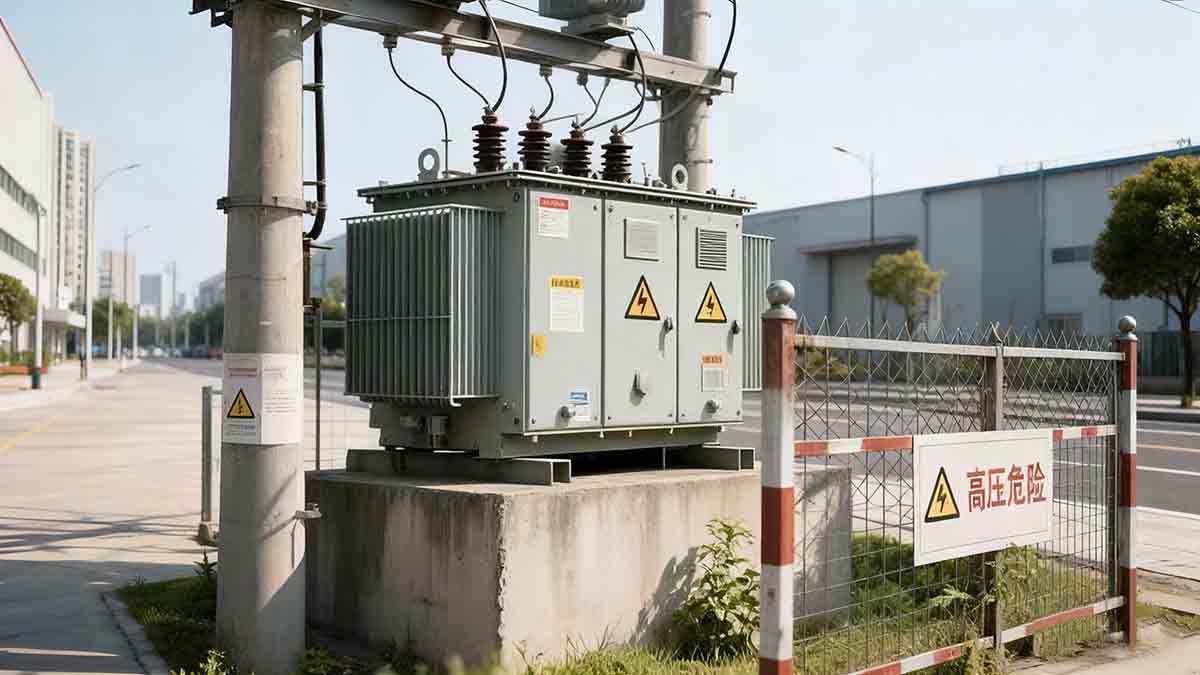
An ill-considered load calculation or mismatched capacity selection can not only lead to energy waste and increased operational costs but also trigger equipment failures, power outages, and even potential safety hazards. This article delves into the key principles of
transformer load calculation, dissects the factors influencing load rate determination, and provides comprehensive guidelines for capacity selection, aiming to offer authoritative and practical references for power engineers, distribution system designers, and transformer users.

The transformer load rate is defined as the ratio of the actual power load borne by the transformer during operation to its rated capacity, usually expressed as a percentage. This parameter is a critical indicator for evaluating whether a transformer is operating within a reasonable range, as it directly links the transformer’s performance to the actual power demand of the distribution system. Understanding the dynamic changes of load rate under different working conditions is the first step toward precise load calculation and capacity selection.
For
power distribution systems characterized by a stable power supply and consistent load demand, the transformer load rate can be optimized to around 85%. In such systems, the power consumption pattern is predictable, with minimal fluctuations in the total load of connected electrical equipment. For example, continuous industrial production lines that run 24 hours a day with fixed machinery and equipment fall into this category. When the load rate is maintained at 85%, the transformer can operate at a high-efficiency point, balancing
power transmission capacity and energy loss.
Mathematically, this optimal load rate provides a straightforward formula for calculating the required
transformer capacity. If the total electrical load of the system is known, the rated capacity of the transformer that needs to be installed can be derived by dividing the total load by 0.85. This calculation method is widely applied in scenarios where the load demand is stable and long-term, as it ensures that the transformer is not underutilized while avoiding overloading risks. For instance, if a factory’s total stable power load is 850 kW, the required transformer rated capacity would be 850 kW ÷ 0.85 = 1000 kVA, which means a 1000 kVA transformer is sufficient to meet the factory’s stable power supply needs.
In reality, however, most
power distribution systems do not operate under perfectly stable load conditions. Electricity consumption exhibits distinct peak and valley periods due to various factors, such as the operational cycles of industrial equipment, the daily electricity usage habits of residential users, and the seasonal changes in cooling or heating demand. During peak hours, the total load may surge significantly, while during valley hours, the load drops to a relatively low level. This fluctuation necessitates a downward adjustment of the transformer’s optimal load rate to ensure reliable operation across all load conditions.
In such cases, a transformer load rate ranging from 60% to 70% is considered more appropriate. This range leaves sufficient buffer capacity to accommodate the peak load surges, preventing the transformer from being overloaded during high-demand periods. Overloading a transformer can cause excessive temperature rise, which not only accelerates the aging of insulating materials but also increases the risk of equipment breakdown and power outages. Additionally,
transformer capacity is manufactured according to fixed rating levels (e.g., 250 kVA, 400 kVA, 500 kVA, 630 kVA, etc.), with no custom capacities available for every specific load value. Therefore, when selecting a transformer, it is a widely accepted principle to choose a capacity that is slightly larger than the calculated value rather than smaller. This “over-sizing” margin provides an extra layer of safety, ensuring that the transformer can handle unexpected load increases and prolonging its service life.
Calculating
transformer capacity is not a one-size-fits-all process; it requires a combination of theoretical formulas and practical adjustments based on load characteristics. By following a systematic approach, engineers can accurately determine the most suitable
transformer capacity for a given distribution system, balancing efficiency, cost, and reliability.
The starting point of transformer capacity calculation is the relationship between the total electrical load and the optimal load rate. As mentioned earlier, in stable load systems, the formula is:
Transformer Rated Capacity (kVA) = Total Electrical Load (kW) ÷ Optimal Load Rate (0.85)
It is important to note that this formula assumes a power factor of the load close to 1, which is common in systems dominated by resistive loads. For systems with a large proportion of inductive loads (e.g., motors, compressors), the power factor should be taken into account to avoid calculation errors. In such cases, the formula is adjusted to:
Transformer Rated Capacity (kVA) = (Total Electrical Load (kW) ÷ Power Factor) ÷ Optimal Load Rate
For example, if a workshop has a total inductive load of 700 kW with a power factor of 0.8, and the optimal load rate for stable operation is 85%, the required
transformer capacity would be (700 kW ÷ 0.8) ÷ 0.85 ≈ 1029 kVA. Since transformer capacities are standardized, the nearest larger rating (1250 kVA) would be selected.
When dealing with systems with significant load fluctuations, the basic calculation result needs to be adjusted according to the peak load factor. The peak load factor is the ratio of the maximum peak load to the average load over a certain period. To calculate the adjusted
transformer capacity, engineers first need to conduct a load survey to determine the average load and peak load of the system.
The adjustment process involves two key steps:
- Calculate the average load capacity based on the 60%-70% load rate range: Average Load Capacity = Transformer Rated Capacity × (0.6 ~ 0.7)
- Verify whether the adjusted rated capacity can accommodate the peak load: Peak Load ≤ Transformer Rated Capacity × 1.2 (the typical short-term overload capacity of distribution transformers)
For example, if the average load of a commercial building is 600 kW and the peak load reaches 900 kW, using a 65% optimal load rate, the initial calculated capacity would be 600 kW ÷ 0.65 ≈ 923 kVA. The nearest standard capacity is 1000 kVA. Checking the peak load: 1000 kVA × 1.2 = 1200 kVA, which is much higher than the 900 kW peak load, indicating that a 1000 kVA transformer is suitable for this system.
Selecting the right
transformer capacity goes beyond simple mathematical calculations; it requires a comprehensive assessment of user requirements, site conditions, and equipment compatibility. Ignoring these factors may lead to mismatches between the transformer and the distribution system, affecting both operational efficiency and safety.
The first and foremost step in
transformer capacity selection is to conduct a thorough investigation of the user’s electrical equipment parameters, actual power demand, and on-site installation conditions. This foundational work lays the groundwork for all subsequent decisions.
Engineers need to collect detailed information about the user’s electrical equipment, including the rated voltage, rated power, and power factor of each device. Additionally, they must understand the nature of the load—whether it is a continuous load (e.g., industrial motors) or an intermittent load (e.g., commercial lighting, office equipment). Continuous loads require a more stable power supply and higher load rate tolerance, while intermittent loads have greater load fluctuations and need more buffer capacity. The usage time of the equipment is another key factor; for equipment that runs for long hours, the transformer’s long-term load-bearing capacity must be prioritized, whereas for equipment with short operating hours, the focus can be on peak load handling.
On-site conditions also play a vital role in capacity selection. Factors such as ambient temperature, humidity, ventilation conditions, and altitude can all affect the transformer’s heat dissipation performance. Transformers operating in high-temperature environments or enclosed spaces with poor ventilation have reduced heat dissipation efficiency, which may require derating the transformer (i.e., reducing the actual usable capacity) to prevent overheating. Similarly, transformers installed at high altitudes face thinner air, which also impairs heat dissipation, necessitating capacity adjustments.
To ensure the transformer operates efficiently and reliably over its service life, the actual power load it bears during operation should be maintained within the range of 75% to 90% of its rated capacity. This range is recognized as the optimal operating zone for distribution transformers, where the balance between copper loss (loss caused by load current) and iron loss (no-load loss) is optimized, minimizing the total energy loss of the transformer.
If the actual load of the transformer is less than 50% of its rated capacity for a long time, it is considered underloaded. Underloaded operation not only wastes the transformer’s capacity but also increases the proportion of iron loss in the total loss, reducing the overall efficiency of the system. In such cases, it is recommended to replace the transformer with a smaller capacity model that matches the actual load demand. For example, if a 1000 kVA transformer is only bearing a 400 kW load (40% load rate), replacing it with a 500 kVA transformer can significantly reduce energy loss and lower operational costs.
Conversely, if the transformer operates at a load rate exceeding 90% for an extended period, it will face increased copper loss and temperature rise. Long-term overloading can accelerate the aging of the transformer’s insulation system, shorten its service life, and increase the risk of insulation breakdown and fire accidents.
While selecting the
transformer capacity, it is equally important to determine the appropriate input and output voltage values based on the characteristics of the power grid line and the end-user equipment. The input voltage of the transformer must match the voltage level of the power grid line to ensure stable power input. For example, in a 10 kV distribution grid, the transformer’s primary side (input side) voltage should be rated at 10 kV.
The output voltage of the transformer, on the other hand, must meet the rated voltage requirements of the end-user’s electrical equipment. Most industrial equipment uses 380 V three-phase power, while residential and commercial lighting uses 220 V single-phase power. Therefore, selecting a three-phase four-wire power supply transformer is the most optimal solution for most distribution systems. The three-phase four-wire system can provide both 380 V three-phase power for industrial equipment and 220 V single-phase power for lighting and household appliances, eliminating the need for additional transformers and simplifying the distribution system structure.
Current selection is another critical aspect of
transformer capacity selection that is often overlooked. The starting current of electrical equipment, especially inductive loads such as motors, can be 3 to 7 times higher than the rated current. This high inrush current can cause voltage drops in the distribution system and may even trigger overcurrent protection devices if the transformer’s current capacity is insufficient.
Therefore, when selecting a transformer, engineers must ensure that the transformer’s rated current is sufficient to accommodate the starting current of the load equipment. The rated current of the transformer can be calculated using the formula:
Rated Current (A) = Rated Capacity (kVA) ÷ (√3 × Rated Voltage (kV))
For three-phase transformers, the rated current of the primary and secondary sides should be checked separately to ensure they meet the current requirements of the grid line and the end equipment. Additionally, for equipment with high starting current, measures such as soft starters or variable frequency drives can be adopted to reduce the inrush current, thereby reducing the requirements for the transformer’s current capacity.
The consequences of selecting an incorrect
transformer capacity extend beyond equipment performance issues; they can directly affect the operational costs and safety of the entire
power distribution system. Both oversized and undersized transformers bring significant drawbacks that should be avoided through careful calculation and selection.
Choosing a transformer with a capacity much larger than the actual load demand may seem like a safe choice, but it leads to a series of cost and efficiency problems. First, oversized transformers have higher initial purchase costs, increasing the upfront investment of the
power distribution project. Second, oversized transformers result in higher basic electricity bills. In many regions, the basic electricity fee is calculated based on the transformer’s rated capacity, regardless of the actual power consumption. A larger capacity means higher basic electricity fees, which add to the long-term operational costs of the user.
Moreover, oversized transformers operate at a low load rate for a long time, which significantly reduces their energy efficiency. Transformers have two main types of losses: iron loss and copper loss. Iron loss is constant as long as the transformer is connected to the power grid, regardless of the load size, while copper loss increases with the square of the load current. When the transformer is underloaded, the copper loss is very small, but the iron loss accounts for a large proportion of the total loss, leading to low overall efficiency. For example, a 1000 kVA transformer with an iron loss of 1.5 kW and a copper loss of 6 kW at full load will have a total loss of only 1.6 kW when the load rate is 20%, but the efficiency is much lower than when it operates at the optimal load rate. Over time, this low efficiency results in substantial energy waste.
An undersized transformer, which has a rated capacity lower than the actual load demand, poses even more severe risks. The most direct consequence is overloading during operation, which causes the transformer’s temperature to rise rapidly. Excessive temperature rise accelerates the aging of the transformer’s insulating oil and insulating paper, reducing the insulation performance of the transformer. If the temperature exceeds the allowable limit for a long time, it can cause insulation breakdown, leading to short circuits between transformer windings or between windings and the iron core. This can trigger power outages, equipment damage, and even fire accidents, posing a serious threat to personnel and property safety.
In addition to safety risks, undersized transformers often trigger frequent tripping of protection devices. When the transformer is overloaded, the overcurrent protection relay will trip to protect the equipment, resulting in unexpected power outages. For industrial users, frequent power outages can disrupt production schedules, cause product defects, and lead to significant economic losses. For commercial and residential users, power outages can affect daily operations and quality of life, damaging the reputation of the power supply provider.
To sum up, accurate
transformer load calculation and capacity selection require a combination of theoretical analysis, on-site investigation, and practical experience. By following a set of best practices, engineers can ensure that the selected transformer is perfectly matched to the
power distribution system, achieving optimal performance, efficiency, and safety.
First, conduct a comprehensive load survey and analysis. This involves collecting detailed data on all electrical equipment in the system, including rated power, voltage, current, power factor, and operating characteristics. Classify the loads into continuous and intermittent types, and calculate both the average load and peak load of the system. This data serves as the foundation for all subsequent calculations.
Second, select the appropriate load rate based on the load characteristics. For stable load systems, use an 85% load rate for initial calculations; for systems with significant load fluctuations, adjust the load rate to 60%-70% and consider the peak load factor when finalizing the capacity.
Third, take into account site conditions and environmental factors. Adjust the
transformer capacity according to ambient temperature, ventilation, and altitude to ensure the transformer’s heat dissipation performance meets operational requirements.
Fourth, verify the selected capacity against the optimal load range (75%-90% rated capacity) and current requirements for load startup. Ensure that the transformer can operate efficiently under normal conditions and handle peak loads and starting currents without overloading.
Finally, regularly monitor the transformer’s operating parameters after installation, including load rate, temperature, and loss. If the load demand changes significantly over time, adjust or replace the transformer in a timely manner to maintain the optimal performance of the distribution system.
In conclusion,
transformer load calculation and capacity selection are critical links in
power distribution system design. By adhering to scientific principles and practical guidelines, engineers can avoid the pitfalls of incorrect capacity selection, ensuring that transformers operate reliably, efficiently, and safely, and providing a stable power supply for industrial production, commercial operation, and residential life.