
Understanding distribution transformer prices is essential for utilities, industrial buyers, contractors, and project managers who want to balance quality, reliability, and budget. Many buyers ask why prices vary so widely between suppliers and models, and the answer lies in a combination of technical specifications, materials, design, certifications, and production standards. Distribution transformer prices are not arbitrary; they reflect performance, durability, safety, and long-term value. In this article, we explain the 10 critical factors that influence distribution transformer prices so you can evaluate quotes logically and avoid overpaying or choosing low-quality equipment that leads to higher long-term costs.
Key Components That Directly Impact Distribution Transformer Prices
Distribution transformers are precision electrical devices built with specialized materials and engineering. Every design choice affects the final cost. Below are the most significant elements that shape pricing.
Transformer Capacity (kVA Rating)
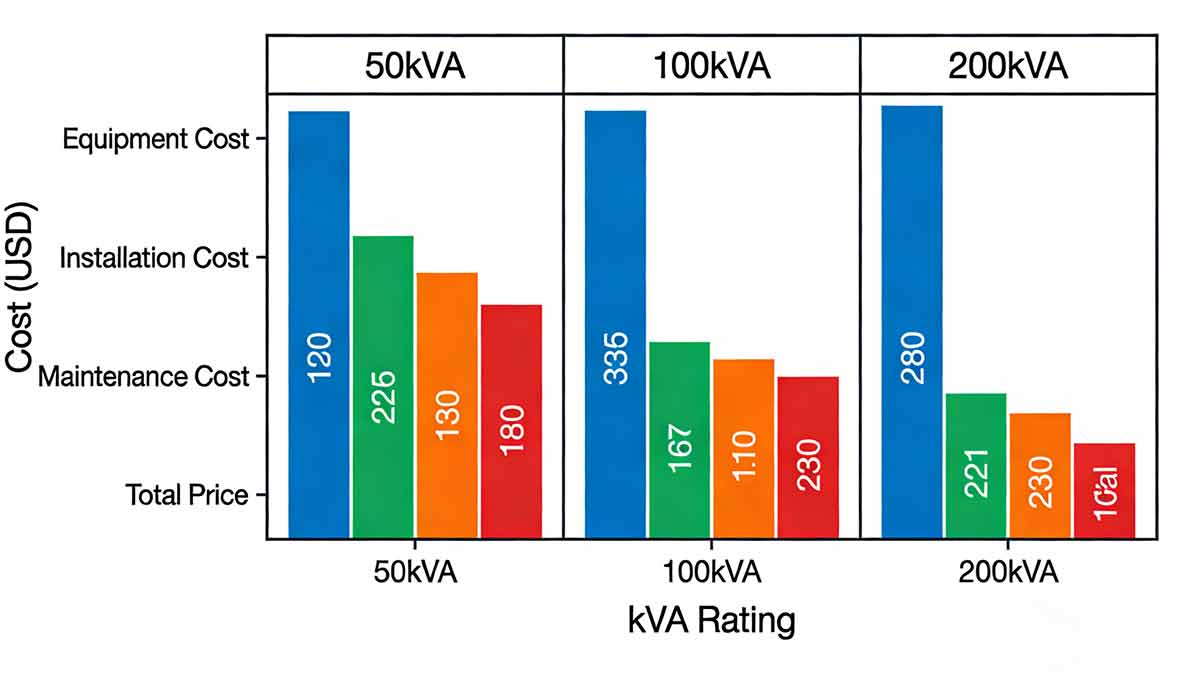
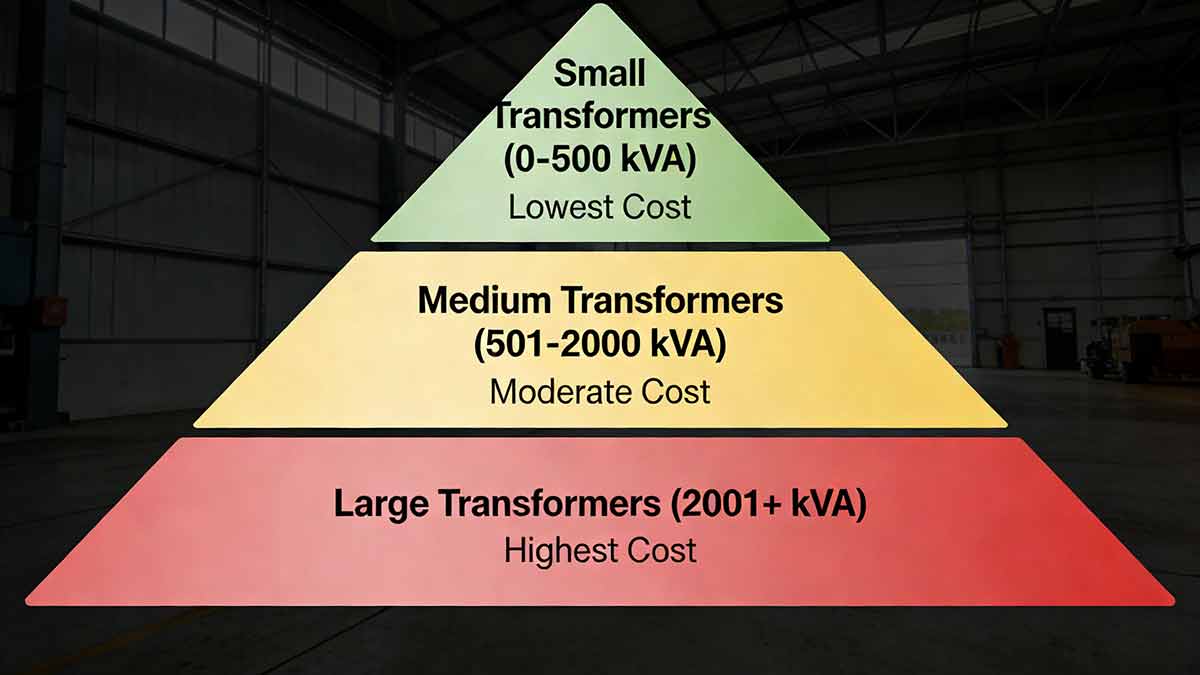
Transformer capacity, measured in kVA, is one of the most obvious factors affecting distribution transformer prices. Higher capacity units require more raw materials, larger cores, thicker windings, and stronger structural components.
- Small distribution transformers (10kVA–500kVA) are mass-produced and cost less, making them popular for residential areas, small businesses, and rural grids.
- Medium-capacity transformers (500kVA–2500kVA) are widely used in urban distribution, commercial complexes, and small industrial facilities.
- Large industrial transformers (2500kVA and above) need custom manufacturing, heavy-duty components, and advanced cooling systems, significantly increasing distribution transformer prices.
Higher kVA transformers also require more copper or aluminum, larger tanks, and more insulating oil, all of which add to material expenses.
Core Material: Silicon Steel Grade
The transformer core manages magnetic flux and directly impacts efficiency, energy loss, and cost. Core material is a major driver of distribution transformer prices.
- High-grade cold-rolled grain-oriented silicon steel (CRGO) reduces no-load loss, improves efficiency, and supports long service life.
- Low-grade or recycled silicon steel costs less but increases energy waste, reduces lifespan, and may fail safety standards.
- Premium ultra-low-loss silicon steel is used in high-efficiency transformers for utilities and green energy projects, raising the price but lowering long-term operating expenses.
Many buyers focus only on upfront distribution transformer prices without realizing that low-cost cores lead to higher electricity bills over time.
Winding Material: Copper vs. Aluminum
The choice between copper and aluminum windings significantly changes distribution transformer prices and performance.
- Copper windings offer higher conductivity, better thermal resistance, lower loss, and longer lifespan. Copper transformers cost more but provide greater efficiency and reliability.
- Aluminum windings are more affordable and lighter, reducing initial purchase cost. However, aluminum has lower conductivity and requires a larger winding volume to match copper performance.
- Copper-clad aluminum windings represent a middle‑cost option but are less common in high-quality utility and industrial transformers.
For heavy-duty, long‑life applications, copper transformers deliver better value despite higher upfront distribution transformer prices.
Insulation Type and Cooling System
The insulation and cooling system define where and how a transformer can operate, and these features heavily influence cost.
Oil Immersed vs. Dry Type Transformers
One of the biggest decisions affecting distribution transformer prices is choosing between oil immersed and dry type designs.
- Oil immersed transformers use insulating oil for cooling and insulation. They cost less for large capacities, perform well outdoors, and have excellent thermal stability.
- Dry type transformers use epoxy resin or vacuum pressure impregnation (VPI). They are safer for indoor, fire-sensitive locations like hospitals, data centers, and commercial buildings.
- Dry type transformers generally have higher distribution transformer prices due to expensive insulation materials and more complex manufacturing.
The table below compares typical cost differences:
| Feature | Oil Immersed Transformers | Dry Type Transformers |
|---|---|---|
| Upfront Cost | Lower | Higher |
| Installation Location | Outdoor / Industrial | Indoor / Public Spaces |
| Cooling Efficiency | Excellent | Good |
| Typical Price Variance | Base price | 30%–60% higher |
Cooling System Design
Basic cooling systems support lower distribution transformer prices, while advanced systems support higher loads and longer lifespans.
- Natural oil and natural air cooling (ONAN) is standard for most distribution transformers and keeps costs affordable.
- Forced oil or forced air cooling increases load capacity but adds components like fans and pumps, increasing price.
- Special cooling for high-temperature or high-load environments requires custom engineering and raises distribution transformer prices.
Voltage Rating and Configuration
Voltage requirements directly affect insulation design, component size, and production complexity, all of which change distribution transformer prices.
- Low-voltage distribution transformers (11kV, 22kV) are standard, mass-produced, and more affordable.
- Medium and high-voltage models (33kV, 66kV) need enhanced insulation, thicker bushings, and stricter testing, increasing cost.
- Custom voltage ratios for special grids or industrial systems require engineering adjustments and lead to higher distribution transformer prices.
Voltage stability, impedance level, and connection type ( Dyn11, Yyn0, etc.) also influence manufacturing difficulty and final pricing.
Quality of Accessories and Components
Accessories may seem minor, but they greatly affect reliability, safety, and distribution transformer prices.
- High-quality bushings, tap changers, thermometers, pressure relief devices, and Buchholz relays improve safety and performance.
- Imported or branded components meet international standards but increase cost.
- Basic or low-grade accessories reduce upfront prices but raise failure risks and maintenance costs.
Reliable transformers include durable accessories to prevent leaks, breakdowns, and safety hazards.
Industry Certifications and Standards
Certifications ensure compliance with safety, performance, and environmental regulations and are a key factor in distribution transformer prices.
- International certifications (IEC, ANSI, IEEE, CE, ISO) require strict testing, material control, and production processes.
- Utility-approved transformers must pass additional load, loss, and safety tests, increasing manufacturing cost.
- Non-certified transformers have lower prices but may be rejected by grid operators and pose safety risks.
Buyers responsible for public or industrial projects must prioritize certified units even if distribution transformer prices are higher.
Customization and Special Requirements
Standard transformers have fixed, lower prices, while customized designs increase distribution transformer prices.
- Custom dimensions for limited installation spaces
- Special corrosion resistance for coastal or industrial areas
- Weather protection for extreme cold, heat, or humidity
- Smart monitoring systems for remote operation
- Noise reduction for urban or residential areas
Each modification requires unique engineering and production steps, adding to the cost.
Brand, Production Capacity, and Warranty
Reputable manufacturers often have higher distribution transformer prices due to consistent quality control, material sourcing, and after-sales support.
- Established brands invest in R&D, testing labs, and quality assurance.
- Large-scale production reduces per-unit cost but maintains high material standards.
- Longer warranties (3–5 years or more) reflect manufacturer confidence and add value.
Unknown or low-cost manufacturers may offer lower prices but provide limited support and shorter lifespans.
Market Conditions and Raw Material Costs
Distribution transformer prices also shift with global market trends.
- Copper and aluminum prices change daily based on global supply and demand.
- Silicon steel, insulating materials, and oil costs affect production expenses.
- Shipping, logistics, energy prices, and exchange rates impact final pricing.
Short-term price fluctuations are normal, but long-term cost trends depend on material stability and manufacturing efficiency.
Why Lower-Priced Transformers Often Cost More Long-Term
Many buyers focus only on the lowest distribution transformer prices, but this decision can lead to hidden expenses.
- Low-grade materials increase energy loss and monthly operating costs.
- Poor construction leads to frequent breakdowns, downtime, and repair fees.
- Shorter lifespan means earlier replacement and repeated capital spending.
- Non-certified units may fail inspections, causing project delays or fines.
Top utilities and industrial buyers choose moderately priced, high-quality transformers to minimize the total cost of ownership.
How to Evaluate Distribution Transformer Prices Wisely
When comparing quotes, consider these practical steps to avoid mistakes:
- Confirm kVA, voltage, winding material, and insulation type match your needs.
- Check certification standards required by your local grid or industry.
- Compare core loss, efficiency, and expected service life.
- Evaluate warranty, after-sales support, and supplier experience.
- Avoid choosing purely based on the lowest distribution transformer prices.
A trustworthy supplier will explain cost differences clearly and help you select the best transformer for your application.
Conclusion
Distribution transformer prices are shaped by capacity, materials, design, cooling type, voltage, certifications, customization, accessories, brand reputation, and market conditions. Each factor contributes to performance, safety, efficiency, and service life. By understanding these elements, buyers can move beyond price alone and choose transformers that provide stable power, low operating costs, and long-term reliability.
Whether you are purchasing for utility grids, industrial facilities, commercial projects, or rural distribution, understanding what influences distribution transformer prices helps you make confident, cost-effective decisions. If you want to discuss your specific power requirements, receive transparent pricing based on real technical specifications, or explore high-quality transformers designed for durability and efficiency, professional support is available to match your project needs.